The Plain of Jars in Laos is one of the country’s most unusual landscapes, with hundreds of massive stone jars scattered across rolling hills and farmland. It stands out from other regions in Laos because the main focus is archaeological and historical rather than scenery alone, making it a deliberate stop within a longer itinerary.
Travelers typically come for the jar sites, wartime history, and a quieter rural setting. The area is usually included on overland routes between Vientiane and northern Laos or added as a side trip from Luang Prabang, rather than used as a standalone destination. This helps you judge whether the extra travel time suits your interest in archaeology, history, and low-key, less developed regions.
Why visit the Plain of Jars?
The Plain of Jars offers an eerie, open-air archaeological experience unlike anywhere else in Laos. Instead of temples or caves, you walk directly among fields of massive, weathered stone jars, many over two meters tall, whose exact purpose is still debated. Misty upland light, bomb craters overgrown with grass, and jar clusters framed by distant mountains create a striking, almost surreal landscape.
Local guides share excavation stories, unexploded ordnance clearance efforts, and theories ranging from funerary rites to ancient trade, bringing the site’s mysteries and wartime scars into sharp focus. Sunrise or sunset visits let you wander in near-silence, hearing only wind in the grass and village sounds drifting across the plain.
This intimate, on-foot encounter with both deep prehistory and recent conflict is difficult to find elsewhere in Laos.

The stone Plain of Jars dot Laos
Who is the Plain of Jars best for?
You will probably enjoy the Plain of Jars if you are drawn to evocative, thought-provoking places rather than classic checklist sights. Curious travelers who like archaeology, unsolved histories, and unhurried conversations with local guides tend to get the most from a visit.
Photographers who favor mood and texture over grand vistas can experiment with changing light around the jars at quieter times of day. The area also works well for overland explorers and road-trip travelers who enjoy adding offbeat stops between larger hubs.
You may prefer another destination if you want a packed day of varied activities, nightlife, or extensive facilities in one compact area. Families with very young children or anyone expecting hands-on attractions and resort comforts might be happier in Luang Prabang or along the Mekong.
If your priority is dense wildlife, long trekking routes, or high-end lodges, Laos' national parks or river regions are likely to be a better fit.
How does the Plain of Jars fit into an itinerary?
The Plain of Jars usually sits in the middle of a longer overland route across northern and central Laos, often linking Luang Prabang with Vang Vieng, Vientiane, or the more remote northeast.
Rather than acting as a standalone break, it tends to be a purposeful detour that adds a quieter, more reflective stretch to your itinerary. Travelers typically arrive by private driver, shared minivan, or on a custom road trip, using Phonsavan as the practical base for exploring the wider area.
Most tailor-made trips allow one or two nights here, enough to travel in, see the key sites at an unhurried pace, and then continue your journey without compressing other parts of your route. Adding the Plain of Jars slows the rhythm of your holiday, replacing back-to-back city or riverside stays with a pause in a smaller town.
It fits neatly between larger hubs, giving your plans a more gradual overland flow rather than a series of direct hops between major centers.
Trips that include Plain Of Jars
The Laos history tour | Temples, heritage and local culture begins in Vientiane with visits to historic temples and Buddha Park before continuing to Phonesavanh in Xieng Khouang.
At the Plain of Jars, Site 1, travelers explore mysterious ancient stone jars and see bomb craters that reveal the region's wartime history. A scenic journey through mountain landscapes then leads to Luang Prabang.
At the Plain of Jars, our local experts can provide deeper insights into the archaeological mysteries and wartime history of Site 1, bringing context to this remarkable landscape.
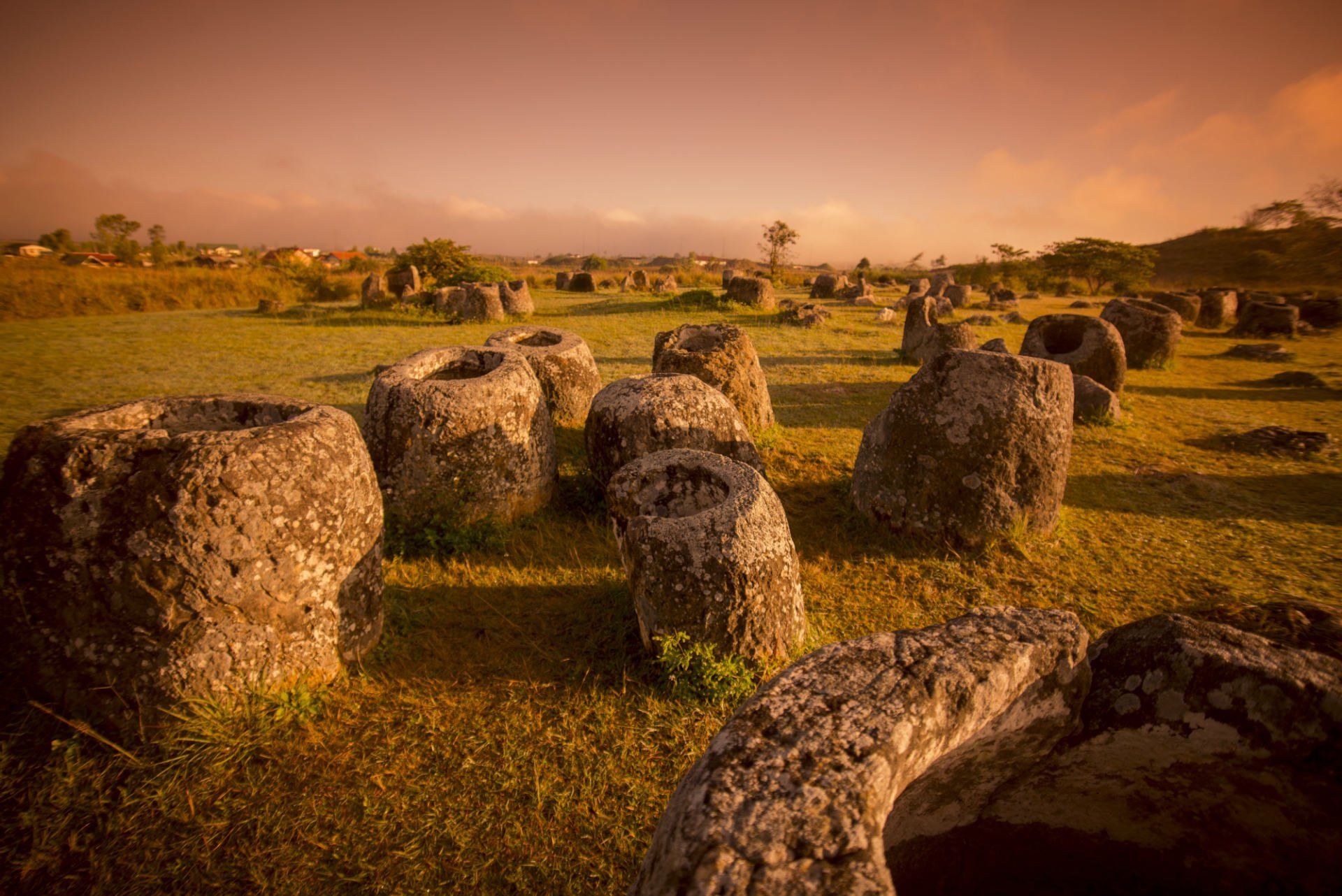
The Plain of Jars, Laos @ Shutterstock
How many days do you need?
Most travelers find one full day at the Plain of Jars is enough to visit two or three major jar sites at an unhurried pace, often combined with a stop at the UXO information centre in Phonsavan.
A second night mainly adds flexibility for delayed buses or flights and allows time for a slower morning departure or an extra visit at sunrise or sunset. A longer stay turns the area into a useful pause between mountain driving days, with time for short countryside walks and village detours.
| Days | Recommended focus |
|---|---|
| 1 day / 1 night | Travel to Phonsavan, afternoon visit to a main jar site, simple town dinner. |
| 2 days / 2 nights | Sunrise or sunset at a jar site, additional sites or local villages, time for UXO centre. |
| 3 days / 3 nights | Deeper exploration of rural surroundings and rest between longer overland legs. |
If you are short on time, an overnight stop with one focused site visit still gives a meaningful impression without stretching the itinerary.
Best region combinations
A classic route links Vientiane - Vang Vieng - Phonsavan - Luang Prabang, using the Plain of Jars as a reflective midpoint between river towns and cultural centres. The long, winding drives (typically 5-8 hours between stops) turn travel days into scenic highland journeys.
Combining with Vang Vieng adds limestone karsts and riverside activities, while Luang Prabang contributes temples, markets, and the Mekong.
Another option is to travel between Phonsavan and southern Laos via Vientiane, contrasting the Xiangkhoang Plateau with the 4,000 Islands and waterfalls on the Mekong over a longer trip.
These combinations work best when you allow at least a week in Laos, so the Plain of Jars feels like a deliberate pause rather than a rushed detour.
When is the best time to visit the Plain of Jars?
November to February is generally the best time to visit Laos for travelers exploring the Plain of Jars. Cooler temperatures and clearer skies make walking between the sites more comfortable, although misty mornings can leave the grass damp.
March to May brings hotter, hazier conditions, so sunrise or late-afternoon visits are easier than midday walks. From June to October, rain can make slopes slippery and access roads muddier, but the surrounding countryside is lush and visitor numbers are lower.
Travelers seeking easier road journeys usually favor the dry season, while those comfortable with rain may prefer the quieter sites and vivid green landscapes of the wetter months.
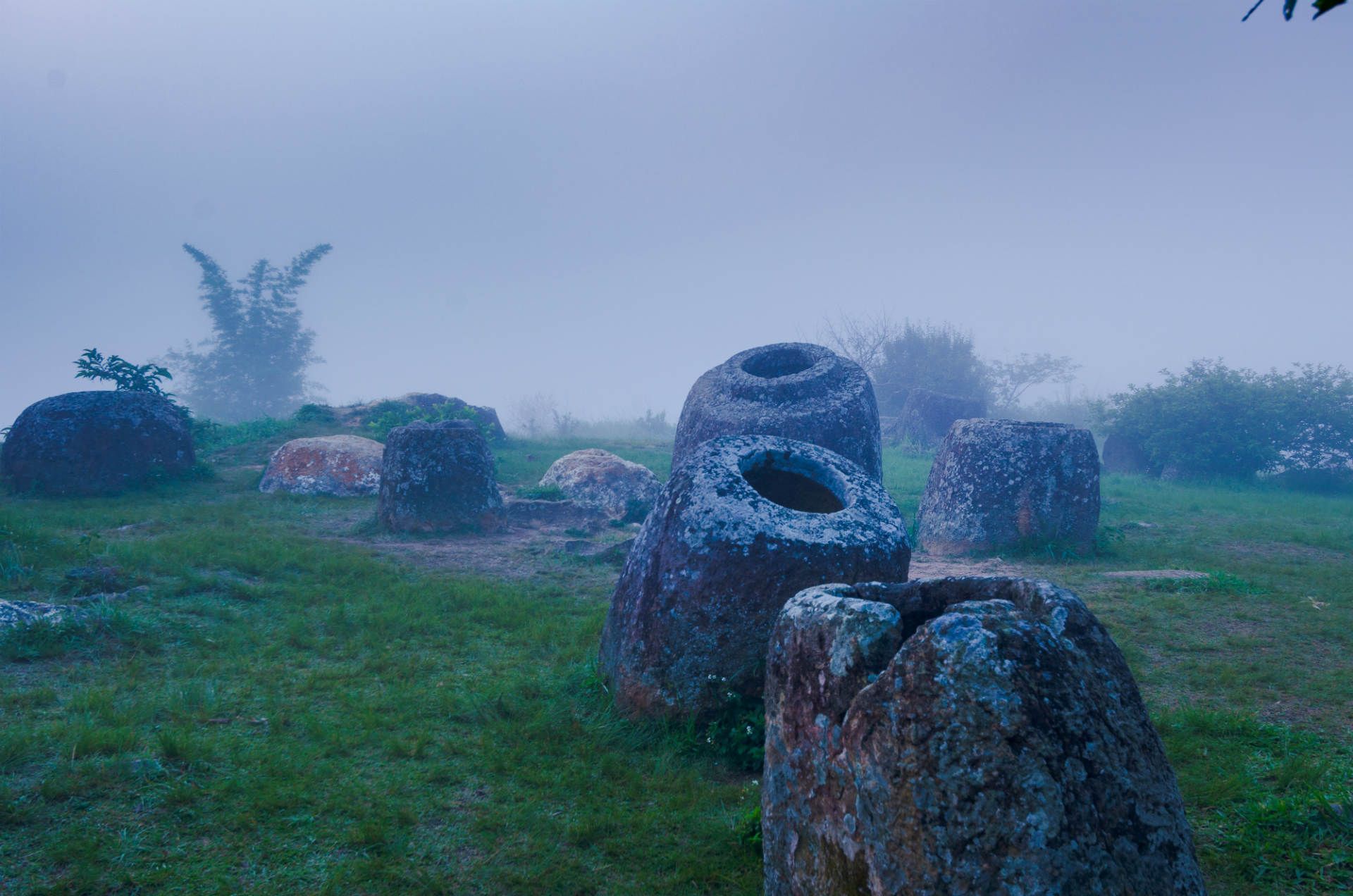
Phonsavan, Laos @ Shutterstock
Experiences to include in the Plain of Jars
The experiences below highlight the most rewarding outdoor ways to explore the Plain of Jars, combining atmospheric jar fields with surrounding valleys, viewpoints, and gentle countryside walks.
Walk among jars at Site 1 and nearby viewpoints
Start at Jar Site 1 near Phonsavan to wander between the largest concentration of stone jars, then detour to nearby hilltop viewpoints overlooking the Xiangkhoang Plateau. Allow half a day for unhurried walking and photos, suiting reflective travelers and photographers.
Combine Jar Sites 2 and 3 with countryside trails
Spend half a day linking Jar Site 2's forested setting with Jar Site 3's hilltop views over Ban Xieng Di. Simple paths connect fields, villages, and low ridges, giving a feel for rural Xiangkhouang Province. Best for moderately active visitors.
Drive the Phonsavan-Muang Khoun scenic valley route
Muang Khoun is one of the top attractions in Laos for travelers exploring the countryside beyond the Plain of Jars. Allow half a day or a full day from Phonsavan to follow valleys and low hills dotted with villages and rice fields. Viewpoint stops and short walks make the trip ideal for visitors who prefer scenic touring to strenuous hiking.
Explore the Nam Ngum headwaters near Phonsavan
Use a half- or full day to visit the upper Nam Ngum River valleys south of Phonsavan, walking tracks through paddies and low woodland. Light hikes and village paths suit travelers wanting gentle immersion in Plain of Jars countryside rather than tough treks.
Sunrise or sunset at Jar Site 3 ridgeline
Jar Site 3, near Ban Xieng Di, sits on a small ridgeline overlooking fields and distant hills. Allow two to three hours to be in place for sunrise or sunset, when mist and soft light appeal particularly to contemplative travelers and photographers.
Rural detours on the Route 7 mountain passes
When traveling along Route 7 between Phou Khoun and Phonsavan, pause at high passes and side roads toward villages near Nong Haet or Phou Khoun. Short roadside walks and valley viewpoints break up the journey for those who enjoy scenic overland travel.

Phonsovan, Laos @ Shutterstock
Planning the Plain of Jars with local expert tips
The Plain of Jars spreads across the uplands of Xieng Khouang Province, where thousands of ancient stone jars occupy archaeological sites among rolling hills and farmland. Local trip planners can select the most worthwhile sites for your schedule and place them within a broader Laos route without making the journey feel like a lengthy detour for a single attraction.
Where to stay near the Plain of Jars
Phonsavan is the practical base for exploring the Plain of Jars, with accommodation, restaurants and road connections concentrated in and around the town. The archaeological landscape extends well beyond one location, so staying centrally makes it easier to visit several jar sites without changing hotels.
Some routes can also incorporate villages, viewpoints and other places connected with the region’s history. Accommodation is generally simpler than in Luang Prabang, making location and reliable transportation more important than an elaborate hotel stay. Your local expert can decide how much of the surrounding countryside to include.
If archaeology is your main interest, they can devote time to contrasting jar sites rather than adding distant stops that would create additional hours on mountain roads.
How transportation can be arranged
Reaching Xieng Khouang often involves a combination of regional air or road connections, depending on your wider Laos itinerary and current schedules. Road journeys from other parts of northern Laos cross mountainous terrain and can take considerable time, so they need to be treated as part of the route rather than a short transfer.
Once in Phonsavan, private transportation with a knowledgeable local guide is useful because the principal jar sites are dispersed across the countryside. Visitors should remain on marked paths in designated areas because unexploded ordnance remains a concern in the province.
If you are combining the Plain of Jars with Luang Prabang, your expert can choose the most practical connection for your dates and arrange the following stage without unnecessary backtracking.