The southeast of Burma-Myanmar offers a different perspective from the country’s classic central and northern routes, combining quieter coastal areas, river valleys and border towns with less-visited cultural sites. It deserves a place in a multi-day itinerary if you want to balance headline destinations with time in more everyday settings and secondary cities.
This region works well for travelers interested in overland journeys, cross-border routes, and seeing how landscapes and cultures shift as you head toward Thailand. It typically fits into a wider trip after Yangon or Bagan, either as an overland loop or as a final, slower-paced stretch before departure.
Why visit the Southeast?
The southeast of Burma-Myanmar reveals how daily life unfolds along coastal inlets, river valleys and frontier hillsides, far from the country’s headline monuments. Here you can linger over dockside fish markets at dawn, ride small ferries between riverbank villages and follow winding roads that trace old trade and pilgrimage routes toward the Thai border.
This is where you feel the country in motion: shrines tucked into limestone cliffs, teak houses facing dusty crossroads, and monsoon clouds rolling in across rice fields as evening loudspeakers carry monastery chants. Time settles into a pattern of tea shops, informal street food stalls and unhurried conversations.
You leave with a sense of Burma-Myanmar as a lived-in landscape rather than a set of iconic sights, a memory of subtle, everyday scenes that are harder to find in the more frequently visited parts of the country.

Kawgun Cave, Hpa-An, Myanmar @ Shutterstock
Who is the Southeast best for?
You'll probably enjoy the Southeast if you like unhurried trips where everyday moments matter as much as headline sights. It works particularly well for travelers who have already seen places like Yangon or Bagan and now want to dig a little deeper, whether as an overland journey toward Thailand or a slower finale to a longer itinerary.
Curious food lovers, independent-minded couples and culture-focused friends who are happy with simple comforts in exchange for more local encounters tend to get the most from this region. Flexible families with older children who travel light and enjoy road journeys can also find it rewarding.
You may prefer another destination if you want a straightforward first look at Burma-Myanmar, with short transfers, familiar facilities and a clear list of must-see landmarks. Another part of the country may be a better fit if you are planning a classic beach break with resort-style amenities, traveling with very young children who need predictable routines, or seeking high-end luxury hotels and nonstop nightlife.
How does the Southeast fit into an itinerary?
The Southeast typically comes after time in Yangon, Bagan or Inle Lake, once you are ready to slow the pace and spend longer on the road or river. It often forms the middle or final section of your route, linking the central heartlands with land borders to neighbouring countries, or creating a loop that begins and ends in a main gateway city.
Rather than staying in a single base, most travelers move gradually through the area, combining a couple of small cities with nights in quieter towns or along the coast. Over a longer holiday, around a third of your itinerary might be devoted to this region, with two or three overnight stops linked by overland journeys.
This keeps daily travel times manageable while still allowing you to feel the shift in landscapes and local cultures. A trusted local expert will usually slot the southeast into a broader plan so that connections feel logical and the rhythm of your trip eases from busier hubs into more low-key days.

Kyaiktiyo Pagoda, Myanmar @ Shutterstock
How many days do you need?
Most travelers spend 3-6 days moving through the southeast of Burma-Myanmar, linking small cities, river towns and coastal stops rather than staying in one place. Distances look short on the map, but winding roads, river crossings and pauses in markets or pagodas naturally slow the pace, so allowing time for unhurried travel days makes journeys more enjoyable.
| Days | Suggested route | Ideal pace |
|---|---|---|
| 3-4 | One hub town plus a nearby coastal or riverside stop | Highlights with one or two longer drives |
| 5-6 | Chain of two or three towns with varied landscapes | Balanced mix of travel and exploration |
| 7+ | Broader overland route toward a land border | Slow, flexible journey with free days |
Additional days make it easier to add detours to smaller villages, viewpoints or limestone countryside, or to include boat trips and walks that would feel rushed on a shorter itinerary.
Best region combinations
Pairing the southeast with Yangon works well for first or second visits, starting with city sights and colonial streets before easing into quieter towns and coastal scenery. Overnight buses or short domestic flights usually connect Yangon with southeastern hubs.
Combining the southeast with Bagan creates a contrast between major temples and everyday life along rivers and roads. Travelers often follow the Irrawaddy and road routes south, suiting culture-focused couples or friends on longer trips.
Adding Inle Lake brings together three distinct landscapes: lake stilt villages, central plains and southeastern hills or coast. This order works for those who enjoy varied journeys and do not mind a mix of flights and overland segments.
For overland enthusiasts, a route linking Mandalay, Bagan, the southeast and then on toward the Thai frontier offers a continuous sense of movement and gradual change, best for flexible, experienced travelers.
When is the best time to visit the Southeast?
The best time to visit Myanmar for the southeast is from November to February, when drier days, lower humidity and more reliable roads make overland travel, village walks and hill viewpoints more comfortable. Boat journeys are also generally easier to plan during this period.
March to May can be extremely hot and hazy, especially inland, so shorter travel days, early starts and more time in breezier coastal areas are often preferable. From June to October, monsoon rains bring lush scenery and fewer visitors, but smaller roads and ferry services may face occasional disruption.
Seasonal planning may adjust the order of destinations, use alternative routes or change the balance between road and river travel. Local conditions also influence which markets, viewpoints and coastal stops remain most enjoyable during wetter periods.
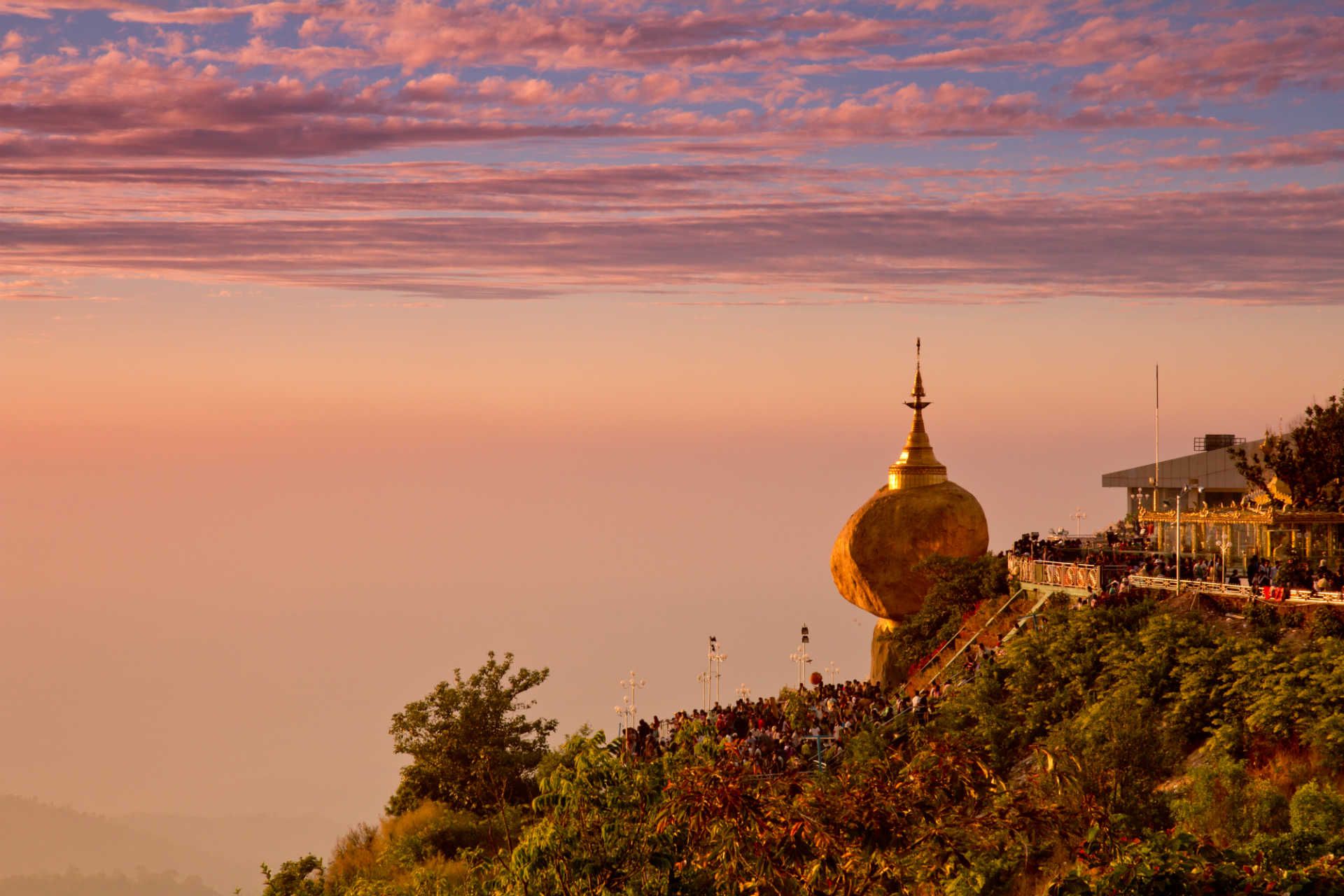
Kyaiktiyo Pagoda, Golden Rock, Myanmar @ Shutterstock
Experiences to include in the Southeast
Myanmar’s Southeast combines limestone landscapes, pilgrimage sites, colonial-era towns and a tropical coastline. Its mix of cultural heritage, rural scenery and coastal escapes adds a quieter, more varied dimension to a wider Myanmar itinerary.
Travel overland between Mawlamyine and Hpa-An
Link Mawlamyine and Hpa-An by road to watch the landscape shift from riverfront streets to jagged limestone hills. This overland leg breaks up longer journeys, adds village stops, and suits travelers who enjoy scenic drives more than domestic flights.
Cruise the Thanlwin River from Mawlamyine
Spend half a day on a small boat along the Thanlwin River near Mawlamyine, passing stilted villages, pagoda-topped hills and quiet jetties. It slows the pace of a busy itinerary and suits travelers who value everyday river life over major monuments.
Explore cave landscapes around Hpa-An
Hpa-An is one of the top attractions in Myanmar for limestone caves, karst cliffs and peaceful rural scenery. Spend one or two nights visiting sites such as Kawgun Cave and Saddan Cave, with time for hill viewpoints and drives through rice fields and village roads. The area offers a refreshing contrast to Myanmar’s better-known temple and city experiences.
Follow coastal life around Dawei
Use Dawei as a base to explore its peninsula by day, combining local markets with quiet beaches like Maungmagan. Distances are modest, but roads can be slow, so allow at least two days to enjoy coastal viewpoints and relaxed seafood meals.
Pause in frontier towns near Myawaddy
Include a night around Myawaddy or Kawkareik when traveling overland toward Thailand. Time here breaks up a long route, introduces frontier markets and hill scenery, and suits flexible travelers who prioritise atmosphere, simple guesthouses and road journeys over polished facilities.
Savor street food in secondary cities
Dedicate evenings in towns such as Mawlamyine and Dawei to simple teashops and street food rather than structured sightseeing. Unhurried meals, shared tables and riverside stalls reveal how people live, adding texture and detail to a wider Burma-Myanmar journey.

Beach at Dawei in Myanmar’s southern Tanintharyi Division, Burma. Copyright, Jo James
Planning Myanmar’s Southeast with local expert tips
Myanmar’s southeast stretches from areas east of Yangon toward Mon and Kayin States and the long Tanintharyi coast. Routes can involve substantial road journeys, and current access varies across the region, so local experts can focus the itinerary on places that can be visited safely and practically during your dates.
Where to stay in Myanmar’s Southeast
Mawlamyine has traditionally been one of the main bases for exploring the southeast, while Hpa An provides access to the limestone landscapes and rural areas of Kayin State. Farther south, towns along the Tanintharyi coast require a separate approach because distances increase considerably. Accommodation availability and access can change, so older hotel recommendations should not automatically determine the route.
Your local expert can first establish which areas are suitable for travel and then select overnight stops that reduce unnecessary time on the road. When only part of the southeast is accessible, concentrating on one area may produce a more coherent journey than trying to link several distant towns. The final choice of bases can be adjusted around your interests and the conditions in place during your visit.
How transportation can be arranged
Road travel is central to journeys through southeastern Myanmar, but routes, journey times and local restrictions need to be checked close to departure. Rail and other scheduled services have historically connected some towns, although current operation should not be assumed when planning a trip. A local expert can confirm practical transportation options and arrange a private vehicle where appropriate, allowing extra time when road conditions require it.
Longer journeys toward the Tanintharyi region should be considered separately rather than simply added to a short circuit from Yangon. If your original route includes both Hpa An and destinations farther south, for example, your expert can review current access for your dates and reshape the journey around the sections that are realistically available, without committing you to an impractical road itinerary.