The west of Burma-Myanmar offers a distinct contrast to the central plains and the classic Yangon-Bagan-Mandalay route, with quieter coastal towns, remote beaches, and culturally varied communities. It earns a place in a multi-day itinerary if you want to balance headline sights with less developed areas and more time outdoors.
This region suits travelers who are comfortable with simpler infrastructure, longer journeys, and weather-dependent plans. It usually works best as a several-day add-on at the start or end of a trip, linked to the rest of the country by domestic flights and a few targeted overland sections.
Why visit the West?
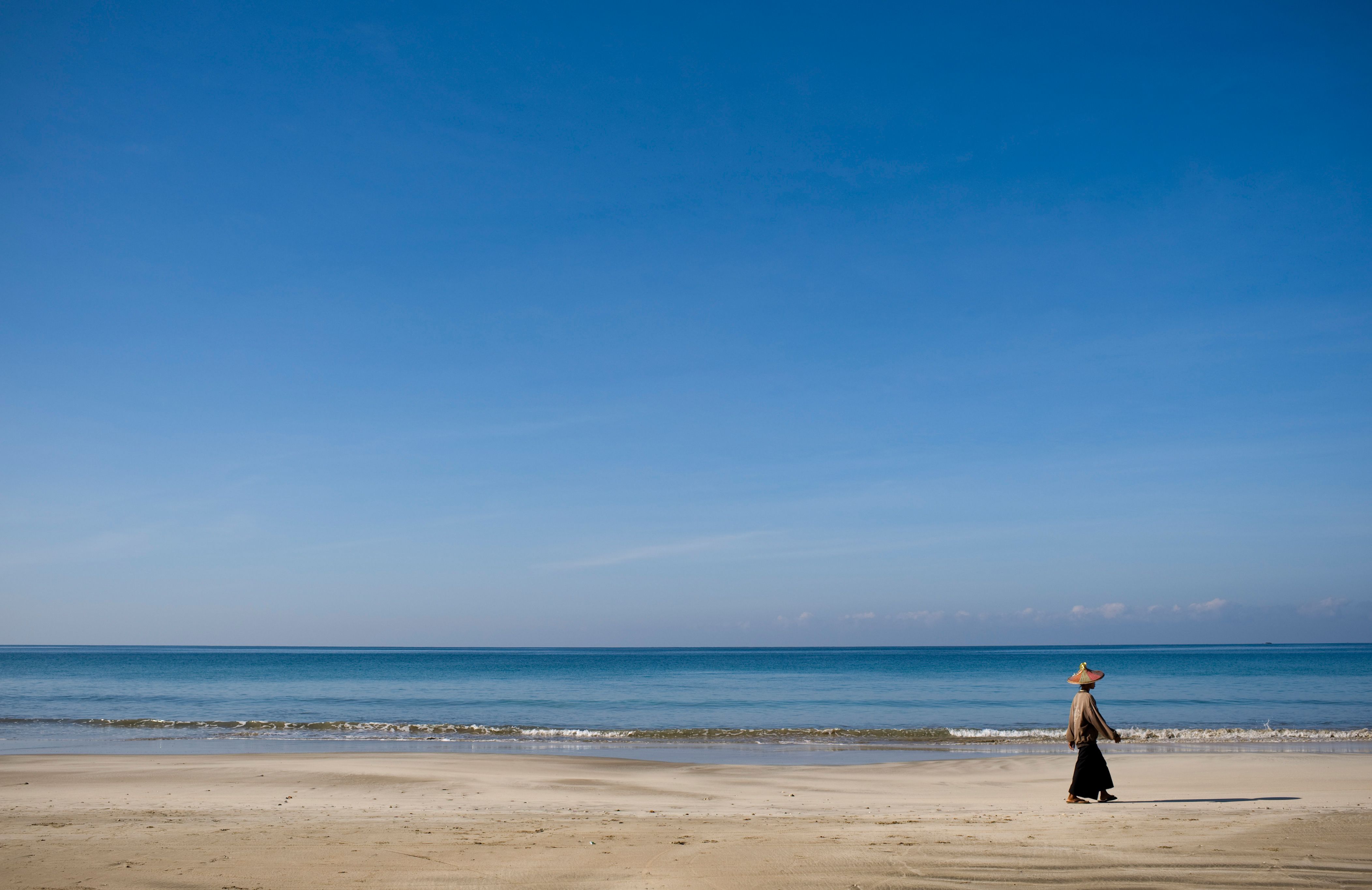
The west of Burma-Myanmar stands apart for its sense of remoteness, where fishing villages, coastal monasteries, and quiet bays still set the rhythm of daily life. Here, you swap famous pagoda skylines for empty stretches of sand, creaking wooden jetties, and markets that feel unchanged for generations.
Time slows on long beaches where sunsets seem to last for hours, and evenings might be marked only by the sound of waves and temple bells drifting inland. Inland, old port towns and river settlements recall the days when this coast linked Burma-Myanmar to the wider Bay of Bengal, with traces of different trading cultures in their streets and waterfronts.
You leave with the impression of having stepped into a quieter strand of the country, where everyday coastal scenes linger as strongly as any individual sight.

Ngapali Beach, Myanmar @ Shutterstock
Who is the West best for?
You will probably enjoy the West if you are an experienced traveler who is comfortable with slower journeys, flexible plans, and simple guesthouses rather than polished resorts. It tends to appeal to people who value time to wander coastal towns, read on a quiet beach, and have unhurried conversations more than ticking off big-name sights.
Couples or solo travelers looking for reflection and space, photographers drawn to everyday life, and culture-focused visitors who enjoy markets and working harbors rather than formal attractions often find this region especially rewarding.
You may prefer another destination if you are planning a first-ever trip to Burma-Myanmar and want a straightforward introduction with easy logistics, varied sightseeing, and a wide choice of comfortable hotels.
Families needing short transfers, reliable facilities, and plenty of structured activities usually find the central regions or main beach areas easier. If you are seeking high-end beachfront resorts, nightlife, or a very full itinerary with back-to-back highlights, another part of the country will likely be a better fit.
How does the West fit into an itinerary?
The west of Burma-Myanmar usually works as a slower-paced coastal chapter within a wider route that focuses on the better-connected central regions. Many travelers start with the main cultural centers and key gateways, then add a few days in the west at the beginning or end to change tempo and spend longer stretches in one or two locations. Overland sections can be time-consuming, so it is often more efficient to use a domestic flight in one direction and return via a shorter road segment or onward flight.
Within a tailor-made plan, the west rarely stands alone. It tends to link with central hubs and, on longer holidays, with another contrasting area such as the south or a major river region.
Rather than a fast-moving circuit, your route through the west typically involves settling into a base for several nights, building in rest days between transfers, and then flying or driving back to a main gateway to continue your journey.

Mindat, Chin State, Myanmar @ Shutterstock
How many days do you need?
Most travelers allow 3-5 days for the west of Burma-Myanmar, moving between one coastal base and a nearby town or river port rather than ticking off many stops. This gives time for slow walks along the beach, a boat trip or two, and unhurried market visits without feeling rushed by long overland journeys.
| Days | Suggested route | Ideal pace |
|---|---|---|
| 3 days | One coastal town with a short excursion inland | Compact, focused on rest with one or two light activities |
| 4 days | Coastal base plus a nearby river port or trading town | Balanced mix of beach time and local life |
| 5-6 days | Two contrasting bases, such as a quieter beach and a livelier town | Unhurried, with spare time for weather delays and extra outings |
With additional days, you can add another overnight stop, explore smaller villages off the main roads, or simply build in more flexibility for changing sea conditions and road travel.
Best region combinations
A classic option is to start in Yangon, continue through the central cultural heartland around Bagan and Mandalay, then finish with several slow days in a western coastal town such as Ngapali. This suits first-time visitors who want landmark sights followed by quiet beaches.
Another approach is to pair the west with the Ayeyarwady River, using a river port as a stepping stone between boat journeys and the coast, ideal for travelers who enjoy water-based travel and historic trade routes.
More experienced visitors sometimes focus on the west and the far south, linking two less-developed coastal areas for a trip that favors simple guesthouses, fishing villages, and long travel days.
Photographers often combine the west with Inle Lake, using domestic flights to bridge the distances while keeping a relaxed pace.
When is the best time to visit the West?
The best time to visit Myanmar for the west is from November to February, when calmer seas, lower humidity and more reliable road conditions make coastal stays and overland travel easier. These months also offer the best chance of clear sunsets, although some destinations may be busier during local holidays.
March and April can be hot, but they still suit travelers focused on quiet towns, beach time and sea breezes rather than long inland walks. From May to October, heavy monsoon rain can disrupt boat services and road travel, while some smaller accommodations may close.
During the shoulder and wet seasons, itineraries often use fewer bases, allow extra time for delays and prioritize routes with more dependable transport.

Young woman traveler walking through the field to the ancient Buddhist stupas, Myanmar © soft_light/Shutterstock
Experiences to include in the West
Myanmar’s West combines ancient temple landscapes, quiet coastal towns and remote mountain scenery. Its mix of history, coast and highland culture adds a distinctive contrast to the country’s better-known central routes.
Unwind on Ngapali Beach
Ngapali Beach is one of the top attractions in Myanmar for wide sands, fresh seafood and relaxed evenings by the sea. Base yourself near Thandwe for at least two or three days, with time to watch fishing boats return and enjoy the slower pace. It makes an ideal place to unwind after busier cultural stops elsewhere in Myanmar.
Explore the streets and markets of Sittwe
Spend a day or two in Sittwe wandering the waterfront, morning fish market, and backstreets lined with wooden houses. It adds an atmospheric, working-port contrast to quieter beach towns and suits travelers interested in everyday coastal life.
Boat along the Kaladan River to Mrauk U
A river journey on the Kaladan between Sittwe and Mrauk U introduces mangrove-fringed banks and small riverside villages. This slow transfer doubles as a scenic experience and helps you appreciate the region's remoteness before or after inland exploration.
Discover village life around Mrauk U
Use Mrauk U as a base for day trips into nearby Chin and Rakhine villages, where traditional weaving, riverside fields, and wooden houses reveal local livelihoods. One or two unhurried excursions work well between quieter walks and temple visits.
Walk quiet coves near Gwa and Kanthaya
For a more offbeat coastline than Ngapali, consider the low-key beaches around Gwa or Kanthaya. Simple guesthouses, rougher roads, and largely empty coves appeal to seasoned travelers happy to trade comfort for a stronger sense of isolation.
Myanmar, Burma
Planning Western Myanmar with local expert tips
Western Myanmar includes remote coastal and mountain regions where distances, infrastructure and access can make travel particularly complex. Rather than building a fixed circuit around older routes, a local expert can shape the trip around the areas that are realistically accessible during your dates and adjust the plan as local conditions become clearer.
Where to stay in Western Myanmar
Accommodation is concentrated in established towns and a limited number of coastal destinations, with far fewer choices once you move into remote areas. This makes each overnight an important part of the route rather than simply a place to stop between sights. Your local expert can check which properties are operating and select bases that minimize difficult road journeys.
In some circumstances, staying longer in one accessible location will make more sense than attempting to reach several widely separated areas. Western Myanmar has also experienced significant conflict and restrictions, so places that appeared in older travel itineraries may not currently be appropriate for visitors.
Your expert can revise the accommodation plan around current access, your preferred pace and the parts of the region that can be visited responsibly.
How transportation can be arranged
Historically, western Myanmar has relied on a mixture of road, air and local boat connections, but current services and permitted routes can change considerably. A local expert can verify transportation close to departure instead of assuming that published schedules or familiar overland routes remain available. Where travel is feasible, private transportation may provide more flexibility for coordinating accommodation and longer road sections, while flights can sometimes reduce demanding overland journeys.
Extra margins are sensible whenever a regional connection must meet an onward international flight. If conditions affect one part of your planned route, your expert can reorganize the journey around accessible destinations and your confirmed dates rather than trying to preserve an itinerary that no longer works on the ground.