The Skeleton Coast is Namibia's most remote and dramatic shoreline, very different from the more accessible coastal areas around Swakopmund and Walvis Bay. Strong Atlantic swells, dense fog, and vast dune fields create a wild, inhospitable atmosphere rather than a classic sun-and-swim setting.
This destination suits travelers who value solitude, stark scenery, and desert-adapted wildlife over conventional beach time. It usually works best as a focused 2-4-day segment within a longer Namibia itinerary that also includes places like Etosha, Damaraland, or Sossusvlei.
Most visits are arranged as fly-in or guided overland trips, suiting those comfortable with higher logistics and limited infrastructure.
Why visit the Skeleton Coast?
The Skeleton Coast delivers a level of stark drama and remoteness that you will not find on Namibia's busier shores. Here, cold Atlantic swells collide directly with high, shifting dunes, creating stark patterns of sand and surf that feel more like another planet than a typical coastline.
Rusting wrecks lie half-buried far inland where dunes have advanced over time, and whale bones still surface from the sand, making the maritime history feel immediate rather than abstract. Inland fog banks roll across gravel plains, feeding strange, moisture-harvesting plants and desert wildlife that depend on the sea mist instead of rainfall.
After dark, the absence of settlements leaves only the stars and the constant ocean roar, turning the Skeleton Coast into a place to experience Namibia's desert and shoreline in their most elemental form.
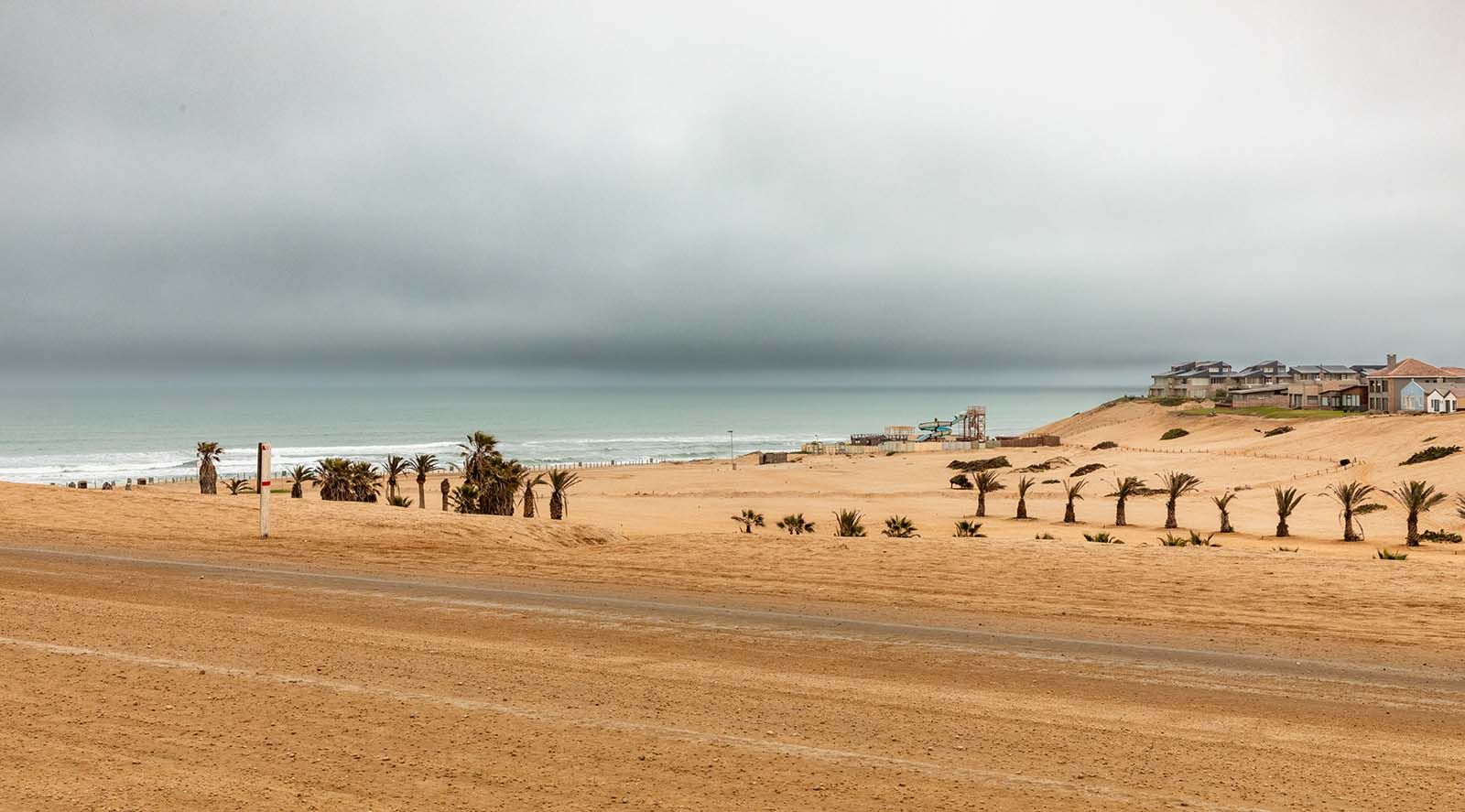
Part of the town of Henties Bay on the Skeleton Coast shoreline of Namibia © Shutterstock
Who is the Skeleton Coast best for?
You will probably enjoy the Skeleton Coast if you are an experienced traveler who values raw wilderness over classic sightseeing. It works particularly well for couples or friends seeking a once-in-a-lifetime, off-grid adventure, photographers drawn to stark, moody seascapes, and wildlife enthusiasts keen on tracking desert-adapted species with expert guides.
Returning visitors to Africa who have already seen safari highlights often appreciate the Skeleton Coast as a more contemplative, atmospheric addition to a longer Namibia route.
Another destination may be a better fit if you want an easy, resort-style beach break with swimming, snorkelling, and a wide choice of restaurants on your doorstep. Families with very young children and honeymooners picturing palm-fringed lagoons may be happier in more conventional coastal destinations, such as Swakopmund or nearby Indian Ocean islands.
The same applies to first-time visitors who feel unsure about small planes, long drives, or limited connectivity. They can consider the Skeleton Coast once they feel comfortable with a more expedition-style trip.
How does the Skeleton Coast fit into an itinerary?
The Skeleton Coast usually works as a focused segment within a wider Namibia itinerary rather than the backbone of your holiday. Travelers often slot it in after Etosha or Damaraland, using a fly-in link from inland reserves to remote coastal lodges, then continue to areas such as Swakopmund or Sossusvlei.
Because of its remoteness and expedition feel, it is rarely used as a gentle, relaxing finale; instead, it tends to be an immersive middle chapter that adds intensity and contrast before you slow the pace elsewhere.
Most routes allow 2-4 nights here, enough to experience the environment without disrupting the overall rhythm of your trip. Arrivals are typically by light aircraft from Windhoek or a previous safari region, with departures on toward the central or southern deserts or back to the capital.
Adding the Skeleton Coast usually shifts your plans toward a more adventurous, slower-travel style, with fewer bases but longer, more in-depth stays at each stop.
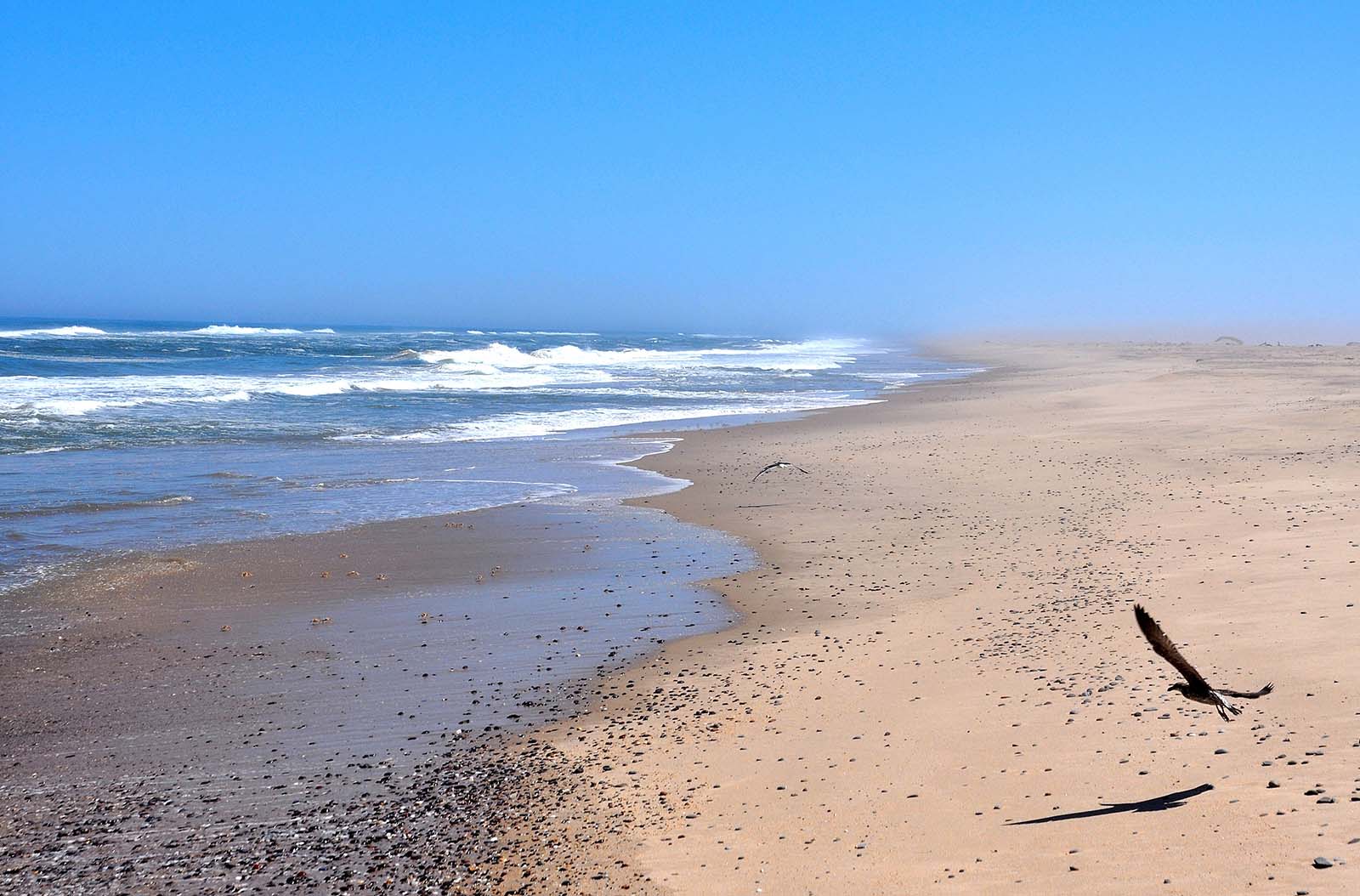
Skeleton coast © Shutterstock
How many days do you need?
Most travelers dedicate 2-4 nights to the Skeleton Coast within a longer Namibia itinerary. This allows time to reach remote lodges, adjust to the stark conditions, and explore without feeling rushed.
Stays shorter than two nights can feel like a scenic fly-by rather than an immersion, while more than four nights mainly suit travelers who enjoy very slow, contemplative wilderness time.
| Time | Recommended focus |
|---|---|
| Half day | Brief taster from Swakopmund or Henties Bay, often driving to Cape Cross or a nearby wild stretch of coast |
| One night | Quick impression, one scenic flight or half-day drive, overnight in a remote lodge |
| Two nights | Core experience: scenic flight, guided drives to dunes and shipwrecks, time to absorb the atmosphere |
| Three nights | Deeper exploration, additional photographic outings, and more flexible pacing around fog and weather |
| Four nights | For wilderness lovers: extended walks, multiple flight routes, unhurried downtime at camp |
Each extra night adds more flexibility around fog and wind, improves chances of good flying conditions, and deepens the sense of isolation.
Best region combinations
The Skeleton Coast combines naturally with nearby desert and wildlife areas. A classic route is Etosha National Park - Damaraland - Skeleton Coast - Swakopmund, moving from big-game safaris to desert landscapes and finally a relaxed coastal town with cafes and activities. Light-aircraft flights between these areas usually take about 1-2 hours, with the Skeleton Coast working best as a 2-3-night stop.
Another focused pairing is Damaraland and the Skeleton Coast, tracking desert-adapted elephants inland and then foggy shores and shipwrecks, linked by a short fly-in or full-day 4x4 drive.
For a longer circuit, add Sossusvlei at the start or end, connecting by light aircraft in roughly 2-3 hours and using the Skeleton Coast as the most remote chapter before or after the red dunes of the Namib Desert.
When is the best time to visit the Skeleton Coast?
May to October is generally the best time to visit Namibia for exploring the Skeleton Coast. Drier inland conditions usually support more reliable light-aircraft connections and clearer views across the dunes, although coastal fog, cool days and cold nights remain common.
From November to April, hotter inland weather and occasional storms can slightly increase the risk of road or flight delays. Fog may also be thicker along the shore, while the Atlantic remains cold and often rough throughout the year, making swimming and snorkeling less important than visibility, comfort, and access.
Visitor numbers stay low in every season. Cooler months often place more emphasis on Etosha and Damaraland, with the Skeleton Coast providing a striking, misty contrast within a wider itinerary.

Namibia, Skeleton coast © Shutterstock
Experiences to include on the Skeleton Coast
The experiences below highlight the most rewarding ways to explore Namibia's Skeleton Coast, focusing on immersive wilderness, remote viewpoints, and distinctive coastal-desert encounters rather than a comprehensive list of every possible stop.
Take a scenic flight over Skeleton Coast National Park
Low-level flights over Skeleton Coast National Park reveal shipwreck-strewn beaches, seal colonies at Cape Cross, and dunes spilling into the Atlantic. Allow a half day, including briefing and transfers. It suits photographers, repeat safari-goers, and anyone wanting broad views with minimal physical effort.
Drive remote coastal tracks near Torra Bay and Terrace Bay
Guided 4x4 routes around Torra Bay and Terrace Bay offer access to some of the top attractions in Namibia, including shifting dunes, bleached whale bones and pounding Atlantic surf beyond the end of conventional roads.
Allow at least half a day, or a full day for a more immersive trip. The experience best suits adventurous travelers who are comfortable with rugged tracks and drawn to expedition-style journeys and long, empty horizons.
Explore desert canyons and dry riverbeds around the Hoanib
Guided drives through the Hoanib River valley and nearby canyons combine stark geology with the chance of desert-adapted elephants and lions. Allow a full day with flexible stops for walks and viewpoints. It suits wildlife enthusiasts and photographers seeking a quieter, more contemplative alternative to busy game reserves.
Visit the Cape Cross seal reserve from Swakopmund or Henties Bay
A trip up the coast from Swakopmund or Henties Bay to the Cape Cross seal reserve offers dense seal colonies and a visceral sense of the Atlantic's power. Allow a half day by road. It suits first-time visitors wanting an easily accessed Skeleton Coast taster from a comfortable coastal-town base.
Walk foggy dune ridges near Mowe Bay
Short guided walks along dune ridges near Mowe Bay reveal delicate desert plants, shifting sands, and eerie ocean fog rolling inland. Set aside two to three hours, often timed for sunrise or late afternoon. It suits active travelers looking for quiet, low-impact immersion rather than vehicle-based sightseeing.
Follow shoreline wrecks near Toscanini and the Eduard Bohlen area
Guided excursions to wreck sites around Toscanini and the Eduard Bohlen area highlight the coast's maritime history and sense of abandonment. Expect several hours with stops to walk around rusting hulls and beaches. It suits history-minded travelers and photographers drawn to atmospheric, story-rich locations.

Skeleton Coast in Namibia. The shipwreck was stranded or grounded at the coastline of the Atlantic close to Swakopmund © gg-foto/Shutterstock
Planning the Skeleton Coast with local expert tips
Namibia’s Skeleton Coast is defined as much by distance and isolation as by the Atlantic scenery. Some stretches can be incorporated into a road journey, while more remote areas require considerably more planning. A local expert can decide how much of the coast makes sense within your itinerary and connect it with Swakopmund, Damaraland or northern Namibia without adding long drives simply to cover more ground.
Where to stay on the Skeleton Coast
Accommodation becomes increasingly limited as you travel into the more remote parts of the coast, so the overnight stops often determine the route rather than the other way around. For a journey north from Swakopmund, places around Henties Bay or farther along the coast can form part of a road itinerary before turning inland. Remote lodges farther north are a different proposition and may involve specialist arrangements or air access.
Your local expert can distinguish between these experiences and choose accommodation that matches the scope of your trip. It is rarely worthwhile adding a distant lodge when reaching it consumes time you would rather spend in Damaraland or Etosha. If solitude and remote landscapes are your priority, however, your expert can give this section more room and simplify another part of the Namibia route.
How transportation can be arranged
How you travel depends heavily on which part of the Skeleton Coast you intend to see. The more accessible southern section can fit into a private road journey from Swakopmund, with a driver guide continuing north before turning inland toward Damaraland. More isolated areas may call for light aircraft transfers or specially arranged touring rather than a conventional road itinerary.
Fuel availability, long distances and limited services also make this a region where transport should be planned before departure rather than improvised along the way. Your local expert can coordinate the vehicle, accommodation and any flights as one continuous route.
If you are leaving Swakopmund for Damaraland, for example, they can take you north along the coast for part of the journey before turning inland, giving you a taste of the Skeleton Coast without requiring a separate return trip.