Central India sits in the heart of the country, with quieter cities, national parks and heritage sites that are less crowded than major hubs. It deserves a place in a multi-day itinerary if you want to balance headline sights elsewhere with easier travel days and longer stays.
The region is best for overland journeys that link wildlife reserves, historic forts and smaller towns, rather than fast-moving city circuits. Travelers usually fit central India between busier sections such as Rajasthan, the Golden Triangle or Mumbai and coastal areas, using it as a calmer middle phase of a longer route.
Why visit central India?
Central India stands out for its rare mix of tiger-rich forests and atmospheric hilltop forts, all without the crowds found in India’s headline cities. Dawn jeep drives through sal and teak forests bring a real chance of hearing alarm calls and spotting big cats, wild dogs or sloth bears in their natural habitat.
Away from the parks, riverside temples and faded palaces sit above quiet ghats, where daily rituals unfold with little sense of performance. Many towns still move at a walking pace, so you have time to linger in old bazaars, watch craftsmen at work and share unhurried conversations over chai.
You leave with the feeling of having stepped into India’s wilder, more introspective side: long horizons, star-filled skies, and the memory of jungle sounds carrying through the dark.

Narmada River (Marble Rocks) in Bheraghat, Jabalpur, Madhya Pradesh, India © imagesofIndia/Shutterstock
Who is central India best for?
You will probably enjoy central India if you are happy to swap a packed checklist for longer stays in a few places and quieter days. This works particularly well for repeat visitors who have already explored the big cities and now want more time in nature and smaller towns.
Wildlife enthusiasts, photographers, and travelers who do not mind early starts for safaris or village walks often find this region especially rewarding. It can also work well for families with older children who are patient on longer drives and interested in animals, history, and everyday local life rather than theme-park style attractions.
You may prefer another destination if your priority is a classic first trip focused on headline sights, busy city streets, and short transfers between stops. Travelers looking for beach downtime, nightlife, or a wide choice of high-end urban restaurants and shopping might be happier in Goa, Kerala, Mumbai, or the Delhi-Agra-Jaipur route.
If you strongly dislike road journeys, early mornings, or the chance of not seeing star wildlife despite trying, other regions could be a better fit.
How does central India fit into an itinerary?
Central India usually sits in the middle section of a longer route, acting as a bridge between regions such as Rajasthan, the Golden Triangle, or Mumbai and coastal finales. Many travelers begin with a few intense days in major cities, then shift into central India for a slower overland phase before flying or taking trains onward.
Distances are typically covered by a mix of road transfers and occasional internal flights, linking clusters of towns and parks rather than returning repeatedly to big hubs.
Within a two- or three-week holiday, central India often works best as a 4-7 day segment built around two or three bases connected by drives instead of a single static stay. Your route can run north to south or west to east, using this region to change the pace of your plans: fewer hotel changes, earlier nights, and more time on the road between stops rather than constant sightseeing in large cities.
Trips that include Central India
Despite its name, this North India trip also explores parts of Central India, including Orchha and Khajuraho in Madhya Pradesh. In Orchha, travelers can admire historic landmarks such as Sunder Mahal, Raj Mahal, and Chaturbhuj Temple before continuing to Khajuraho, renowned for its intricately carved medieval temples.
The Tailor-made wildlife tour in India explores Central India's rich biodiversity with safaris in Bandhavgarh and Kanha National Parks, alongside a visit to the sacred town of Omkareshwar, known for its temples along the Narmada River.
For a closer look at Orchha's architectural heritage, our local experts can arrange a guided visit to Chaturbhuj Temple, revealing the history and distinctive design of this remarkable monument.

Taj Ul Masajid, Bhopal, Madhya Pradesh, India © Shutterstock
How many days do you need?
Most travelers spend 4-7 days traveling through central India rather than basing themselves in a single town. Distances between national parks and heritage towns are moderate, so it makes sense to create an overland route with two or three well-chosen stops instead of moving every night.
| Days | Suggested route | Ideal pace |
|---|---|---|
| 3-4 days | One national park plus a nearby town (for example, Jabalpur with Kanha) | Focused, one safari hub with limited time for detours |
| 5-7 days | Two parks or one park plus two towns, linked by road | Balanced, with unhurried drives and time for market visits |
| 8-10 days | Three centres, mixing wildlife, fort towns, and riverside stays | Relaxed, with extra buffer days for downtime and flexible safaris |
Additional days let you include both forests and historic hilltop forts, add village walks between drives, and build in slower days to simply watch daily life along roadsides and riverbanks.
Best region combinations
Central India combines well with Rajasthan's forts and palaces, starting in Jaipur or Udaipur before heading south and east into quieter parklands, then flying onward from cities like Nagpur. This suits travelers who want headline sights first, followed by wilderness and slower days.
Linking the Golden Triangle (Delhi, Agra, Jaipur) with central India works for first-timers who want the Taj Mahal and major cities but also time in forests and small towns; travel is usually by a mix of train and short flights.
Pairing Mumbai with central India lets you begin or end with a coastal metropolis, street food, and markets, then move inland to tiger reserves and calmer heritage towns, a good fit for food lovers and families with older children.
When is the best time to visit central India?
Late October to March is generally the best time to visit India for travelers exploring Central India. Comfortable daytime temperatures suit jeep safaris, fort visits and longer walks, while forest visibility is often good.
December and January bring cooler mornings and larger holiday crowds, so national parks and popular lodges are best booked early. Late March and April are hotter, but thinning vegetation and shrinking water sources can improve wildlife sightings, including tigers.
The monsoon, from roughly June to September, brings lush scenery and quieter cultural sites, but many parks close and road travel can become slower. Seasonal planning may favor better-drained hill areas, market towns, cultural experiences and short internal flights when long forest routes are less practical.
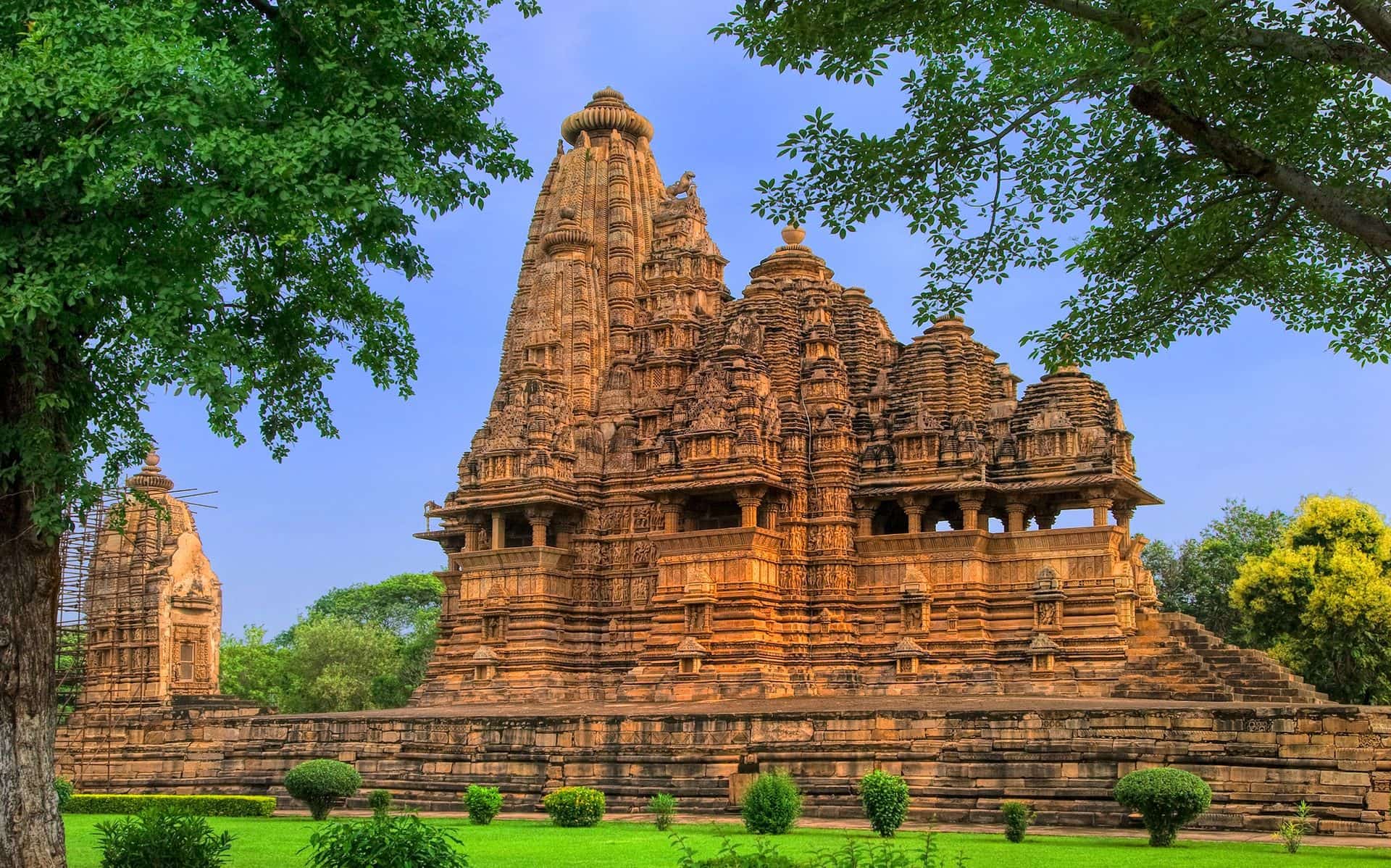
Vishwanatha Hindu temple in Khajuraho, India. Vishwanatha Hindu temple in Khajuraho, India
Experiences to include in Central India
Central India combines ancient temples, formidable forts and some of the country’s best wildlife reserves. Its mix of history, nature and regional culture makes it a rewarding part of a wider India itinerary.
Track tigers in Kanha and Bandhavgarh National Parks
Tiger-rich forests are a major reason to visit central India, and Kanha and Bandhavgarh offer some of the country’s most reliable big-cat viewing. Allow two or three nights at one park for multiple dawn and dusk jeep safaris and quiet time in the sal and bamboo forest.
Combine temples and river life around Jabalpur and the Narmada
Base yourself in Jabalpur to explore the marble cliffs and boat rides at Bhedaghat, then visit Narmada riverside temples and ghats such as Gwarighat. This mix of low-key pilgrimage sites and everyday river life adds a softer cultural counterpoint to wildlife days.
Stay in heritage forts and palaces in Orchha and Gwalior
Orchha and Gwalior Fort are among the top attractions in India for travelers interested in layered history and monumental architecture. Spend one or two nights exploring Orchha’s riverside cenotaphs and fort complex, along with Gwalior’s palaces and ramparts. A slower stay allows time for twilight walks, photography and unhurried visits to both historic centers.
Explore smaller towns like Mandu and Maheshwar
Mandu’s ruined hilltop citadel and Maheshwar’s stepped ghats on the Narmada show a quieter, more reflective side of India. Plan two or three days between them for village walks, relaxed fort visits, and evenings watching local life unfold along the river steps.
Link wildlife hubs with scenic road journeys
Road journeys between hubs such as Pench, Satpura, and Tadoba reveal farmland, forested hills, and everyday village scenes. With a private driver and one or two planned stops en route, these transfers become part of the experience rather than simple point-to-point travel.
Unwind at peaceful retreats in Pachmarhi or Satpura
The forested plateau around Pachmarhi and lodges near Satpura National Park suit travelers who need downtime between busier regions. Two or three nights here allow for gentle walks, boat outings, and time simply to rest with views of hills, forest, and open sky.
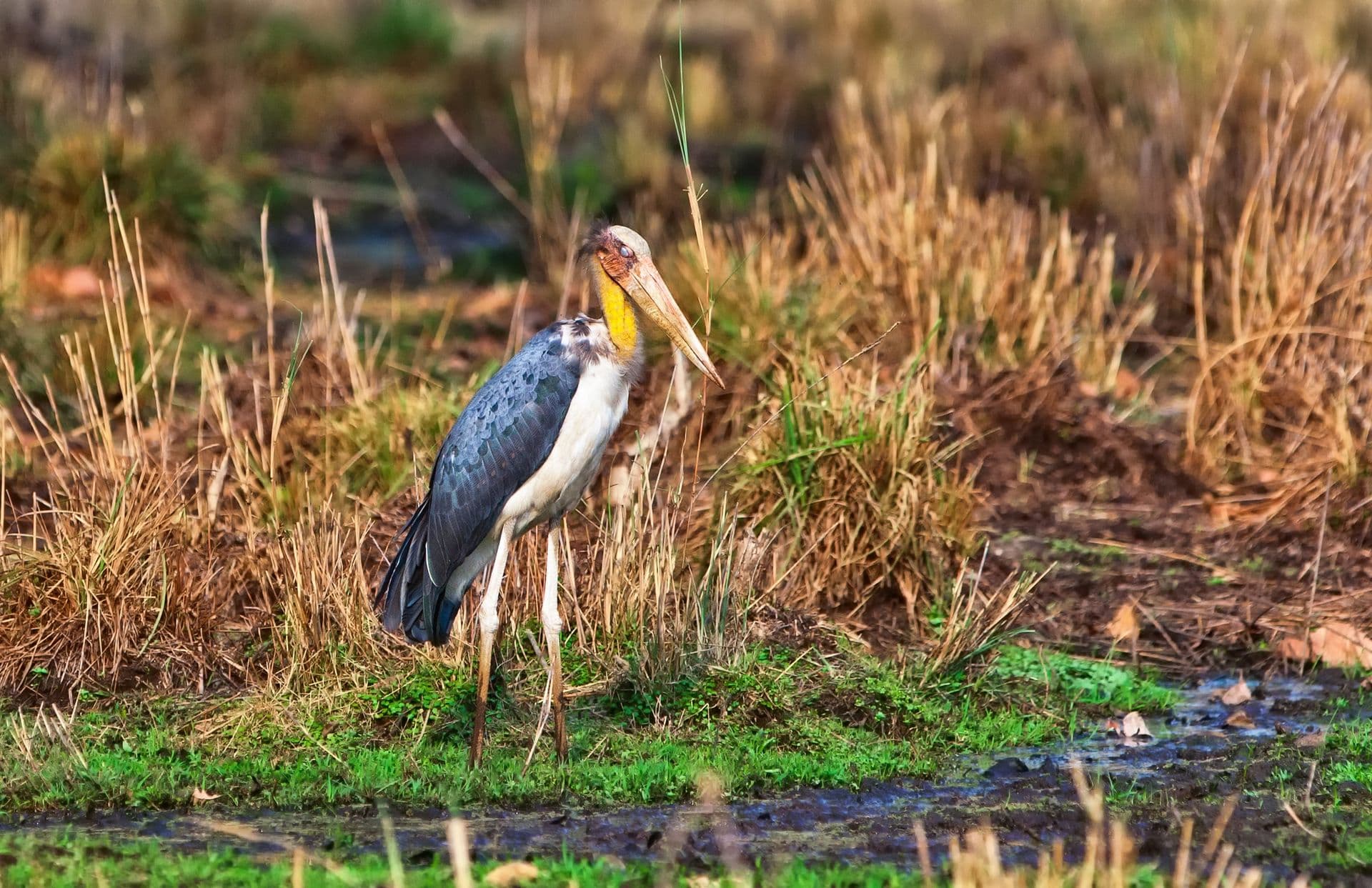
Lesser adjutant (Leptoptilos javanicus), Asian relative of the marabou stork, Bandhavgarh National Park, India
Planning Central India with local expert tips
Central India combines historic cities, important archaeological sites, forest reserves and wildlife areas across a region where road journeys can be substantial. Local experts can build the trip around a few strong bases, using rail or flights for longer connections and private transportation for places that sit away from the main routes.
Where to stay in Central India
The most useful bases depend on whether your priorities are history, wildlife or a combination of both. Khajuraho works well for its temple complexes, while cities such as Bhopal provide access to important cultural and archaeological sites in Madhya Pradesh. For wildlife, staying at a lodge near the entrance used for your chosen reserve is more practical than selecting accommodation purely by distance on a map.
Parks such as Kanha, Bandhavgarh and Pench are separated by lengthy road journeys, so including several can consume a large part of the itinerary. Your local expert can choose the reserve that best complements the rest of your route and place your accommodation around confirmed safari arrangements, rather than adding repeated lodge changes that leave little time outside the vehicle.
How transportation can be arranged
Central India requires a mixture of transportation because many wildlife reserves and historic sites are some distance from major airports and railway stations. Trains can cover selected journeys between cities, while domestic flights may be useful for reaching regional gateways from Delhi, Mumbai or elsewhere in India. Private vehicles then provide the flexibility needed for the final road sections and transfers between reserves.
Safari vehicles and entry arrangements need to be coordinated separately for national parks, making advance planning particularly important. If your journey combines Khajuraho with a wildlife stay, for example, your expert can arrange the road transfer around your confirmed safari schedule and then choose the most practical airport or railway station for your onward destination.