Rajasthan is one of India’s most distinct regions, defined by its desert landscapes, fortified cities, and former royal capitals that contrast with coastal or Himalayan areas. It deserves a place in a multi-day itinerary if you want to combine historic sights, road journeys between cities, and dependable tourism services without complex logistics.
The region suits travelers focused on forts, palaces, and traditional markets rather than beaches or wilderness. Rajasthan usually forms the cultural core of a wider North India route, often linked with Delhi and Agra, and can be planned as a compact circuit between hubs such as Jaipur, Jodhpur, and Udaipur.
Why visit Rajasthan?
Rajasthan offers India's most vivid encounter with desert kingdoms, where honey-colored forts rise from the Thar sands and whole cities glow in pink, blue, or golden tones at sunset.
Sitting on a rampart at Mehrangarh as the lanes of Jodhpur fall quiet, or listening to folk musicians under star-bright skies near Jaisalmer, you step into a royal desert culture that feels distinct from coastal or mountain regions. Inside mirrored palace halls and frescoed havelis, you follow the lives of Rajput courts through painted battles, audience chambers, and intimate courtyards scented with incense.
You leave with specific sensory memories: camel carts creaking past village wells, spices stacked in old-town bazaars, and the echo of evening prayers carrying across sandstone lakes and hilltop temples.
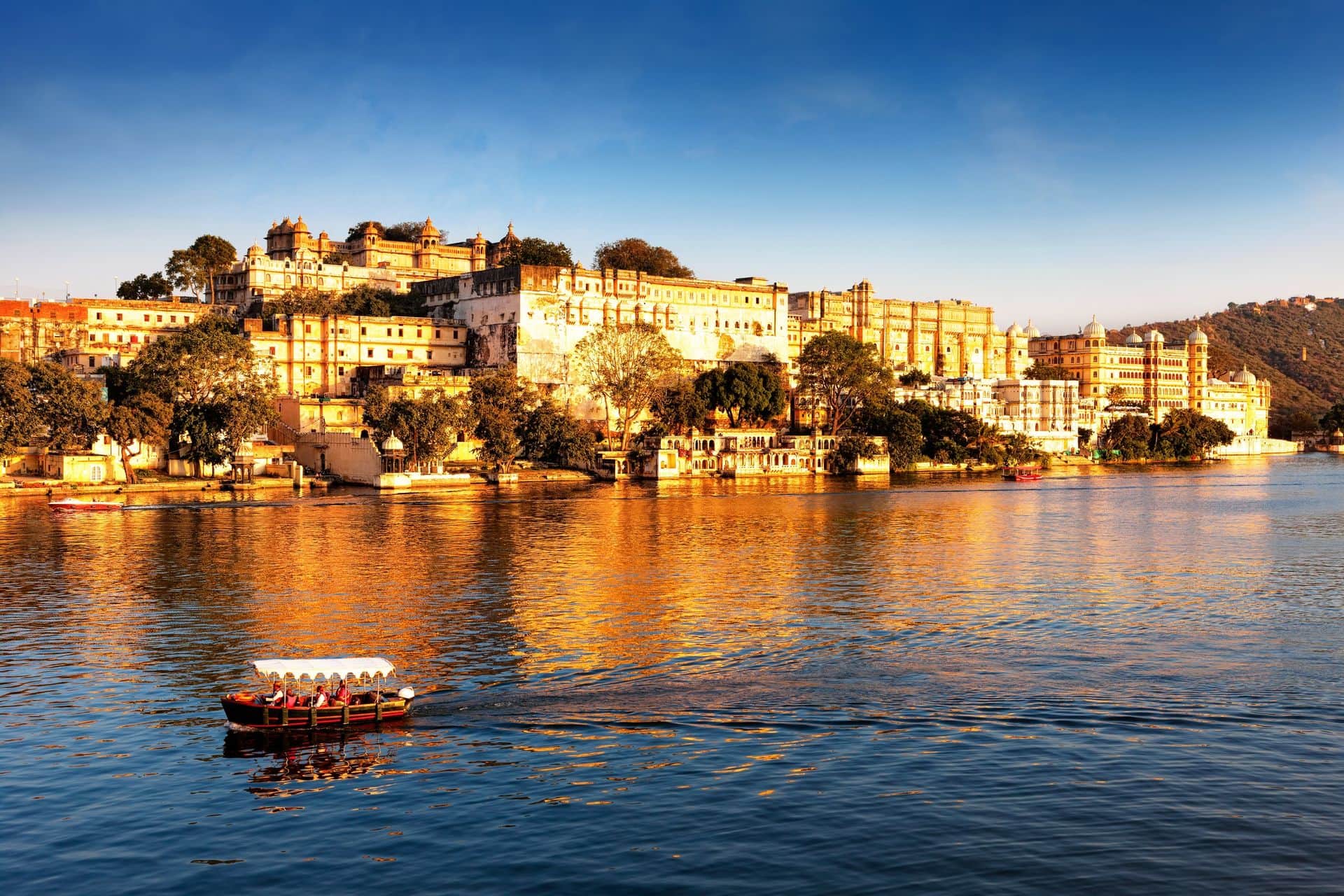
Lake Pichola and City Palace, Udaipur, Rajasthan, India
Who is Rajasthan best for?
You'll probably enjoy Rajasthan if you like layered history, atmospheric cities, and full, sensory travel days rather than quiet resort time. Curious first-time visitors to India who want a strong focus on culture and architecture often find it rewarding, especially if they value context for palaces, forts, and old city quarters.
It also works well for couples interested in characterful heritage stays and memorable dining settings, and for photographers or keen shoppers who enjoy browsing textiles, jewelry, and handicrafts. People comfortable with some bustle, road journeys, and varied daily pacing generally get the most from a Rajasthan itinerary.
You may prefer another destination if your priority is a simple beach holiday, minimal travel days, or lots of unstructured downtime. Those who are uneasy with busy streets, bargaining, or dense urban environments might feel more relaxed in India's coastal regions or hill areas.
Very young families or anyone wanting a purely nature-focused escape may be better matched with destinations that center on wildlife, mountains, or beaches instead of historic cities.
How does Rajasthan fit into an itinerary?
Rajasthan usually forms the central section of a wider North India route, often following initial time in Delhi and Agra and preceding a return flight from either Delhi or Mumbai. Many tailor-made trips move through a triangle or loop linking Jaipur, Jodhpur, and Udaipur, with optional detours to smaller towns or the desert if you have extra days.
It works best as a road-focused part of your itinerary, with private transfers between cities rather than a single-base stay, so you move through a sequence of contrasting stops. Travelers typically dedicate a substantial share of their holiday here, balancing two- or three-night stays in each hub to avoid constant packing while still keeping a sense of momentum.
Adding Rajasthan often shifts your route toward a fuller, more active rhythm, which a local expert can moderate by inserting calmer nights in quieter heritage towns between the larger centers.
Trips that include Rajasthan
The Rajasthan: The Land of Kings India trip explores Jaipur's royal heritage, with visits to Amber Fort, City Palace, Hawa Mahal, and Jantar Mantar. The itinerary also includes Delhi, Agra, and Udaipur, combining Rajasthan's architectural treasures with some of India's most celebrated landmarks.
The North and South India tour takes travelers to Udaipur, where highlights include Lake Pichola, City Palace, Jagdish Temple, and Saheliyon Ki Bari. The wider journey also visits destinations such as Cochin and Ranthambore.
The Gems of India: Luxury India tour showcases Jaipur's historic landmarks, including Amber Fort, City Palace, Jantar Mantar, and Hawa Mahal. Visits to Delhi, Agra, and Mumbai add further cultural variety to the itinerary.
To appreciate the craftsmanship of Jaipur's royal palaces, our local experts can arrange a guided visit to the Sheesh Mahal at Amber Fort, known for its intricate mirrorwork and decorative details.

Pushkar town and lake aerial panoramic view in Rajasthan state of India © Shutterstock
How many days do you need?
Most travelers spend around a week weaving through Rajasthan's main cities rather than staying in one place. With limited time, it is better to focus on a clear route than to rush between too many forts and palaces. Road journeys between hubs like Jaipur, Jodhpur, and Udaipur usually take half a day, so building in at least two nights per stop keeps the pace enjoyable.
| Days | Suggested route | Ideal pace |
|---|---|---|
| 4-5 days | Delhi - Jaipur - Delhi | Snapshot of one Rajasthani city with a couple of day trips. |
| 7-8 days | Delhi - Jaipur - Jodhpur - Udaipur | Balanced first-time circuit with time for markets and evening views. |
| 10-12 days | Delhi - Jaipur - Jodhpur - desert stop (Osian or Jaisalmer) - Udaipur | Deeper mix of cities, countryside, and Thar Desert experiences. |
Additional days let you add smaller towns, heritage stays, and slower mornings, so the region feels layered rather than like a checklist of monuments.
Best region combinations
Rajasthan combines well with Delhi and Agra in a classic Golden Triangle plus desert circuit, usually Delhi - Agra - Jaipur - Jodhpur - Udaipur, suiting first-timers wanting headline monuments and varied cityscapes.
Linking Rajasthan with Varanasi works for culture-focused travelers: Delhi - Jaipur - Agra - Varanasi offers a strong contrast between royal cities and the Ganges.
For those keen on nature, pairing Jaipur and Ranthambore National Park creates a compact route from Delhi with time for both forts and tiger safaris.
Travelers seeking mountains can follow a longer arc from Delhi through Jaipur and Udaipur, then continue to Himachal Pradesh or Uttarakhand for cooler air and hiking.
Rajasthan also pairs well with Gujarat on overland journeys, using Udaipur as a bridge toward the Little Rann of Kutch and coastal towns for craft traditions and less-visited landscapes.
When is the best time to visit Rajasthan?
Late October to March is generally the best time to visit India for travelers exploring Rajasthan. Milder daytime temperatures make city walks, fort visits and rooftop evenings more comfortable, although major sights in Jaipur, Jodhpur and Udaipur are busier and popular heritage hotels often require early booking.
April and early May bring rising heat but can suit travelers who prefer quieter monuments and are comfortable sightseeing in the early morning and late afternoon. The monsoon, usually from June to September, brings humidity and occasional heavy rain, which can affect long road journeys and desert plans but refreshes lakes and rural landscapes.
Seasonal planning may favor shorter drives, shaded or indoor visits during hotter months, and carefully timed desert or stepwell excursions around temperature and light.

Garh Palace is a medieval palace situated in Bundi town in Rajasthan © Shutterstock
Experiences to include in Rajasthan
Rajasthan’s highlights are best experienced through a mix of fort cities, desert landscapes, and quieter heritage towns, so each stop adds a distinct flavor to a wider North India journey.
Wander the old quarters of Jaipur
Time in Jaipur’s Pink City, especially around Hawa Mahal and the bazaars of Johari and Bapu, rewards slow exploration of courtyards, street food, and handicraft shops. Allow at least two days to mix landmark visits with unhurried walks and rooftop sunsets.
Explore the blue lanes and fort views of Jodhpur
Jodhpur combines the drama of Mehrangarh Fort with photogenic blue alleys around the old city and Stepwell Square. It adds a more rugged, desert-edge feel to an itinerary. Two nights give space for the fort, markets, and evening viewpoints.
Unwind by the lakes and lanes of Udaipur
Udaipur is home to some of the top attractions in India, including Lake Pichola, City Palace and the lanes around Gangaur Ghat. Spend two or three nights taking boat rides, enjoying sunset terraces and exploring the compact old city at a relaxed pace. The gentler atmosphere especially suits couples and culture-focused travelers looking to slow down during a Rajasthan itinerary.
Experience the desert around Jaisalmer
Including Jaisalmer brings the Thar Desert into focus, contrasting city stays with sand dunes near Sam or Khuri and the living Jaisalmer Fort. One or two nights in or near the dunes allow for sunset outings, folk performances, and starry skies.
Stay in a heritage village between cities
Breaking journeys with a night or two in smaller stops like Mandawa, Nawalgarh, or Bundi adds frescoed havelis, hilltop forts, and quieter lanes to balance big-city energy. These pauses suit travelers wanting characterful properties and rural or small-town walks.
Add wildlife and forts in Ranthambore
Ranthambore National Park fits naturally between Jaipur and further Rajasthan, pairing fort ruins with tiger safaris. Two or three jeep drives over two nights give a realistic chance of sightings while keeping the focus on a wider culture-oriented itinerary.

Dadi Rani Sati Mandir, Jhunjhunu, Rajasthan, India © Shutterstock
Planning Rajasthan with local expert tips
Rajasthan brings together fortified cities, desert landscapes, palace hotels and rural communities across a state where the distances between major stops can be considerable. Local experts can shape the journey around a sensible progression, giving individual cities enough time rather than trying to include every famous name on a single circuit.
Where to stay in Rajasthan
Jaipur, Jodhpur and Udaipur each make strong bases, but they offer very different settings. Jaipur works naturally near the beginning or end of a northern India route, Jodhpur opens the way toward western Rajasthan, and Udaipur offers a more relaxed lakeside setting. Jaisalmer requires a greater commitment of travel time, so including it makes most sense when the desert is an important part of your plans.
Heritage hotels outside the cities can add a rural contrast, but too many one night stays can make the journey feel fragmented. Your local expert can decide where an extra night will be most valuable. If architecture and food matter more to you than the desert, for example, they can spend longer in Jaipur and Jodhpur rather than extending the route west solely to include Jaisalmer.
How transportation can be arranged
Private road transportation works particularly well in Rajasthan because it allows smaller towns, forts and countryside stops to become part of the journey between major cities.
Trains are useful on selected routes, while domestic flights can reduce travel time when the itinerary covers distant parts of the state or connects with elsewhere in India. A local expert can combine these options instead of relying on one form of transportation throughout.
The route can also be designed to avoid returning to Jaipur unnecessarily, with arrival in one city and departure from another where schedules permit. If you are continuing from Agra into Rajasthan, your expert can incorporate Fatehpur Sikri on the road toward Jaipur, then arrange the following stages through the state around your dates, preferred pace and eventual onward connection.