Wellington is New Zealand's compact capital region, combining a working harbour, national institutions and quick access to hills and exposed coastline. Compared with many other regions, distances are short and public transport is reliable, so you can add it to a multi-day itinerary without long driving days.
This region suits travelers who prioritise museums, food, short walks and everyday city life over remote wilderness. It commonly acts as a hinge point between the North and South Islands, with 1-3 nights here to break the overland journey and connect with Cook Strait ferries or domestic flights.
Why visit Wellington?
Wellington offers an intimate, lived-in snapshot of New Zealand that you rarely find elsewhere in the country. Hills tumble straight into a working harbour, so you can watch commuter ferries, container ships and local sailing boats sharing the same stretch of water while you sit in a café or walk the waterfront promenade. The city’s scale means you move quickly from downtown laneways to wind-bent hilltops, feeling how exposed this corner of the country is to the elements.
What lingers is how closely creativity and daily life sit together. You might join locals for an early-morning harbour swim, then warm up over strong coffee in a tucked-away café, or sit out a windy spell browsing independent bookshops and small galleries. Leaving Wellington, you carry a sense of New Zealand as a creative, coastal nation rather than just a backdrop of mountains and beaches.

Wellington, New Zealand
Who is Wellington best for?
You will probably enjoy Wellington if you like compact cities where you can walk between cafes, galleries and viewpoints rather than spend hours in transit. It works well for first-time visitors who want an easy, low-stress introduction to New Zealand's culture and everyday life.
Families with school-age children often appreciate the mix of interactive museums and relaxed waterfront time without needing a packed schedule. Couples who enjoy food, coffee, and low-key cultural discoveries tend to find plenty to fill a few days. This stop also suits travelers who like adding a creative, urban pause between more remote hikes or road-trip sections.
You may prefer another destination if your priority is long, sandy beach days, extensive backcountry trekking or resort-style stays with lots of on-site facilities. Travelers seeking high-adrenaline adventure activities every day might feel better served in regions known for rafting, canyoning or big alpine landscapes.
If you want a single, all-inclusive base with minimal moving around, or you are focused on hot weather and swimming, other parts of New Zealand are likely to fit your plans more closely.
How does Wellington fit into an itinerary?
Wellington usually sits at the hinge point between the North and South Islands, so it often appears in the middle of your route rather than at the very start or end. Many travelers arrive in Auckland, travel south by road or rail, then pause in Wellington before continuing by ferry to the South Island. Others do the reverse, using it as a final urban stop before flying home. A stay of two to three nights is common, giving enough time to change gears without adding too many hotel moves.
Because distances around the city are short, Wellington also works as a relaxed base for a couple of day trips into nearby coastal or wine regions while keeping unpacking to a minimum. Placing it in the center of your itinerary creates a useful buffer between more driving-heavy sections, letting you slow down, deal with practicalities such as laundry or car hire changes, and refine your plans before heading back into longer stretches on the road.

Museum of New Zealand Te Papa Tongarewa in Wellington, New Zealand © Shutterstock
How many days do you need?
Most travelers allow 2-3 days in Wellington as part of a wider New Zealand journey. One full day lets you walk the waterfront, ride the cable car, and visit a key museum or gallery without rushing. Two days add time for neighbourhood exploring in places like Cuba Street or Newtown and a hilltop viewpoint for harbour panoramas.
With three days, you can include a relaxed coastal walk, a brewery or food tour and a flexible slot for weather-dependent activities. Longer stays of 4-5 days suit travelers using Wellington as a base for day trips into the Kapiti Coast or Wairarapa without frequent hotel changes.
| Days | Recommended focus |
|---|---|
| 1 day | Core city highlights and waterfront walking |
| 2 days | Cultural sights plus neighbourhood cafes and viewpoints |
| 3 days | Coastal walks, food experiences and flexible weather day |
| 4-5 days | Wellington base with day trips to nearby regions |
Best region combinations
- Auckland - Wellington - South Island (via Cook Strait) works well for first-time visitors who want an urban-to-urban arc with contrasting landscapes in between. Start in Auckland, drive or fly south through geothermal regions, then pause in Wellington before crossing to the South Island for mountains and lakes.
- Wellington and Martinborough create an easy city-and-wine pairing. Travel over the Remutaka Range (about 1.5 hours by car) for relaxed vineyard cycling and cellar doors, returning to Wellington's harbourfront restaurants.
- Combining Wellington with the Kapiti Coast suits a slower-paced coastal trip. In under an hour by road or train, you can shift from compact capital to open beaches and small seaside towns, ideal for families seeking variety without long drives.
- Wellington and Nelson/Blenheim form a natural link across the Cook Strait. A ferry journey adds a scenic transition between harbour, sounds and wine country, creating a coast-and-culinary-focused route.
- For travelers focused on culture and shorter drives, pairing Wellington with Napier and Hawke's Bay offers art deco architecture, ocean views and vineyard visits within a day of overland travel.
When is the best time to visit Wellington?
October to March is generally the best time to visit New Zealand for travelers exploring Wellington, with longer daylight hours, milder temperatures and a lively calendar of events. Wind is possible in any season, so flexible plans help when combining harbour walks, coastal viewpoints and outdoor sightseeing.
Autumn often brings more settled weather and fewer visitors, while winter is cooler and better suited to museums, galleries, food and slower city days. Keeping a free half-day makes it easier to switch between outdoor and indoor activities as conditions change.

Wellington, New Zealand
Experiences to include in Wellington
Wellington, New Zealand’s compact capital, combines a lively waterfront with steep hills, creative neighbourhoods and a strong food and cultural scene. Its walkable center makes it easy to move between museums, harbour views, cafés and nearby nature.
Walk the Wellington waterfront and Oriental Bay
Following the waterfront promenade from Queens Wharf to Oriental Bay gives you an easy sense of the city’s harbour setting, with cafés, sculpture and sheltered spots to sit. Allow half a day for a relaxed walk, photo stops and a swim in summer.
Ride the Cable Car and explore the Botanic Garden
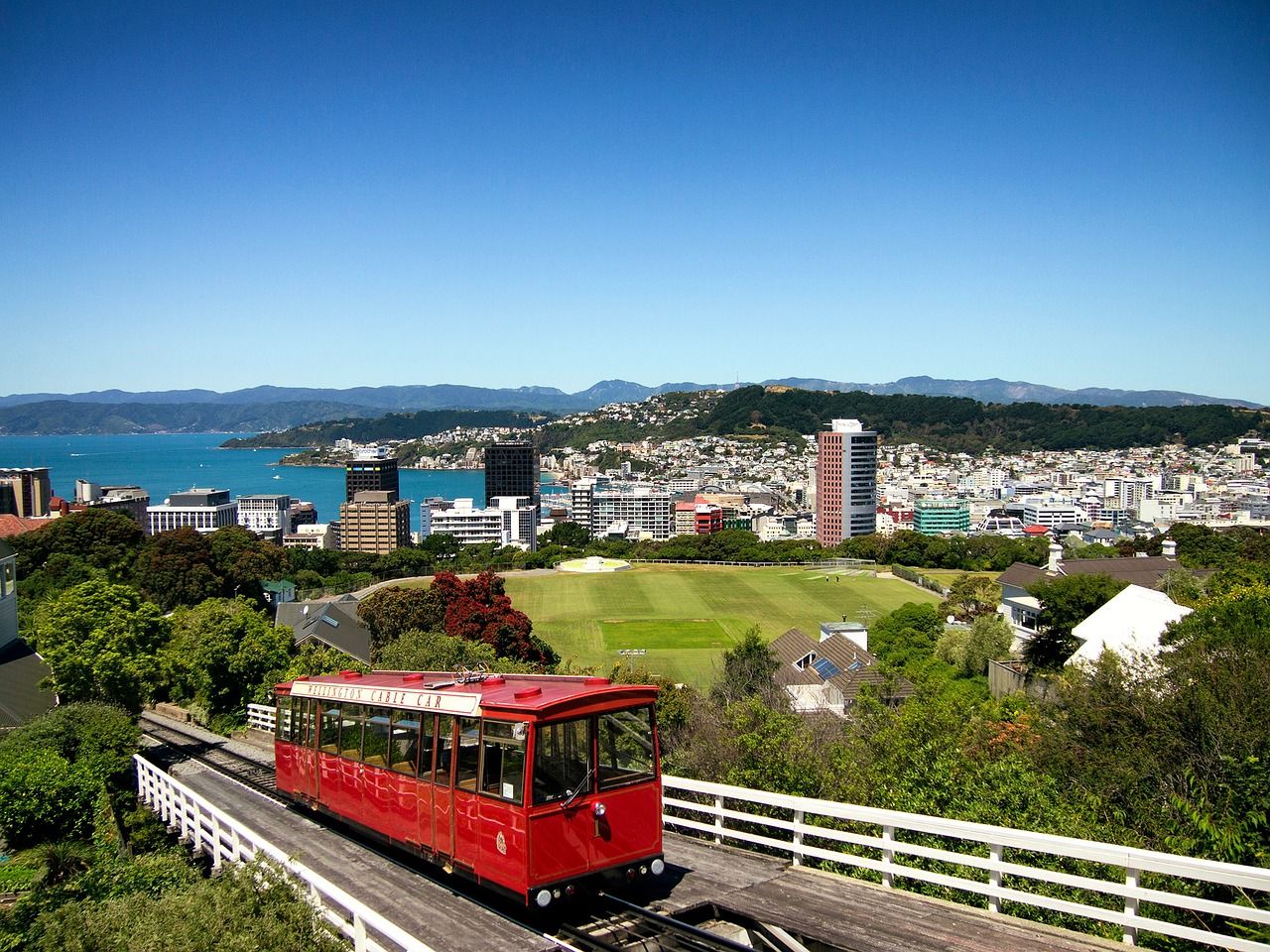
Among the top attractions in New Zealand, the Wellington Cable Car offers an easy ride from Lambton Quay to Kelburn, with harbour views and access to the Wellington Botanic Garden. Allow a couple of hours to explore the gardens before walking back downtown through the historic Bolton Street Cemetery.
Discover national stories at Te Papa Tongarewa
Time at Te Papa Tongarewa - Museum of New Zealand helps anchor the rest of your trip, with exhibits on Māori culture, natural history and recent events. Plan about two hours, more if you enjoy interactive displays and detailed interpretation.
Explore character suburbs like Cuba Street and Aro Valley
Walking through Cuba Street and Aro Valley reveals Wellington’s creative, everyday side through independent cafés, record shops and small galleries rather than big-ticket sights. A half day suits travelers who like coffee, casual dining and low-key urban photography.
Head to coastal viewpoints around Miramar Peninsula
Heading out to the Miramar Peninsula for stops at Breaker Bay, Tarakena Bay and Point Halswell adds raw coastline and Cook Strait views to a city stay. Allow half a day, more if you link short coastal walks between viewpoints.
Day trip for wine in Martinborough
A day trip over the Remutaka Hill to Martinborough introduces Wairarapa’s small-scale wine scene without changing hotels. Flat roads, bike-friendly lanes and cellar doors close to the village square suit couples or groups keen on relaxed tastings and a long lunch.
Wellington, New Zealand
Planning Wellington with local expert tips
Wellington combines a compact waterfront center with museums, dining, hillside neighborhoods and an important role as the gateway between New Zealand’s two main islands. Local experts can make good use of its walkable center while arranging your arrival and departure around flights, trains or the Cook Strait ferry.
Where to stay in Wellington
Central Wellington is usually the most convenient choice, particularly around the waterfront, Te Aro, and the streets close to Te Papa. These areas put restaurants, museums, and many city sights within walking distance, reducing the need for transportation during your stay. Travelers seeking quieter surroundings can consider neighborhoods outside the busiest central streets, although the city’s steep terrain makes location worth considering carefully.
There is rarely much benefit in changing hotels during a short Wellington visit. Instead, your local expert can select one well-placed property and adjust the length of your stay to the wider itinerary. If your main priorities lie on the South Island, Wellington can remain a concise city stop before you continue across Cook Strait.
How transportation can be arranged
Wellington Airport lies southeast of the center and is straightforward to reach by road, while the railway station sits conveniently near the northern end of the central waterfront. Ferry services across Cook Strait connect Wellington with Picton, making the city a natural transition point for travelers continuing into Marlborough and the wider South Island.
Within Wellington, walking works well for much of the center, with public transportation or private transfers useful for hillier neighborhoods and places farther out. Ferry crossings and onward arrangements should allow for changing conditions on Cook Strait rather than relying on a tight connection.
Your expert can, for example, match a morning in Wellington with your Picton sailing and arrange onward transportation into the Marlborough wine region around the confirmed ferry schedule.


