Palawan stands out from other Philippine beach destinations for its combination of dramatic limestone cliffs, clear lagoons, and relatively low-rise, small-scale development. It is less resort-heavy than places like Boracay or Mactan, which suits travelers who prioritise scenery, snorkeling, and island-hopping over nightlife or shopping.
This region fits best into itineraries where you can stay several nights in one or two bases such as El Nido, Coron, or Puerto Princesa, rather than moving daily. Many travelers schedule Palawan in the middle or later part of a wider Philippines trip, after Manila or Cebu, using it as the slower coastal segment focused on boat trips, swimming, and straightforward day excursions.
Why visit Palawan?
Palawan rewards the effort it takes to reach it with experiences that feel closer to a tropical wilderness than a typical resort coast. You can drift by kayak through narrow, sheer-sided lagoons where the water shifts from emerald to electric blue, and swim above coral gardens framed by dramatic karst walls rather than hotel frontages.
Offshore, whole days can be spent weaving between uninhabited islets, stopping to snorkel over reefs where sea turtles and dense schools of fish are commonplace, not rare highlights. Inland, you can swap the sea for mangrove rivers, jungled trails, and underground cave systems, giving you direct contact with raw, varied landscapes in a single province.
Choosing Palawan over other Philippine beach areas means access to this close-knit mix of towering limestone, secluded coves, and relatively intact marine life in one region.

Kayangan Lake in Coron Island, Philippines © Shutterstock
Who is Palawan best for?
You will probably enjoy Palawan if you like unhurried days built around swimming, snorkelling, and simple island-hopping rather than tightly scheduled activities. It works particularly well for couples and honeymooners who value quiet coves, sunset boat trips, and intimate, low-key resorts over big-name hotels and nightlife.
Families with school-age children who are confident in the water often find it rewarding, as do divers and snorkellers who want easy access to reefs without needing advanced skills. Active travelers who do not mind occasional rough transfers or basic comforts in exchange for more time outdoors also tend to appreciate it.
You may prefer another destination if you want shopping malls, a wide choice of restaurants and bars, or high-energy nightlife on your doorstep every evening. First-time visitors to the Philippines who feel more comfortable starting somewhere with very polished infrastructure might be happier beginning in Cebu or Mactan, adding Palawan later once they are used to local travel logistics.
Travelers seeking large, all-inclusive beach resorts with extensive kids clubs and organised entertainment may find Boracay a better match.
How does Palawan fit into an itinerary?
Palawan often forms the slower-paced coastal chapter of your Philippines plans, typically following more urban or culturally focused stops such as Manila, Cebu, or the northern highlands. Many travelers fly into Puerto Princesa or El Nido from Manila or Cebu, then move between hubs like El Nido and Coron by boat or short domestic flight. It works well as a mid- to late-trip segment when you are ready to trade busy streets for a simpler, sea-focused rhythm.
Within a broader route, Palawan is usually treated as an island-hopping or wind-down section, with at least four to seven nights split between one or two bases rather than frequent hotel changes. Building in this longer stay naturally slows your overall journey, with fewer transfers and more unstructured days. Travelers commonly depart Palawan by flying back to Manila for onward international flights, or connect to Cebu if they are continuing to other islands.
Trips that include Palawan
The Palawan beach trip: tropical islands explores the UNESCO-listed Puerto Princesa Underground River in Sabang before continuing to Modessa Island, El Nido, and Coron for beaches, lagoons, and island scenery.
The Palawan island trip: beaches and lagoons combines a visit to Sabang's underground river with time on peaceful Flower Island and the dramatic limestone landscapes of El Nido.
The tailor-made Boracay and Palawan island trip pairs Boracay's lively beaches with the quieter surroundings of El Nido and Miniloc Island, balancing relaxation with opportunities for exploration.
Beyond El Nido's popular lagoons, our local experts can recommend secluded coves and coral-rich snorkeling spots for a more personal island experience.
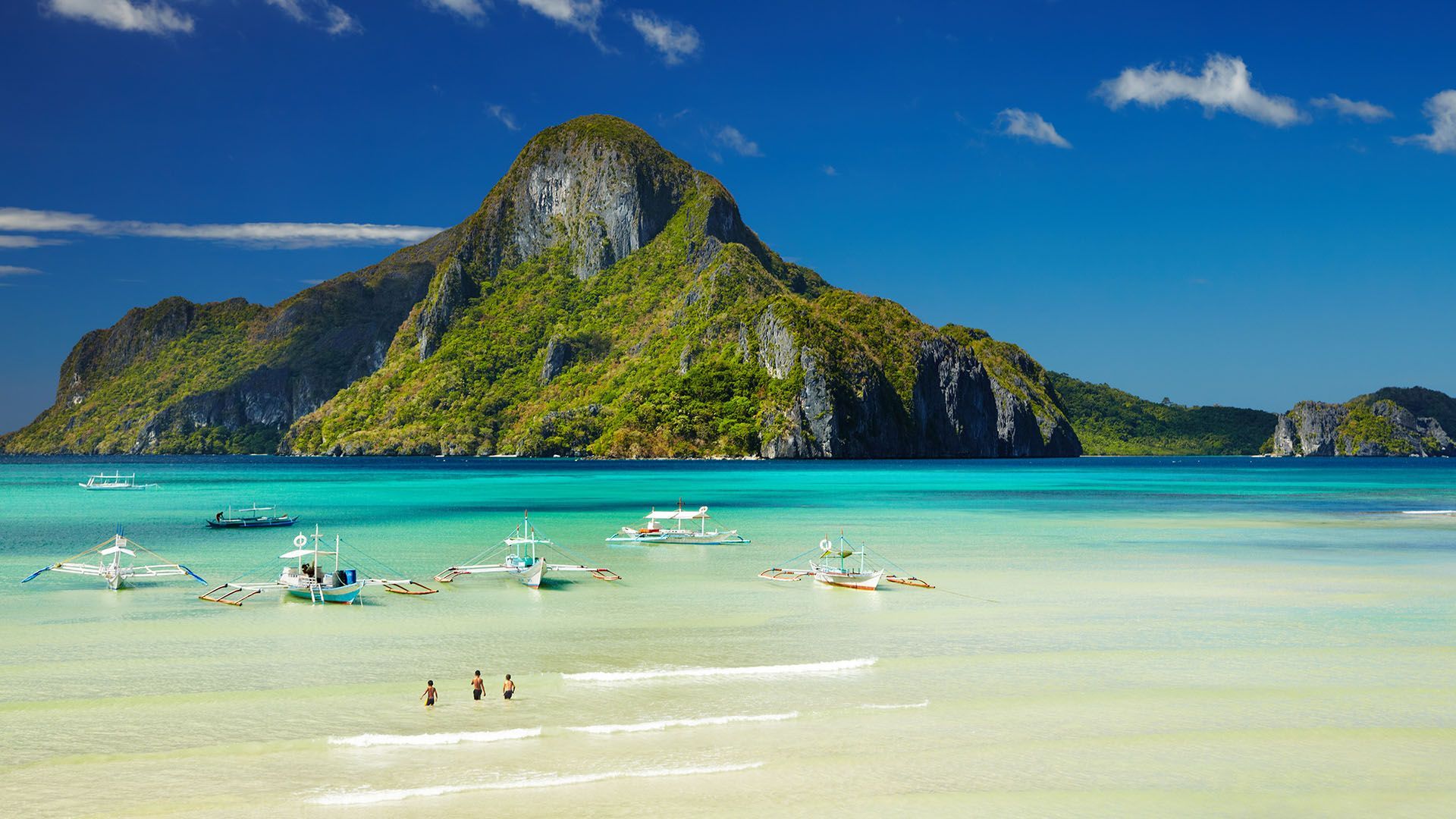
El Nido, Philippines
How many days do you need?
Most travelers give Palawan at least four to seven days, usually split between one or two bases such as El Nido, Coron, or Puerto Princesa. Very short stays tend to feel rushed because transfers and boat trips eat into beach time, so it helps to be realistic about what you can cover.
| Time | Recommended focus |
|---|---|
| Half day | Brief stop in Puerto Princesa or Coron Town for a city tour or viewpoint visit between flights. |
| One day | Single island-hopping tour from El Nido, Coron, or Port Barton without onward travel the same day. |
| 3 days / 2 nights | One base only, with a single island-hopping day and a relaxed beach or town day. |
| 5 days / 4 nights | Two island-hopping days plus one inland or free day, all from a single hub. |
| 7 days / 6 nights | Two bases (for example El Nido and Coron) with time for multiple boat tours and rest days. |
Each extra couple of days lets you add either another base or more downtime between boat trips, which is useful in a heat- and sea-focused destination.
Best region combinations
A classic route is Manila - El Nido - Coron - Manila, using flights and ferries to move between hubs while keeping Palawan as a series of multi-night coastal stays.
Another option is Manila - Puerto Princesa - El Nido - Manila, combining underground-river and inland activities with northern island-hopping; allow at least six nights.
Manila - Cebu - El Nido works for travelers wanting both Palawan scenery and Cebu's more developed resorts, with flights of around 1.5-2 hours between each.
For a quieter trip, combine Puerto Princesa with Port Barton, treating Port Barton as a low-key overnight stop before heading on to El Nido.
If you have longer, a loop such as Manila - Coron - El Nido - Cebu lets you finish with additional beaches or onward island connections.
When is the best time to visit Palawan?
December to May is generally the best time to visit the Philippines for travelers exploring Palawan, with sunnier weather, calmer seas and better underwater visibility for snorkeling and diving. Island-hopping routes are also more reliable, although popular bases and boat tours are busier and should be booked in advance.
From June to November, higher humidity and more frequent rain can disrupt ferries and boat trips, particularly from August to October, when rough seas and occasional typhoons are more likely.
Late November and early June can offer fewer crowds with generally workable conditions, while travelers visiting in the wettest months may prefer one main base and a few buffer days rather than a tightly scheduled multi-stop itinerary.

Puerto Princesa - inside the cave
Experiences to include in Palawan
These experiences highlight Palawan's standout lagoons, bays, and coastal routes, helping you focus on a few memorable days instead of trying to visit every island or beach.
Island-hop around Bacuit Bay from El Nido
Spend a full day exploring Bacuit Bay's limestone cliffs, Small and Big Lagoon, and hidden coves from El Nido. Shared or private boats suit couples, small groups, and families comfortable on the water. Expect multiple swim stops, simple beach lunches, and basic facilities on the islands.
Snorkel and beach-hop around Coron Island
Among the top attractions in the Philippines, Coron stands out for its clear lakes, dramatic limestone karsts and sheltered lagoons. Allow a full day to explore highlights such as Kayangan Lake, Twin Lagoon and nearby beaches, keeping plans flexible around changing sea conditions.
Paddle mangroves and quiet shores near Port Barton
Set aside half to a full day in Port Barton for gentle island-hopping and kayaking around islets such as German Island and Exotic Island, plus nearby mangroves. This suits travelers who prefer slower, low-key days. Expect basic infrastructure, informal beach shacks, and occasional choppy seas on longer crossings.
Explore the Puerto Princesa Underground River and Sabang coast
From Puerto Princesa, devote a day to the Underground River at Sabang and nearby forest trails or beach time on Sabang Beach. It is best for curious travelers and families happy with shared tours and short queues. Boat landings can be bumpy and schedules weather-dependent, so plan buffer time.
Seek quieter coves on Nacpan Beach and Duli Beach
North of El Nido Town, allow half a day each for Nacpan Beach and the more surfy Duli Beach. These wide, less-developed stretches suit travelers seeking space over nightlife. Access can involve bumpy roads, limited shade, and simple food stalls rather than polished beach clubs.
Combine Honda Bay islands with inland stops
From Puerto Princesa, spend a day combining Honda Bay's islets such as Cowrie Island or Luli Island with inland visits to the Iwahig mangroves or straightforward city food stops along Rizal Avenue. This works well for short-stay visitors and families. Expect easy snorkelling, rented gear, and lively picnic areas.

El Nido, Palawan, Philippines @ Shutterstock
Planning Palawan with local expert tips
Palawan stretches across a long chain of islands and coastline in the western Philippines, with limestone cliffs, clear lagoons, beaches, and marine reserves separated by significant distances. Local experts can concentrate your time around a few complementary bases, matching flights and boat journeys so that moving between them does not consume too much of your stay.
Where to stay in Palawan
El Nido is a natural choice for exploring the limestone islands and lagoons of Bacuit Bay, with accommodation ranging from properties near town to quieter resorts reached by boat.
Coron, farther north, offers a different mix of island scenery, diving, and lakes, while Puerto Princesa is the main gateway for central Palawan and trips toward the Puerto Princesa Subterranean River National Park. Trying to include all three on a short visit can create more travel than relaxation.
A local expert can decide whether El Nido and Coron provide enough contrast or whether Puerto Princesa adds something important to your route. For travelers primarily interested in beaches and marine experiences, fewer bases with longer stays can leave more room for weather-dependent boat excursions.
How transportation can be arranged
Flights connect Palawan with major Philippine gateways, while air services within the region can reduce the need for lengthy road journeys. El Nido and Puerto Princesa are also linked overland, although the distance makes transfer planning important. Travel between El Nido and Coron is commonly arranged by sea or, when schedules allow, by air.
Island hopping excursions use local boats and should be organized around sea conditions rather than placed immediately before a critical onward connection. Your expert can build in appropriate margins and arrange transfers between airports, ports and accommodation.
If your trip continues to Manila or Cebu after Coron, for example, they can sequence El Nido and Coron around the most practical confirmed connection for your departure date.