Plan your trip to South Korea carefully by considering the typical climate during the period you wish to visit and the events and festivals that will be taking place.
South Korea's climate
South Korea’s location on the eastern edge of the Eurasian landmass results in a continental climate, with cold winters (rather milder along the south coast and in Jeju-do) and hot, humid summers. Seoul’s rather unpredictable weather is often compared to that of New York City.
From December to early March the weather is generally cold and sunny, with occasional snowfalls. Afternoon temperatures in Seoul are usually around freezing; Busan is a few degrees warmer. The cold is enhanced by the Siberian winds that whip down the peninsula, often in a cycle of three consecutive cold days followed by four milder days.
A spring thaw comes in mid-April and lasts for around two months. In the early spring northwesterly gusts bring swirls of dust from the Gobi Desert and some light rain. As summer approaches, humid southerlies vie for control and the spring drizzle can become an occasional downpour, culminating in three or four weeks of heavy rains during the late July and early August monsoon season.
July and August are the hottest, most humid months, and are particularly enervating in the inland basin around Daegu, where afternoon temperatures climb into the lower 30°s centigrade (around 90°F). Daytime temperatures in Seoul are more often around 82°F (28°C). Nights are warm and muggy.
Between mid-July and the end of September occasional typhoons move north from the East China Sea to bring torrential rain and strong winds to the Korean peninsula, although these are rarely damaging as they are further to the south (Jeju-do is more at risk).
Fall arrives in early October when the air currents shift back to the crisp northerlies. The weather is normally dry and sunny.
The best months for visiting are mid-April to mid-June, and September to October just before and after the summer rains. Fall has the advantage of the wonderful displays of foliage in the Korean forests, while spring is famous for the cherry blossom.
Festivals and events in South Korea
January
- What: Hallasan Snowflake Festival: Jeju island
- When: January
South Korea’s favorite mountain, Hallasan on Jeju Island, is the center of attention in the midwinter Hallasan Snowflake Festival. Make a winter climb of the mountain (along with a few thousand others), take part in the snowball contest, and watch some local folk performances unique to the island. In January, mild Jeju Island is probably the best place to be in South Korea.
February
- What: Lunar New Year: All over South Korea
- When: February
One of South Korea’s two big vacations (the other is Chuseok) is the Lunar New Year, known as Seollal in South Korea (and Chinese New Year most everywhere else). Koreans dress in their hanbok and head for their hometown to eat, socialize, do the “deep bows” to their elders, and turn one year older. Travel is almost impossible during this vacation, so it’s best just to stay put and wait for it to pass. Based on the lunar calendar, Seollal usually falls sometime in February.
March
- What: Bullfighting Festival: Cheongdo
- When: mid-March
South of Daegu is the small city of Cheongdo, which hosts an annual Bullfighting Festival in mid-March. There’s also a bull rodeo, a traditional market, and a beauty contest for female calves.
April
- What: Cherry blossoms festival: Jinhae
- When: early April
The cherry blossoms bloom in early April, presenting impressive displays throughout the country. The most famous display is in the southeastern port city of Jinhae, which hosts a week of festivities right when the blossoms reach their peak.
- What: Dr Wang In festival: Yeongam (Jeollanam Province)
- When: early April
In early April, the life of the benevolent Dr Wang In is celebrated in the southwestern town of Yeongam (Jeollanam Province). Dr Wang left Korea and settled in Japan several hundred years ago, bringing a little renaissance to Japan as he spread Korea’s more advanced culture. At the festival, there is an elaborate memorial rite, some ssireum (Korean-style) wrestling, a few contests for intellects, and an exhibition of ancient Asuka culture.
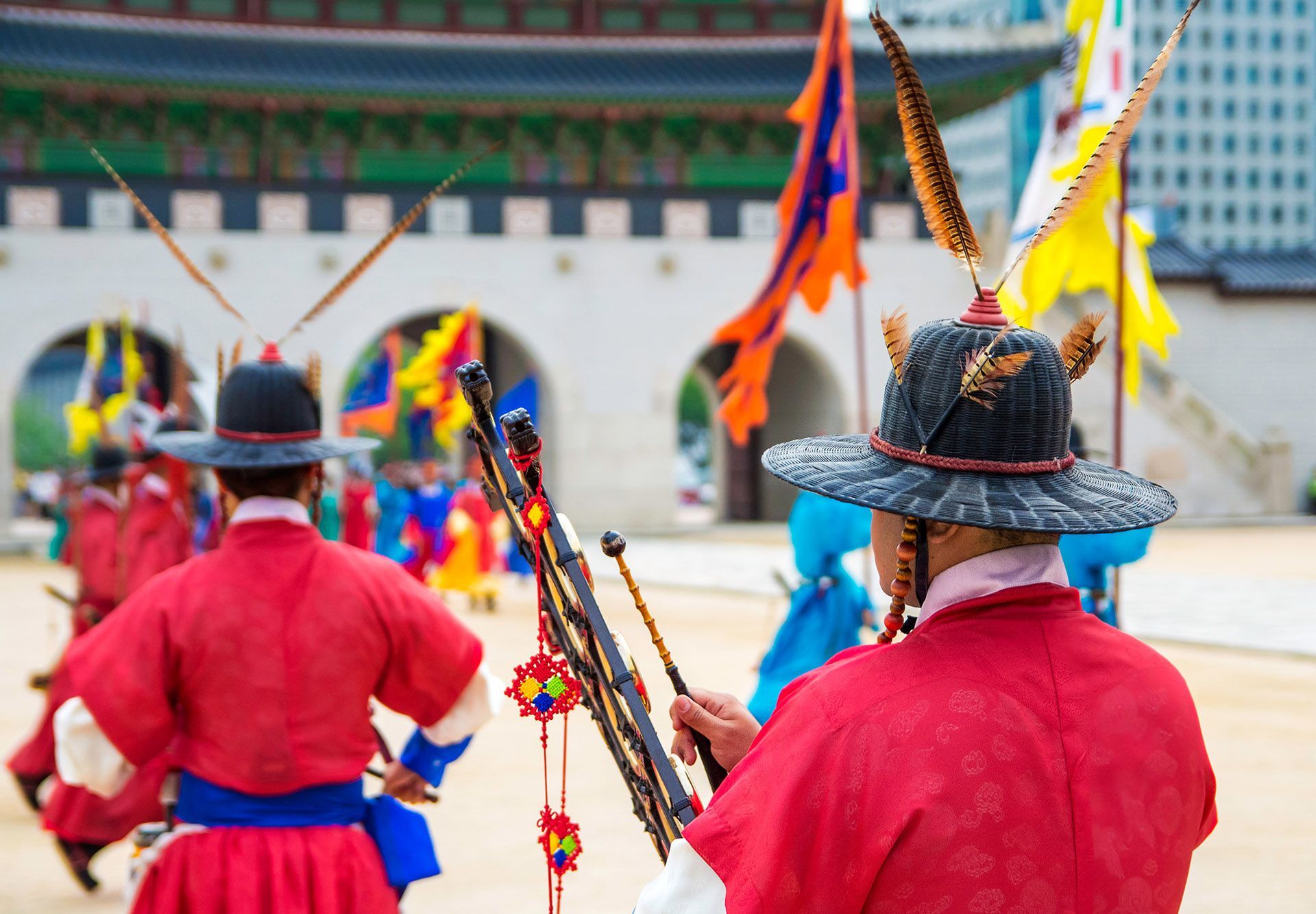
May
- What: Boseong Tea Festival: Jeollanam-do
- When: May
The Boseong Tea Festival takes place in Jeollanam-do, the country’s main tea-growing area, showcasing every conceivable aspect of the Korean tea industry. Nearby, the Damyang Bamboo Festival takes place early in the month.
- What: Buddha's birthday: All over South Korea
- When: May
Buddha’s birthday is a national vacation when the celebrations are centered around the temples. Every temple will be decorated for the event, but the larger ones have hundreds of lanterns hanging along the roadways and in the temple grounds (they are lit in the evening), and the faithful line up for the symbolic bathing of the baby Buddha. Jogye-sa in Seoul (and some of the other large temples) has a candlelight parade along with day-long events. Buddha’s birthday is based on the lunar calendar, and is usually in May.
- What: Moses Miracle: Jin-do
- When: May
On the southwestern island of Jin-do, there is a semi-annual “parting of the sea” that exposes tidal lands between the mainland and an offshore island. Thousands of Koreans trudge between the two points of land. It has become something of an annual festival, with folk performances, a parade, and various contests added to the milieu. The Korean Christian community has dubbed the parting of the seas the Moses Miracle.
- What: Royal ancestral rites festival: Seoul
- When: First Sunday in May
On the first Sunday in May, the royal ancestral rites are performed at the Jongmyo Shrine in Seoul. These Confucian rites, in memory of the royal families of the Joseon dynasty, are an elaborate combination of color, ritual, and traditional music and dance. They begin early, and end by midday, but if you’re in Seoul you shouldn’t miss this event that preserves some of the glory and traditions of old Korea.
- What: Dano Festival: Gangneung
- When: late May/early June
On the 5th day of the 5th lunar month (late May or early June), the Dano Festival is held in the eastern port city of Gangneung. This is a good opportunity to see traditional shamanistic performances, and mask dance dramas unique to the region.
July
- What: Boryeong Mud Festival: Daecheon
- When: mid-July
The Boryeong Mud Festival takes place on Daecheon beach in mid-July and is a lot of fun. The week-long event involves mud-wrestling and muddy tug-of-war contests, but is mostly about covering yourself and your friends in mud. Very popular with expats.
August
- What: Ginseng festival: Geumsan
- When: August
Geumsan, the center of Korea’s ginseng production, is the host of an interesting festival honoring the “elixir of life.” Arguments of stores sell ginseng and other medicinal herbs (along with bugs and snakes).
On the stage, there is ongoing entertainment, and hundreds of food carts ensure that you won’t go hungry. There is also the opportunity to visit a ginseng field and harvest your own.
September
- What: Harvest Moon Festival (Chuseok): All over South Korea
- When: late September/early October
The Harvest Moon Festival (Chuseok) is held on the 15th day of the 8th full moon (usually the end of September or early October). Analogous to Thanksgiving in the United States, this is a time for the family to get together, play some traditional games, and eat.
This is a three-day vacation in South Korea, and one of the big ones. Unless you are invited to someone’s home to share in the festivities, this is not a great time to visit South Korea. Most stores are closed and transportation is a nightmare.
- What: World Culture Expo: Gyeongju
- When: September-November
Gyeongju hosts a World Culture Expo that begins in September and ends in November. The Expo is held along the touristy shores of Bomun Lake and features folk performances, exhibitions, and a general carnival atmosphere. It’s certainly an interesting way to kill an afternoon or two between visits to Gyeongju’s historic locations.
October
- What: Andong Mask Dance Festival: Andong and Hahoe
- When: early October
One of South Korea’s most interesting festivals, the Andong Mask Dance Festival takes place in early October (occasionally in late September) in the city of Andong, and the nearby traditional village of Hahoe. The best dance groups in the country perform folk dance/dramas that have ancient shamanistic roots. Each year, several folk dance groups from other countries are invited to perform for the appreciative audiences.
- What: Gimchi festival: Gwangju
- When: late October
If you like gimchi, you’ve got to pay a visit to Gwangju at the end of October. The best of the region’s gimchi-makers display their creations inside the display hall, and vendors offer visitors dozens of varieties of gimchis to taste and purchase. Displays within explain the history and regional variations of this popular dish, and outside are ongoing performances to keep things interesting. There’s also a gimchi-making contest for foreigners if you want to show off or learn how it’s done.


