The north of Sri Lanka offers a different experience from the island's southern and central regions, shaped by recent history, Hindu culture, and relatively low visitor numbers. It deserves a place in a multi-day itinerary if you want to balance better-known beaches and hill country with quieter towns, less-developed coastlines, and a closer look at the post-conflict landscape.
This region is best suited to travelers who are comfortable with longer road transfers and simpler tourism infrastructure in exchange for fewer crowds. It typically works well as a 2-4 day extension added after the Cultural Triangle or when traveling to or from Jaffna and nearby coastal areas.
Why visit the north?
The north of Sri Lanka reveals a side of the island shaped more by Hindu temples, war-scarred towns, and lagoon-fringed flatlands than by the tea estates and beach resorts found elsewhere. Time here is rewarded with quiet, specific moments rather than headline sights.
You might slip into a kovil during evening puja, with bells, incense, and Tamil devotional music echoing off crimson walls, or browse markets where dried seafood, palmyrah products, and Jaffna sweets are piled in fragrant stacks. Long causeways cut across shallow lagoons alive with wading birds, turning simple road journeys into memorable experiences.
Faded colonial-era facades stand beside freshly rebuilt streets, so everyday walks double as a lesson in layered history. You leave with a deeper sense of the island's cultural and political story, and an appreciation of its resilience over postcard-perfect scenery.
Who is the north best for?
You will probably enjoy the north if you are a repeat visitor to Sri Lanka looking beyond headline sights, or an independent traveler who values quiet streets and local interaction over polished attractions. Patient explorers interested in recent history, Hindu traditions, and everyday life in provincial towns tend to find time here especially rewarding. This area also works for culturally curious couples or solo travelers who are comfortable with simpler guesthouses and straightforward dining options.
You may prefer another destination if you want your first trip to focus on Sri Lanka's classic highlights, or if you expect seamless infrastructure, abundant restaurant choices, and resort-style comfort. Families with young children, travelers with limited mobility, or anyone seeking an easy beach holiday with plenty of entertainment often feel better matched with the south coast, the Cultural Triangle, or the central hills, where travel days are shorter and services are more developed.
How does the north fit into an itinerary?
The north of Sri Lanka usually works as a quieter chapter within a longer tailor-made route, added after you have explored the Cultural Triangle or central hills, or before heading to the better-known southern and western beaches.
Many travelers approach from Anuradhapura or Trincomalee, continue up to Jaffna and nearby coastal areas, then loop back south by road or domestic flight. Rather than anchoring your holiday in a single town, you typically move every one or two nights, with travel days forming part of the experience as you cross lagoons and causeways.
In most plans, 2-4 days are enough to keep the region in balance with time elsewhere. Adding the north generally slows the overall rhythm of your route, shifting from intensive sightseeing to measured overland travel and local neighbourhood exploration.
It often sits in the middle or latter half of your journey, providing a reflective pause and a different cultural focus before you return to Sri Lanka's classic highlights or end with a more conventional beach stay.
Trips that include the North
The Sri Lanka food tour: flavors of Anuradhapura and Jaffna combines heritage sites around Anuradhapura and Sigiriya with the culinary traditions of northern Sri Lanka. In Jaffna, travelers sample Tamil snacks and sweets on an evening street food walk and learn to prepare Jaffna crab curry in a hands-on cooking class.
A guided cycling tour takes in Jaffna Public Library, Jaffna Fort, and Nallur Kovil, with stops at local spice and produce stalls. A boat trip to Delft Island offers a glimpse of village life, a visit to Old Delft Fort, and a family-hosted seafood lunch featuring traditional recipes before the journey ends in Negombo.
On Delft Island, our local experts can set aside extra time to visit the ancient baobab tree, alongside the island's historic landmarks and villages.

Jaffna, Jaffna Peninsula, Manalkadu, North Eastern Province, Sri Lanka, boats on beach
How many days do you need?
Most travelers spend 2-4 days moving through the north rather than settling in a single base. Distances look short on the map but road journeys are slow, so it makes sense to link a couple of overnight stops and treat transfers as part of the experience.
| Days | Suggested route | Ideal pace |
|---|---|---|
| 2 days | Anuradhapura - Jaffna | Snapshot of northern landscapes and one evening in Jaffna |
| 3 days | Anuradhapura - Jaffna - nearby islands or Casuarina Beach | Balanced mix of town, coastal scenery, and slower local life |
| 4 days | Trincomalee - Jaffna - Karainagar or Point Pedro | More time for side trips, markets, and unhurried walks |
Adding extra days opens up quieter peninsulas, village detours, and flexible time for temple visits or ferry rides, rather than rushing between sights.
Best region combinations
A classic route links the north with the Cultural Triangle, traveling from Sigiriya and Anuradhapura up to Jaffna before looping back south; this suits travelers interested in both ancient kingdoms and recent history.
Combining the north with Trincomalee works well in the warmer months, pairing low-key cultural days in Jaffna with relaxed beach time on the east coast, ideal for couples wanting contrast without constant travel.
For an overland journey, some travelers start in Colombo, move through Anuradhapura and the north, then continue down the west coast, a good fit for those who enjoy long road trips and varied cityscapes.
With more time, you can add side trips to Mannar Island or Point Pedro for windswept coastal scenery alongside inland towns.
When is the best time to visit the north?
June to September is generally the best time to visit Sri Lanka for travelers exploring the north, with drier weather, more reliable roads and comfortable conditions for lagoon crossings, temple visits and town walks. April, May, October and November are hotter or more unsettled, but usually bring fewer visitors.
December to March can also work well when combining the north with the Cultural Triangle and the south or west coasts, though occasional showers are possible. Flexible routing helps manage seasonal rain and longer transfers between towns, islands and coastal areas.

Vallipuram Alvar or Valipura Aalvar Vishnu Kovil is a Hindu temple near Jaffna, Sri Lanka.
Experiences to include in Sri Lanka’s North
Sri Lanka’s north offers a distinct mix of Tamil culture, Hindu temples, colonial heritage, islands and quiet coastal landscapes. From Jaffna’s markets and historic sites to remote causeways, lagoons and fishing villages, the region rewards slower, more immersive exploration.
Absorb Jaffna's everyday life around the Dutch Fort
Base yourself near Jaffna Fort and the waterfront to wander markets, snack stalls, and backstreets on foot. A full day here suits travelers interested in colonial history and Tamil daily life rather than headline sights, with simple cafes and relaxed evenings.
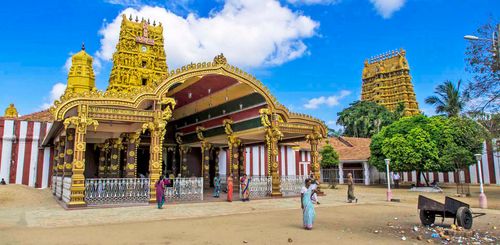
Explore Hindu traditions at Nallur Kandaswamy Kovil
Allow a few unhurried hours at Nallur Kandaswamy Kovil, timing your visit for an evening puja when drums, bells, and lamps bring the shrine to life. It rewards culturally curious travelers comfortable observing rituals respectfully rather than rushing between landmarks.
Drive the coastal road to Point Pedro and beyond
Follow the quiet coastal road from Jaffna to Point Pedro, stopping at small fishing villages and windswept beaches along the way. This half- to full-day drive suits travelers who enjoy slow, reflective journeys more than busy resort strips or crowded viewpoints.
Ferry across the Jaffna Lagoon to Delft Island
Delft Island is one of the top attractions in Sri Lanka’s north, reached by a local ferry across Jaffna Lagoon. The journey offers open-water views before a relaxed day exploring sandy tracks, village life and the island’s remote landscape, best suited to travelers comfortable with simple services.
Trace recent history in Kilinochchi and Elephant Pass
A guided drive through Kilinochchi and Elephant Pass offers context on Sri Lanka's recent conflict, contrasting memorials with everyday rebuilding. Half a day here suits travelers interested in political and social history, adding depth to time spent in Jaffna and the Cultural Triangle.
Spot birdlife around Jaffna Lagoon causeways
Early-morning or late-afternoon drives across the causeways near Chavakachcheri and Karainagar reveal flocks of herons, egrets, and other waterbirds framed by wide-open water and sky. This gentle experience works as a flexible add-on for photographers and nature lovers between town-based days.

Nallur Kandaswamy Temple, Jaffna
Planning Sri Lanka’s North with local expert tips
Sri Lanka’s North has a character distinct from the rest of the island, shaped by Tamil culture, Hindu temples, historic forts, and a low-lying landscape extending toward the islands beyond Jaffna. Local experts can give the region its own place in your itinerary, rather than squeezing it between the Cultural Triangle and destinations much farther south.
Where to stay in Sri Lanka’s North
Jaffna is the most practical base for exploring the north, with hotels, restaurants, and access to the peninsula’s temples, markets, and historic sites. Staying centrally makes it easier to explore Jaffna itself, while excursions can take you into the surrounding countryside and toward the offshore islands.
Travelers interested in the region’s culture generally gain more from several nights in one base than from moving between small towns with limited accommodation. The main consideration is whether northern Sri Lanka merits the additional journey within your overall route.
Your local expert can devote more time to Jaffna when Tamil heritage is a priority, or keep the northern section concise when your itinerary also includes the Cultural Triangle, Hill Country and South Coast.
How transportation can be arranged
Jaffna can be reached from Colombo by rail or road, while private transportation becomes particularly useful for exploring the peninsula and places beyond the city.
Some island communities require a combination of road and boat travel, so departure times and local conditions need to be considered before adding them to the day. The north can also connect naturally with Anuradhapura, allowing you to continue into the Cultural Triangle without returning to Colombo.
A local expert can arrange that progression and select the most suitable combination of rail and private road transportation. If you arrive in Jaffna by train, for example, they can organize local excursions before arranging an overland journey south toward Anuradhapura at your preferred pace and sightseeing priorities.