The Central Pacific coast of Costa Rica stands out for its easy access from San José, well-developed tourism infrastructure, and mix of lively beach towns and protected national parks. Compared with more remote coasts, it offers shorter transfers, a wide range of accommodations, and reliable services, which keeps logistics straightforward.
This region works best for travelers who want a practical blend of beaches, wildlife, and light adventure such as surfing, zip-lining, and boat tours without long travel days. It usually sits in the middle of an itinerary, connecting the Central Valley or Arenal with either the southern Pacific or the Nicoya Peninsula, and helps break up overland journeys with a comfortable coastal stay.
Why visit Central Pacific?
Costa Rica's Central Pacific stands out for the way dense rainforest, mangroves, and ocean meet within a short distance of each other, creating close-up wildlife encounters without long journeys into remote areas. You can watch scarlet macaws flying over the surf, spot crocodiles and monkeys along tidal rivers, and join night walks where the forest and shoreline feel vividly alive after dark.
Beaches shift from dark volcanic crescents backed by jungle to rocky headlands with natural tidal pools, giving the coast a rugged character that differs from the country's gentler, white-sand bays. The region also concentrates canopy bridges, short coastal trails, and river safaris in one compact stretch, so you can move quickly between forest, estuary, and open Pacific.
Choosing another coastline often means losing this tight overlap of habitats and easy, high-impact wildlife viewing.

Surfer in Playa Hermosa, Costa Rica
Who is Central Pacific best for?
You will probably enjoy the Central Pacific if you like mixing relaxed beach time with easy access to activities rather than sticking to one pace. It works particularly well for first-time visitors who want a gentle introduction to Costa Rica with straightforward logistics and plenty of guided options.
Active travelers and nature lovers can fill their days with canopy adventures, surfing lessons, and wildlife-focused excursions, then return to comfortable hotels by evening. Couples and honeymooners who prefer laid-back, intimate stays over big-city nightlife often feel at home here, as do families looking for a base where activities are close by and transfer times are short.
You may prefer another destination if you are primarily interested in high-caliber diving or snorkeling, in which case the Southern Pacific or Caribbean coasts generally deliver more rewarding underwater experiences. Travelers seeking very remote, off-grid escapes might find the Osa Peninsula more compelling, while those focused on large luxury resorts and long, calm swimming beaches may be happier on parts of the Nicoya Peninsula.
How does Central Pacific fit into an itinerary?
The Central Pacific usually forms a coastal segment within a broader Costa Rica route, linking the Central Valley or Arenal with either the southern Pacific or the Nicoya Peninsula. Most travelers arrive overland from San Jose, pause here for a few nights, then continue along the coast or loop back inland.
It often works as a midway pause that breaks up longer transfers, or as a final coastal stay before returning to the capital for departure. Because it is straightforward to reach and leave, it fits both compact holidays and extended, multi-region plans, letting you adjust the rhythm of your trip.
A two- to four-night stay is typical, adding a slower, more restorative stretch into your itinerary without crowding the rest of your route.
Trips that include Central Pacific
The Tailor-made Costa Rica wildlife tour combines guided wildlife walks in Manuel Antonio National Park with kayaking from Pez Vela Marina in Quepos to Biesanz Bay for snorkeling. A catamaran cruise offers another perspective on the coastline.
The Costa Rica Rainforest and Coast - 10 days pairs La Fortuna with Manuel Antonio, featuring a guided national park walk, swimming at Third Beach, and a catamaran cruise from Quepos with snorkeling at Biesanz Bay.
The Beaches and volcanoes Costa Rica trip travels from Poás and Arenal to Manuel Antonio for a guided wildlife walk, followed by ocean kayaking from Quepos dock to Bisanz Beach for snorkeling and a snack.
To make the most of Manuel Antonio's coast, our local experts can coordinate wildlife walks with kayaking departures from Quepos, allowing time for both rainforest and marine adventures.
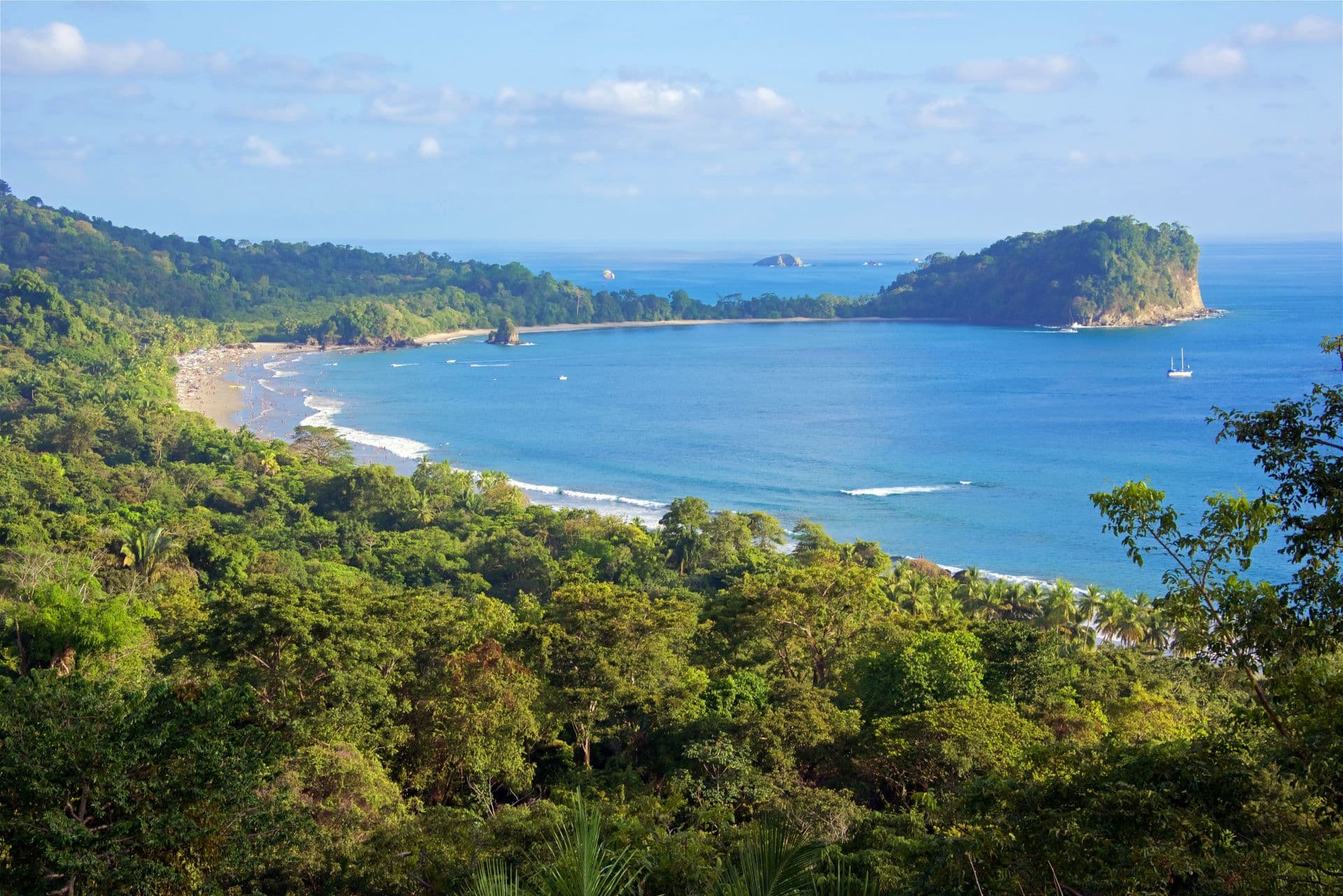
Manuel Antonio, Costa Rica © PAUL ATKINSON/Shutterstock
How many days do you need?
Most travelers spend two to four nights along Costa Rica's Central Pacific, using it as a base for both beach time and excursions. A single day lets you sample a nearby national park trail or mangrove boat tour, but you will be choosing just one highlight.
With one night, you can add a sunset on the beach and an evening wildlife or night walk experience. Two to three nights allow a fuller mix of canopy activities, surfing lessons, estuary explorations, and unhurried time at your hotel.
Stays of four or more nights suit travelers who want to slow down, revisit favorite spots, or explore more than one coastal town without packing and unpacking too often.
| Time | Recommended focus |
|---|---|
| Half day | Short trail, viewpoint, or boat tour stop en route |
| One day | Single park visit or mangrove excursion with beach sunset |
| One night | Afternoon arrival, evening activity, relaxed morning on the coast |
| Two-three nights | Blend of wildlife outings, canopy or surfing, and beach time |
| Four+ nights | Deeper exploration of multiple towns and slower-paced days |
Best region combinations
The Central Pacific pairs naturally with San Jose and the Central Valley, starting with a night in the capital before driving 2-3 hours to the coast. From La Fortuna and Arenal, a 4-5 hour transfer brings you to the ocean, making the Central Pacific a logical follow-up to volcano and hot spring experiences.
Manuel Antonio works well as a two- or three-night base before continuing 3-4 hours south to Uvita or the Osa-bound gateway of Sierpe for wilder Pacific coastline.
Alternatively, you can travel 3-4 hours north along the coast toward Jaco and then on to Puntarenas to connect with ferries to the Nicoya Peninsula, using the Central Pacific as a shorter stop before longer beach stays in Santa Teresa, Montezuma, or Nosara.
When is the best time to visit Central Pacific?
December to April is generally the best time to visit Costa Rica for travelers exploring the Central Pacific, with sunnier days, calmer seas and good conditions for swimming, beginner surfing and coastal hikes. This is also the busiest period, with higher prices and more crowded national parks.
From May to August, mornings are often bright before afternoon showers, while stronger waves appeal to experienced surfers. September and October are usually the wettest months and can disrupt road access or boat trips, while November often brings greener landscapes, fewer crowds and improving sea conditions.
Experiences to include in Costa Rica’s Central Pacific
The experiences below highlight the most rewarding ways to enjoy Costa Rica's Central Pacific, from rainforest-backed beaches and national parks to coastal routes and wildlife-rich mangroves.
Hike rainforest-to-sea trails in Manuel Antonio National Park
Manuel Antonio National Park ranks among the top attractions in Costa Rica for its accessible forest trails, coastal viewpoints and wildlife-rich beaches. Allow half a day or longer to explore the main paths and Playa Manuel Antonio, with guided walks offering a better chance of spotting wildlife.
Explore the Tarcoles River mangroves and crocodiles
Set aside half a day for a boat tour on the Tarcoles River near Tarcoles Bridge. Calm waters and close-up views of American crocodiles, waterbirds, and mangroves make this ideal for families and photographers. Expect straightforward logistics from beach towns like Jaco and Herradura.
Ride the Pacific coastal route between Jaco and Quepos
Devote half a day to driving the coastal stretch between Jaco and Quepos, stopping at viewpoints near Playa Hermosa, Esterillos Este, and Parrita. This suits independent travelers who enjoy spontaneous stops at roadside sodas, surf breaks, and sunset lookouts along an easy paved highway.
Canopy ziplining and forest views around Jaco
Plan two to four hours for canopy tours in the hills above Jaco and Playa Herradura. Platforms overlooking the Gulf of Nicoya, coupled with short nature walks, suit adventurous families and first-timers. Expect well-organized operations, clear safety briefings, and convenient shuttles from major hotels.
Surf Pacific waves at Playa Hermosa or Herradura
Spend a few hours to a full day enjoying surf-focused beaches like Playa Hermosa (near Jaco) for experienced riders or Playa Herradura for gentler conditions and lessons. These spots suit active travelers, with board rentals, casual beachfront eateries, and easy access from the main highway.
Sunset dining and nightlife in Jaco
Reserve an evening in Jaco to combine a Pacific sunset from the main beach with dinner at local seafood restaurants and low-key nightlife. This experience suits sociable travelers who appreciate walkable streets, varied dining, and a more energetic atmosphere than quieter Central Pacific villages.

Espadilla Beach near the Manuel Antonio National Park, Costa Rica © Shutterstock
Planning Costa Rica’s Central Pacific with local expert tips
Costa Rica’s Central Pacific brings rainforest right to the ocean, with wildlife-rich national parks, surf beaches, and coastal towns within reach of San José. Costa Rica travel experts can help narrow down where to linger, since the region works equally well as an active nature stop or as a slower few days beside the Pacific.
Where to stay on Costa Rica’s Central Pacific
Manuel Antonio is a natural choice when wildlife and rainforest walks are priorities, with hotels scattered along the hills between Quepos and the national park. Properties higher above the coast often trade immediate beach access for views and a quieter setting.
Farther north, Jacó has more restaurants and nightlife and makes a convenient base for surfing and nearby excursions, while the surrounding coast offers calmer alternatives outside town.
Travelers continuing toward the Osa Peninsula may prefer to concentrate their time around Manuel Antonio rather than adding another similar coastal stop. Costa Rica local experts can weigh beach access, wildlife, dining, and onward travel when selecting your base, keeping hotel changes to a minimum.
How transportation can be arranged
The Central Pacific is well suited to an overland itinerary, with road connections from San José continuing south through the main coastal destinations. Quepos also has a domestic airport, which can shorten the journey when time is limited or connect neatly with more distant parts of Costa Rica. Private transfers allow stops to be incorporated along the way and are particularly helpful when accommodation sits away from town centers.
Boats also feature in selected wildlife and marine excursions. Costa Rica local specialists can position the region between the capital and the southern Pacific, perhaps continuing from Manuel Antonio toward the Osa Peninsula instead of returning to San José, with the route adjusted to your flight schedule and preferred amount of beach time.