Trinidad is one of Cuba's best-preserved colonial towns, with compact historic streets, nearby countryside, and straightforward access to the coast. It earns a place in a wider Cuba itinerary if you want a walkable base that clearly contrasts with Havana, resort areas, and larger cities.
For most travelers, Trinidad works best as a short stay of two or three nights, giving time to see the centre and make one or two nearby excursions. If your schedule is tight, it can be visited as a long day trip from another base, but that reduces flexibility and means missing the town's quieter evening atmosphere.
Why visit Trinidad?
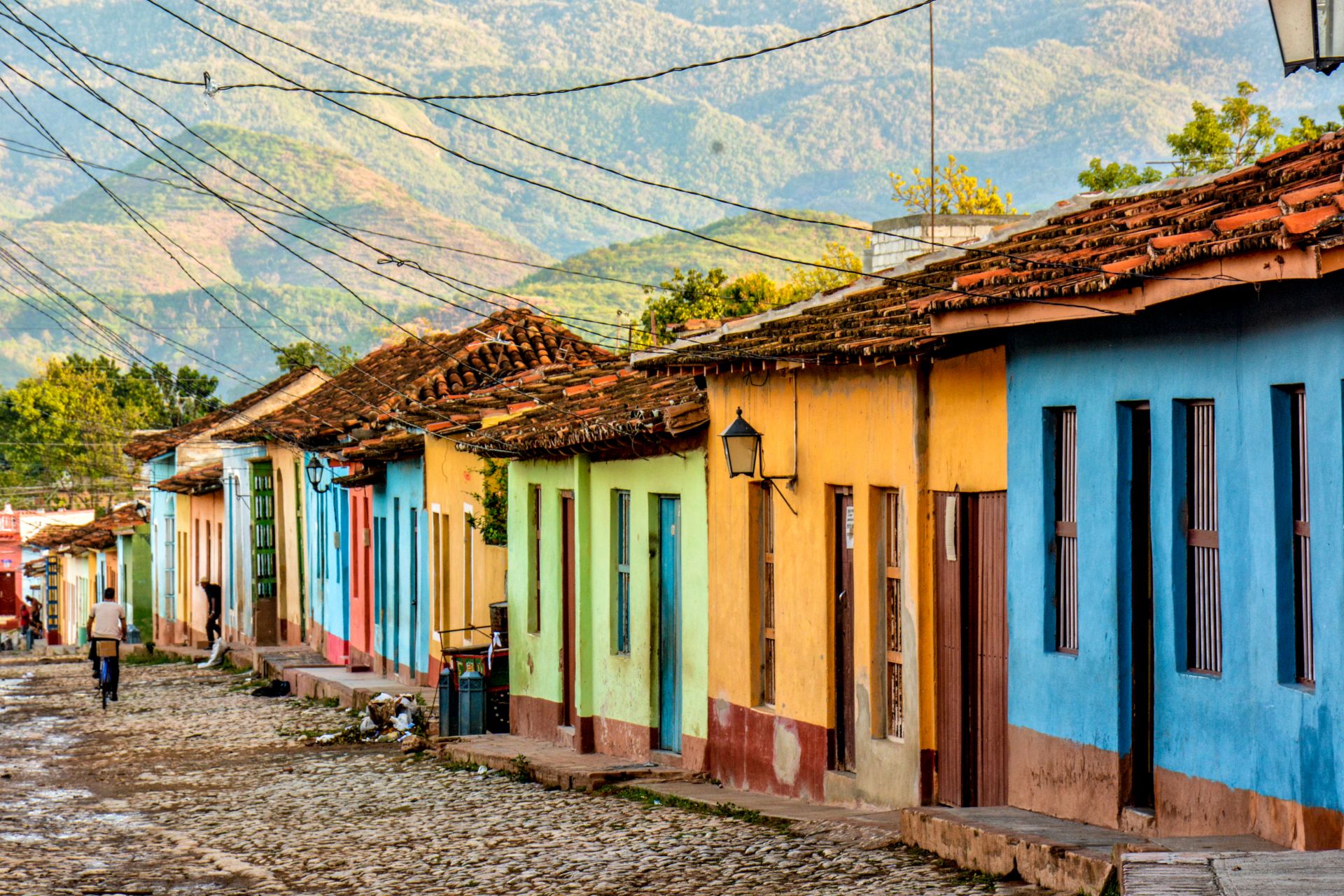
Trinidad offers a rare feeling of stepping straight into Cuba's 19th-century sugar boom, with cobbled streets, pastel mansions, and music spilling from intimate casas de la musica. Unlike larger cities, the historic centre is small enough that you quickly feel part of its rhythm, moving from quiet plazas to lively evening drum circles without needing transport.
Its position between the Escambray Mountains and the Caribbean creates a combination of experiences you will not find bundled together elsewhere in Cuba: riding or walking out among old sugar estates, then returning for rooftop views over tiled roofs and the distant sea, followed by live salsa in a colonial courtyard.
The lasting impression is of a town where everyday Cuban life, sugar-era history, and nearby countryside and coast all intersect within a compact, easily explored setting.

Valle de los Ingenios near Trinidad, Cuba © Shutterstock
Who is Trinidad best for?
You'll probably enjoy Trinidad if you like to slow down and explore on foot rather than rush between big sights. It works particularly well for couples and friends who want evenings with live music, small bars, and people-watching in intimate plazas instead of large-scale nightlife.
Culture-focused travelers who enjoy chatting with hosts, visiting small museums, or taking informal music or dance lessons tend to get the most from an overnight stay. Active visitors who appreciate mixing gentle hikes or horseback rides with relaxed cafe time also find the balance rewarding. For many, one or two nights is ideal to enjoy early mornings and quieter late evenings that a day trip misses.
You may prefer another destination if you want all-inclusive amenities, big resorts, or a very busy nightlife scene in one place. Families needing extensive child-focused facilities, or travelers who dislike cobblestones and uneven streets, might be happier basing themselves elsewhere and visiting Trinidad briefly on a guided day trip instead.
How does Trinidad fit into an itinerary?
Trinidad usually sits in the middle of a Cuba route, after time in Havana or the northern beaches and before continuing east or looping back toward the capital. Most travelers arrive by road from Havana, Cienfuegos, or Santa Clara, using it as a natural pause between long driving days. It works best as a two- or three-night stay rather than a quick stop, giving your itinerary a slower, more immersive rhythm before you continue to larger cities or coastal areas further along your route.
Including Trinidad often means trimming a night from a beach resort or major city, but it adds variety and a more intimate feel to your journey. For tighter schedules, a single overnight still breaks up travel legs and allows an evening in town, while longer holidays can build Trinidad into a gentle midpoint that balances movement with downtime without adding extra internal flights.

Ancon Beach, Trinidad, Cuba @ Shutterstock
How many days do you need?
Trinidad rewards at least one full day and night so you can see the historic centre by day and enjoy music-filled plazas after dark. With limited time, a half day lets you wander the main cobbled streets and plazas, but you will miss nearby countryside and coast.
Two or three nights are ideal to add a trip into the Valle de los Ingenios or Topes de Collantes and still have time for the beach.
| Time | Recommended focus |
|---|---|
| Half day | Quick walk through the colonial centre and main squares |
| One day | Old town highlights plus one small museum or viewpoint |
| One night | Evening music and street life after daytime sightseeing |
| Two nights | Historic centre, countryside excursion, and relaxed café time |
| Three nights | Old town, Valle de los Ingenios or waterfalls, and beach time |
Extra time mainly adds flexibility for side trips and slower evenings without rushing between sights.
Best region combinations
Trinidad combines naturally with Cienfuegos, around 1.5-2 hours' drive away; many travelers visit Cienfuegos first, then continue to Trinidad for one to three nights to enjoy its smaller-scale atmosphere.
Pairing Havana and Trinidad works well on a one-week route: spend several nights in Havana, then travel 4-5 hours by road to Trinidad for a more intimate, small-town contrast before heading to the beaches or back to the capital.
Varadero or Playa Ancón can be added at the end of a trip, using Trinidad as an overnight cultural stop on the way to or from a beach stay.
For longer journeys across Cuba, Trinidad also fits between Santa Clara and Camagüey as a welcome overnight break from driving.
When is the best time to visit Trinidad?
The drier, cooler months from roughly November to April are most comfortable for walking Trinidad's cobbles, exploring viewpoints, and joining evening music outdoors. This is also the busiest period, so local experts may suggest booking well ahead and staying slightly longer to absorb the atmosphere despite crowds.
From May to October, warmer, more humid weather and a higher chance of showers make midday sightseeing more tiring, but the town is generally quieter and evenings can feel more relaxed. In these months, itineraries may build in early-morning or late-afternoon walking tours, plus time for waterfalls or the beach during hotter hours.
Tropical downpours can occasionally affect road timings, so routes between Havana, Cienfuegos, and Trinidad may be planned with extra flexibility.
Trinidad, Cuba
Experiences to include in Trinidad
These experiences capture Trinidad's strongest highlights - colonial streets, sugar-era history, nearby hills, and the coast. They are realistic to fit into a two- or three-day stay without overpacking your itinerary.
Stroll the colonial heart around Plaza Mayor
Wandering the cobbled streets around Plaza Mayor reveals Trinidad's pastel mansions, tiled roofs, and small museums such as Museo Romantico in a compact area. Allow half a day, ideally early or late, and combine it with evening music in nearby plazas.
Ride or drive into the Valle de los Ingenios
A trip into the Valle de los Ingenios, with its old haciendas and viewpoints like Mirador del Valle and the Torre Iznaga, connects Trinidad's beauty to its sugar-era history. Allow half a day; it pairs well with a relaxed town evening.
Walk to waterfalls in Topes de Collantes
Hiking to waterfalls such as Salto del Caburni or Vegas Grandes in Topes de Collantes adds a cooler, greener counterpoint to town time. Reserve at least half a day, and avoid overloading the same day with long drives.
Spend beach time at Playa Ancon
Playa Ancon, a short drive from Trinidad, offers white sand and calm, swimmable water without large resort crowds. Allow half a day to a full day; it combines smoothly with a light evening of music back in the historic centre.
Seek sunset views from Cerro de la Viga
Climbing or driving up Cerro de la Viga rewards you with wide views over Trinidad's roofs toward the Valle de los Ingenios and the Caribbean Sea. Allow one to two hours and pair it with a slower afternoon in town.

Trinidad, Cuba @ Shutterstock
Planning Trinidad with local expert tips
Trinidad brings together cobbled colonial streets, colorful houses, and a lively musical culture, with mountains and Caribbean beaches close enough to broaden the stay beyond the historic center. Cuba travel experts can shape your time around these contrasts, deciding how much belongs to the town itself and whether the nearby coast or Escambray Mountains deserves a full day.
Where to stay in Trinidad
Staying in the historic center lets you experience Trinidad at its most atmospheric, particularly in the early morning and evening when day visitors are less prominent. Casas particulares are plentiful and often occupy traditional houses, while hotels around the town provide alternatives for travelers seeking more conventional facilities.
Playa Ancón is close enough for a beach outing, but moving to a coastal hotel is unnecessary unless relaxation by the sea is a major part of your plans. Cuba local experts can keep you in town when music, architecture, and evening life are the priorities, or select a quieter property on the outskirts when you prefer more space and easier vehicle access.
How transportation can be arranged
Trinidad fits particularly well into an overland journey through central Cuba, with road connections toward Havana, Cienfuegos, and destinations farther east. Within the historic core, walking is the natural choice, while arranged vehicles make it easier to reach Playa Ancón, the Valle de los Ingenios and walking areas in the Escambray Mountains.
Travel times become more important when Trinidad is combined with several colonial cities, since frequent one-night stops can quickly dominate the itinerary. Cuba local specialists can route you through Cienfuegos and Trinidad before continuing east, or return you toward Havana when your flight schedule requires it, adjusting the sequence around the experiences you value most.


