Bago in Burma-Myanmar is a practical stop between Yangon and central regions, adding historical and religious context without a major detour. It is known for its large Buddhist monuments and busy, lived-in feel rather than resort-style tourism, so it suits travelers who want straightforward cultural sightseeing and easy logistics.
For most itineraries, Bago works best as a day trip or brief stopover rather than a long stay. You can visit key pagodas and reclining Buddhas, eat a simple local meal, and continue onward the same day. An overnight mainly makes sense if you prefer a slower pace or have an early departure on a longer overland route.
Why visit Bago?
Bago rewards an unhurried stop with an intensity of living Buddhist culture that feels woven into everyday life rather than staged for visitors. Colossal stupas, sprawling monastery complexes, and vast reclining Buddhas sit amid ordinary streets and markets, so sacred spaces and daily routines constantly overlap.
You might hear temple chants drifting over low-rise neighborhoods while incense smoke mixes with the smell of street food, or notice relic shrines tucked beside workshops and shopfronts.
What sets Bago apart within Myanmar is this unusually dense concentration of active religious sites in a compact, workaday city. Rather than a grand imperial capital or a scenic river landscape, it offers an up-close view of how pilgrimage, ritual, and commerce coexist hour by hour.
You leave with a sharper, ground-level sense of contemporary Buddhist devotion in Lower Myanmar, not just its historic monuments.
Who is Bago best for?
You'll probably enjoy Bago if you are curious about contemporary Buddhist life and comfortable with simple surroundings rather than polished tourist infrastructure. Culture lovers, photographers, and thoughtful first-time visitors to Myanmar who like observing everyday rituals up close often find a few focused hours here rewarding.
Independent travelers using Yangon as a base can easily add Bago as a low-stress day trip, while slow-paced explorers may appreciate an unhurried overnight to break up overland journeys.
You may prefer another destination if you are seeking romantic scenery, luxury resorts, or a wide choice of bars, cafes, and international restaurants. Families with young children who need varied activities, as well as travelers prioritizing beach time, trekking, or dramatic landscapes, are usually better off limiting Bago to a quick stop or skipping it in favor of places such as Inle Lake, Bagan, or the coast.
If your time in Myanmar is very short, Bago generally works best as a single-day detour rather than an overnight stay.
How does Bago fit into an itinerary?
Bago usually slots in as a practical pause on the overland route between Yangon and central Myanmar, rather than as a main base. Many travelers add it as a half- or full-day excursion from Yangon, building in a night only if they want to slow the pace between major stops like Yangon, Golden Rock (Kyaiktiyo), and the central plains.
It works well as an early stop at the start of your journey, helping you adjust gently before longer transfers north. Overland routes often run Yangon-Bago-Golden Rock or Yangon-Bago-Pyay, letting you break up driving times into manageable segments.
Including Bago typically means planning one flexible day in your itinerary that can absorb delays, weather, or energy dips, so the rest of your route, towards Inle Lake, Bagan, or Mandalay, can stay more tightly timed. Thoughtful trip design treats Bago as a connector, smoothing transitions rather than stretching your schedule.

Myanmar, Bago Division, Bago, Swethalyaung Buddha, entrance with chinthe
How many days do you need?
Most travelers experience Bago comfortably in a half or full day, often while transiting between Yangon and other regions. Time in Bago is mainly about visiting a compact set of major Buddhist sites and observing everyday city life, rather than lingering in cafes or layered neighborhoods.
Extra time primarily adds a slower pace and more unstructured observation rather than a long list of additional sights.
| Time | Recommended focus |
|---|---|
| Half day | Quick circuit of one or two main pagodas and a reclining Buddha, then a simple local meal before continuing your journey. |
| One day | Unhurried visits to several major shrines plus markets, with time for street photography and watching daily rituals. |
| One night | Arrive from Yangon, visit key sites in the afternoon, then leave next morning toward Golden Rock or Pyay. |
| Two nights | Best for slow travelers wanting very relaxed pacing, repeated walks, and flexible buffers in a longer overland route. |
Best region combinations
- Yangon - Bago - Golden Rock (Kyaiktiyo): A classic south-central route. Travel Yangon-Bago in around 1.5-2 hours by road, then continue 3-4 hours to the Kyaiktiyo base. Bago works best as a brief stop or one-night pause between the city and the pilgrimage site.
- Yangon - Bago - Pyay: Good for overland routes along the Ayeyarwady. Yangon-Bago takes around 1.5-2 hours, then Bago-Pyay 4-5 hours. Bago serves mainly as a daytime cultural stop to break the journey.
- Yangon - Bago - Naypyidaw: Practical for travelers heading north by road or rail. Expect roughly 1.5-2 hours Yangon-Bago, then about 4-5 hours onward to Naypyidaw. Bago is best used as a short sightseeing detour.
- Yangon - Bago - Taungoo: Suitable for those continuing toward central and eastern routes. Yangon-Bago is a short hop; Bago-Taungoo is about 4-5 hours. Treat Bago as a day stop before a longer drive.
- Yangon - Bago - Mawlamyine: Works for travelers combining Bago's religious monuments with Mawlamyine's riverfront and colonial-era streets. Yangon-Bago is around 1.5-2 hours, then 5-6 hours onward, with Bago best as a daytime pause.
When is the best time to visit Bago?
The best time to visit Myanmar for Bago is from November to February, when lower humidity and cooler temperatures make walking between pagodas and markets more comfortable. These dry-season months also bring clearer skies and more reliable road conditions for day trips from Yangon or longer overland routes.
March to May can be extremely hot, so earlier starts, shaded rest stops, air-conditioned transport and shorter midday walks are often more practical. From June to October, monsoon rains can bring heavy showers, slippery surfaces and occasional flooding, although temple visits are still possible.
During the rainy season, Bago usually works best as a brief, flexible stop that can be shortened if weather affects travel times. Seasonal planning may also adjust route order, driving hours, and the balance between indoor and outdoor sights.
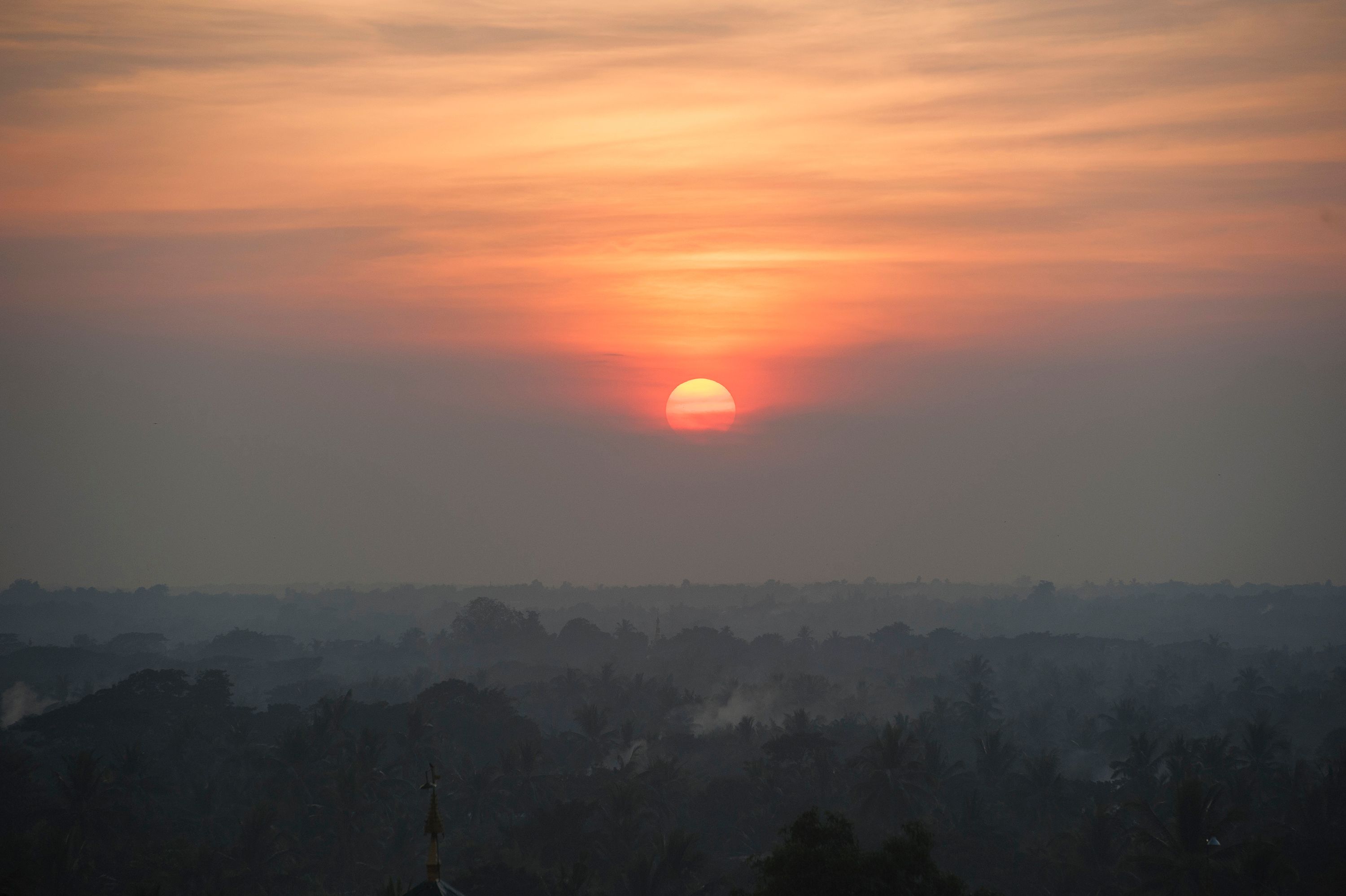
Myanmar, Bago Division, Bago, sunset
Experiences to include in Bago
These experiences represent Bago's highlights, giving a clear sense of its religious, historical, and everyday life within a short visit.
Circle Shwemawdaw Paya and its surrounding shrines
Shwemawdaw Paya is Bago's towering landmark and a key pilgrimage site, showing the city's religious importance. Allow two to three hours to walk the terraces and smaller shrines, easily paired with nearby Mahazedi Paya the same day.
Compare Buddha images at Shwethalyaung and Mya Tha Lyaung
Seeing the reclining Buddha at Shwethalyaung Buddha alongside the more recent Mya Tha Lyaung Buddha highlights changing artistic styles and devotional practices. Allocate two to three hours and combine with Shwemawdaw Paya or Kyaik Pun Paya in a single relaxed circuit.
Walk between Kyaik Pun Paya and Hinthagon Pagoda
Kyaik Pun Paya and Hinthagon Pagoda are among the top attractions in Myanmar, combining Buddhist legend, active worship and sweeping views across Bago. Allow around two hours to visit both sites, then include them in a wider half-day circuit with the Shwethalyaung Buddha. This compact route offers a strong introduction to the city’s religious heritage.
Explore everyday life around the central Bago Market
The streets and stalls around Bago Market reveal the city's working character, from produce traders to monks collecting alms. One to two hours is enough, best combined with Shwemawdaw Paya or Shwethalyaung Buddha during the same morning or late afternoon.
Trace royal history at Kanbawzathadi Palace and museum
The reconstructed Kanbawzathadi Palace and its small museum introduce Bago's role in the Mon and Burmese kingdoms, complementing the living Buddhist sites. Allow one to two hours and pair with the nearby Kanbawzathadi Golden Palace Gate and central city temples in a single day.
Take a short countryside detour toward Kyaik Khat Wine Monastery
A visit to Kyaik Khat Wine Monastery around mealtime offers insight into monastic organization beyond Bago's streets and markets. Plan two to three hours including travel, often combined with rural stops on the road between Yangon and Bago.
Planning Bago with local expert tips
Bago lies within reach of Yangon and is often incorporated into a longer road journey rather than treated as a separate destination requiring several nights. Local experts can decide whether it works better as a day visit or an overnight stop, taking account of current travel conditions and the direction of your wider Myanmar itinerary.
Where to stay in Bago
Accommodation in Bago is more limited than in Yangon, so an overnight is most useful when it improves the route rather than simply extending the visit. Staying locally can allow more time for Bago’s pagodas, monasteries and historic sites without needing to travel back to Yangon the same day.
For many itineraries, however, keeping your hotel in Yangon may be the more practical choice. Your local expert can weigh the additional hotel change against the time available and your next destination.
If the journey continues beyond Bago, an overnight can become more worthwhile because you are already positioned for the following road section. Your expert can select accommodation based on current standards and availability, then adjust the stop to suit your pace and confirmed travel arrangements.
How transportation can be arranged
Road transportation offers the greatest flexibility for incorporating Bago into a wider route, particularly when you want to visit several places before continuing onward. A private vehicle also allows departure times to be adjusted around your hotel and planned visits instead of relying on fixed services.
Rail connections have historically served Bago, but schedules and operating conditions in Myanmar can change, so they should be checked for your actual travel dates. A local expert can confirm the practical options before finalizing the itinerary and allow sufficient time for delays.
If you are traveling from Yangon through Bago before continuing elsewhere, your expert can arrange it as a one way road journey with sightseeing en route, avoiding an unnecessary return to Yangon when current conditions permit.


