Northern Kenya and Lake Turkana is one of Kenya's most remote and striking regions, defined by volcanic desert, stark escarpments and the vast jade waters of the lake itself. It stands apart from the country’s more familiar savannahs and coastal areas, so it merits space in a multi-day itinerary rather than a brief stop.
Travel here is about off-grid exploration, cultural encounters with pastoral communities and reaching truly wild, less-developed areas. It usually works best as an adventurous extension to a broader Kenya route, added after time in better-connected hubs such as Nairobi, Laikipia or Samburu, when logistics, permits and vehicle support can be arranged in advance.
Why visit Northern Kenya and Lake Turkana?
Northern Kenya and Lake Turkana offer a sense of raw, end-of-the-road exploration that you rarely find elsewhere in Kenya. Here you can trace ancient lava flows to the very edge of the so-called Jade Sea, watch mirages shimmer over black volcanic sand, and camp under skies so dark the Milky Way feels almost within reach.
What sets this region apart is how close you get to elemental forces. You might sit out a sandstorm with nomadic herders, walk across jagged lava fields that still feel newly formed, or follow an empty shoreline where crocodiles haul out on desolate beaches.
Boat trips on the lake and walks on volcanic islands put you inside an active rift landscape rather than just viewing it from a vehicle. The isolation, harsh light, and stark geology create a style of adventure that even Kenya's classic savannah parks cannot replicate.

Group of camels early in the morning at sunrise in the dusty town of Maralal, Samburu District, Kenya © Shutterstock
Who are Northern Kenya and Lake Turkana best for?
You'll probably enjoy Northern Kenya and Lake Turkana if you thrive on remote, logistics-heavy adventures and do not mind long, bumpy travel days to reach seldom-visited areas. Hikers and active travelers who like exploratory walks, scrambling over rocky terrain, and days shaped by the elements tend to value this kind of journey.
Photographers drawn to stark compositions, dramatic skies, and human stories rather than classic wildlife portraits also find it rewarding. Road trip enthusiasts comfortable with rough tracks, wild camping, or very simple camps will appreciate the sense of self-sufficient expedition.
You may prefer another destination if you are seeking an easy-going holiday, short driving times, or a wide choice of lodges and family-friendly facilities. Those prioritising dense big-game viewing, stylish tented camps, or varied activities for younger children might be happier in regions like the Masai Mara, Laikipia, or the Rift Valley lakes, which balance wilderness with more comfort and flexibility.
How do Northern Kenya and Lake Turkana fit into an itinerary?
Northern Kenya and Lake Turkana usually sit in the latter half of your Kenya itinerary, after you have adjusted to the country in hubs such as Nairobi, Laikipia, or Samburu. It works best as its own expedition segment rather than a brief detour, with several nights dedicated to a steady push north and back, using a chain of simple stopovers to manage distances.
Travelers normally move in a private 4x4 with a driver-guide, sometimes with a support vehicle, planning one or two transit nights each way between more established regions and the lake. Because of long, rough driving days and basic infrastructure, this chapter naturally slows the rhythm of your holiday, shifting emphasis from fast-paced game viewing to route planning, vehicle reliability and flexible daily timing.
Expect fewer hotel changes overall but longer stays at each overnight base so you can adapt to road conditions, heat and local guidance without rushing.

Desert museum, loyangalani, Lake Turkana, Kenya
How many days do you need?
The Northern Kenya and Lake Turkana region rewards slow travel. With distances long and roads rough, many travelers dedicate at least 4-5 days purely to this northern leg, not counting time in Nairobi or Laikipia.
This allows for staging nights, time on the lakeshore, and unhurried exploration of volcanic landscapes and remote communities. Shorter visits are only practical if you fly in and out of one base camp, focusing on the lake itself rather than overland journeys.
| Days | Recommended focus |
|---|---|
| 2-3 days | Fly-in stay on the lakeshore with limited local walks and boat trips. |
| 4-5 days | Mixed driving and lake time, plus one or two remote excursions. |
| 6-7+ days | Full overland expedition with multiple camps and cultural encounters. |
Additional days allow more flexible routing around weather or track conditions and space to absorb the sense of isolation rather than rushing between viewpoints.
Best region combinations
Laikipia, Northern Kenya and Lake Turkana combine well: start with wildlife conservancies and comfortable camps in Laikipia, then drive or fly north into harsher desert scenery. The contrast between productive game drives and stark volcanic shores makes the journey feel like a clear progression, with travel typically taking most of a day overland or a brief charter flight.
Samburu and the northern deserts are another natural pairing. Travelers often begin with 2-3 nights in Samburu's riverine reserves, then continue by 4x4 into drier, emptier country over a long day's drive. The shift from elephant- and lion-rich savannah to near-lunar lava fields highlights Kenya's ecological variety.
Adding the central Rift Valley lakes or the Masai Mara before heading north gives time for classic big-game viewing first, followed by a more exploratory final chapter. Internal flights link these hubs efficiently, with most connections routed via Nairobi.
When is the best time to visit Northern Kenya and Lake Turkana?
The drier periods from June to September and December to February are generally the best time to visit Kenya for exploring Northern Kenya and Lake Turkana. Clearer skies and more reliable tracks make hiking across lava fields and exploring on foot more manageable, though temperatures remain high and sun exposure is intense. Night skies are often spectacular.
The long rains from March to May and the shorter rains from October to November can bring sudden storms, muddy tracks, and flash-flood risks in dry riverbeds. Itineraries during these months require more flexibility, and support vehicles become especially important.
Wildlife is more scattered than in Kenya’s classic savanna parks, so seasonality matters more for access, visibility, and comfort than for large game concentrations. Crowds are rarely a concern, but many travelers still visit during the cooler, easier periods, often adding the north after highland or conservancy stays.
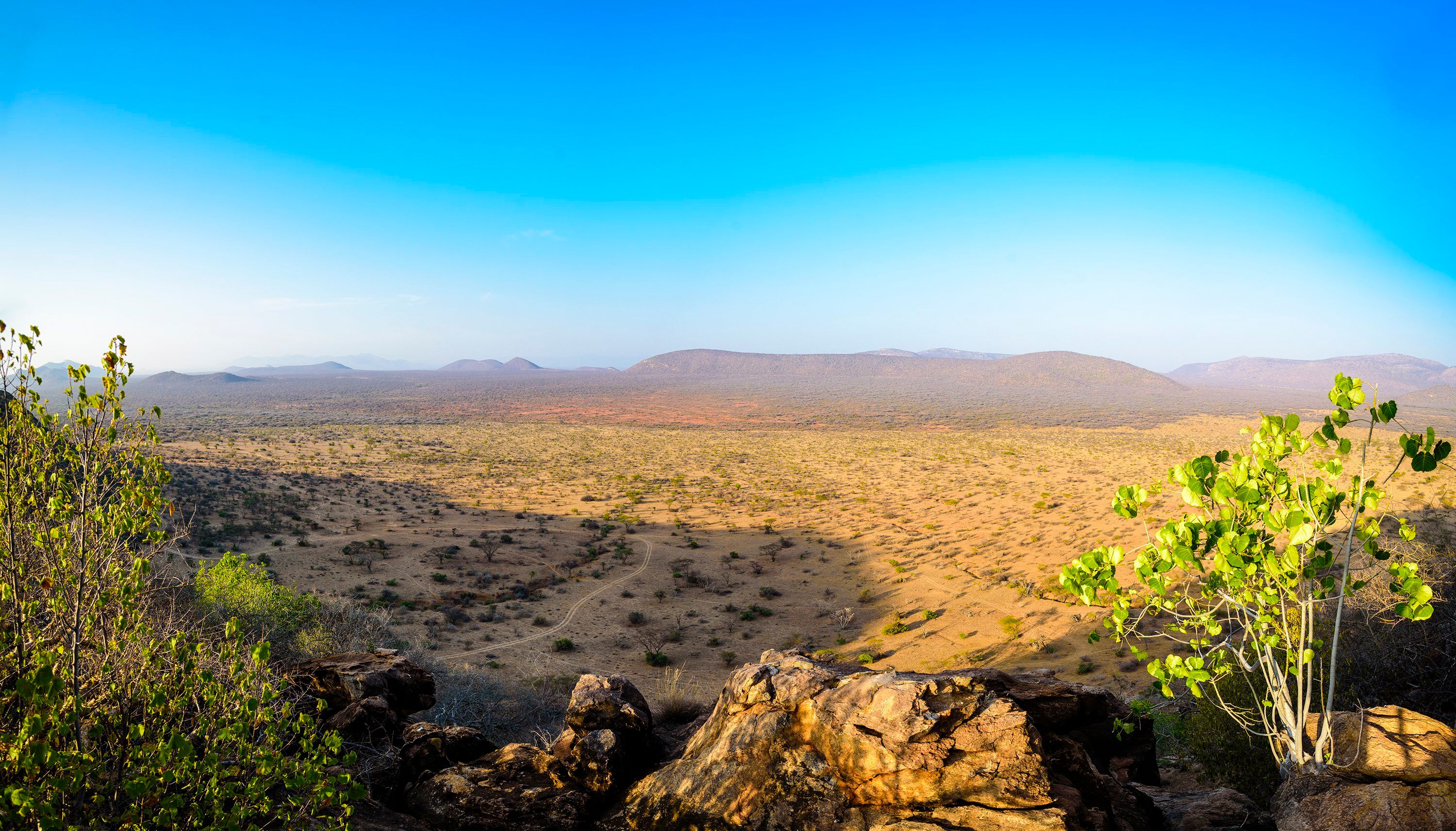
Samburu, North Kenya
Experiences to include in Northern Kenya and Lake Turkana
The experiences below focus on remote outdoor adventures that showcase volcanic desert scenery, vast Lake Turkana views, and encounters with pastoral communities.
Journey by 4x4 across the Chalbi Desert
Cross the Chalbi Desert between Marsabit and North Horr to see vast salt pans, volcanic outcrops and mirage-filled horizons. Set aside a full day, including stops at dunes and dry riverbeds. Expect heat, rough tracks and long stretches of remote scenery.
Camp on the shores of Lake Turkana
Stay at Loiyangalani or Eliye Springs to experience the scale and atmosphere of Lake Turkana, one of the top attractions in Kenya. Spend two to three days combining lakeside camping, walks along black volcanic beaches, and sunrise or sunset viewpoints. Conditions are hot, windy, and basic, so this experience suits travelers comfortable with remote settings and simple facilities.
Explore Marsabit National Park's forested crater
Discover Marsabit National Park’s cool montane forest, crater lakes and viewpoints over Gof Sokorte Guda, a striking contrast to the surrounding desert. Allow at least a day for game drives and short walks to scenic lookouts. Roads can become muddy after rain.
Take a boat trip to Central Island National Park
Arrange a boat trip from Loiyangalani or Kalokol to Central Island National Park, where crater lakes, birdlife and crocodiles are among the highlights. Set aside half a day for the crossing and short hikes to viewpoints. The lake can be choppy, and sun exposure is intense.
Visit pastoral communities around Loiyangalani and North Horr
Join a guided visit to Rendille, Turkana or El Molo communities near Loiyangalani and North Horr to learn about traditional herding cultures shaped by the region’s arid environment. Allow several hours, preferably in the cooler late afternoon. Facilities are simple, and respectful cultural etiquette is essential.
Drive the escarpments around South Horr and Ngurunit
Follow the route through South Horr towards Ngurunit for views of the Ndoto Mountains, rocky escarpments and seasonal riverbeds. Plan a full day with stops at viewpoints and short exploratory walks. The tracks are rough, but the scenery is dramatic and rarely crowded.

Turkana tribespeople at Maralal camel fair
Planning Northern Kenya and Lake Turkana with local expert tips
Lake Turkana changes the scale of a northern Kenya itinerary. Distances are greater, roads can be demanding, and the journey itself becomes a significant part of the experience. A local expert can decide how far north the route should extend and whether road travel, flights, or a combination of both makes the best use of your time in Kenya.
Where to stay in Northern Kenya and Lake Turkana
Accommodation becomes more limited as you travel farther north, so the overnight stops need to follow the route rather than the other way around. Around Lake Turkana, bases such as Loiyangalani can work for itineraries approaching the eastern shore, while other parts of the lake require completely different logistics. Your local expert can select accommodation only after deciding which section of this vast region you will actually explore.
This is also a journey where adding another overnight stop can sometimes improve the pace rather than complicate it, especially when it breaks up a demanding drive. The trade off is that every additional day in the far north leaves less time for Kenya’s more accessible safari areas. If Lake Turkana is your main priority, your expert can simplify earlier stops and give the northern journey enough space to work comfortably.
How transportation can be arranged
Road conditions and long distances make transport one of the first decisions to settle for Lake Turkana. Depending on the route, travel may require a suitable four wheel drive vehicle, an experienced driver and careful planning for fuel and supplies. Flying can shorten some journeys, but air connections and charter options depend on the exact destination and travel dates.
A local expert can check current conditions and decide where a flight genuinely saves useful time and where traveling overland adds something worthwhile to the route. They can also avoid building the itinerary around road connections that look straightforward on a map but are impractical on the ground.
For example, if you have a fixed flight home from Nairobi, your expert can arrange an air connection for the return from northern Kenya rather than spending the final part of the trip retracing a long road journey.