Essaouira is a compact Atlantic port city that adds a clear contrast to inland Morocco on a wider itinerary. Its walled medina, working fishing harbour and manageable size make it straightforward to navigate, even for first-time visitors to the country. Cooler coastal temperatures provide a practical break from the heat of cities such as Marrakech or Fez, and the calm pace offers a useful reset within a longer route.
For most travelers, Essaouira works best as a short stay of one to three nights rather than only a day trip. This gives enough time to walk the ramparts, explore the medina, and slot in simple activities like beach walks or water sports without compressing the rest of your schedule.
Why visit Essaouira?
Essaouira offers a rare blend of Atlantic light, salt air, and artistic energy that you will not find elsewhere in Morocco. Within its compact walls, you can move from crenellated sea bastions straight into workshops where artisans carve fragrant thuya wood or paint bold Gnawa-inspired canvases, all within earshot of the surf.
The constant coastal wind shapes daily life, filling the bay with kites and boards and keeping the medina's lanes cool. Sunset from the ramparts, with fishing boats returning beneath a sky full of gulls, gives a strong sense of Morocco's maritime spirit that inland cities cannot match.
You leave Essaouira with the feel of sea spray, the rhythm of Gnawa music, and the memory of a slower, salt-tinged pace that contrasts with the rest of your journey through the country.

Essaouira in Morocco © Shutterstock
Who is Essaouira best for?
You will probably enjoy Essaouira if you prefer a gentler pace and time to wander rather than tick off sights. First-time visitors who feel nervous about busy cities often find the compact streets and walkable size manageable. Couples often appreciate the slower rhythm for unhurried meals, sunset strolls, and browsing small galleries.
Families with school-age children usually do well here too, as distances are short and days can be easily planned around simple activities and plenty of breaks. Culture and music enthusiasts tend to value the creative scene and live performances, while food lovers enjoy trying different seafood restaurants and lingering in cafés.
Choose a day trip from Marrakech if you mainly want a brief look at the harbour and medina and have limited time. Staying one or two nights works better if you want real downtime between busier stops. Another destination may be a better fit if you prioritize intense nightlife, high-adrenaline outdoor adventures, or a very packed sightseeing schedule.
How does Essaouira fit into an itinerary?
Essaouira usually works as a coastal pause within a wider Morocco route rather than the main focus of your holiday. Many travelers add it after time in Marrakech, using the three-hour road transfer to shift from busy city energy to a slower coastal rhythm.
It can be included as a dedicated seaside stop in the middle of your plans, or as a gentle finale before flying home from Marrakech or Casablanca. For some, it functions as a long day trip from Marrakech, but staying one or more nights builds in valuable downtime, letting your itinerary breathe between more intense cultural stages such as Fez, the desert, or the High Atlas.
Traveling west to Essaouira, mid-journey breaks up overland drives, while ending here creates a softer landing at the end of your route. Trip planners typically schedule one to three nights and adjust the rest of your journey's pace around this calmer coastal segment.
Essaouira, Morocco
How many days do you need?
Essaouira is compact, but how long you stay shapes the experience. A quick visit lets you feel the sea air and glimpse the medina; an overnight or two adds slow mornings, sunsets, and time to follow your curiosity along the ramparts and alleys.
| Time | Recommended focus |
|---|---|
| Half day | Walk the ramparts, take a brief medina stroll, and visit the fishing harbour before or after a longer journey. |
| One day | Add time for cafe stops, a relaxed seafood lunch, and a short beach walk along the bay. |
| One night | Experience an evening in the medina, sunset on the walls, and a quieter morning before day-trippers arrive. |
| Two nights | Build in beach time, a possible surf or kitesurf session, and unhurried browsing of galleries and workshops. |
Each extra night turns Essaouira from a coastal pause into a genuine reset within a wider Morocco route.
Best region combinations
Essaouira combines naturally with Marrakech, roughly a 2.5-3 hour drive inland. Many travelers start with two or three nights in Marrakech, then head to Essaouira for one to three nights of cooler air and easier walking before flying home or returning to Marrakech.
It also pairs well with Agadir, about three hours down the coast; the usual order is Marrakech - Essaouira - Agadir, using Essaouira as a gentler seaside stop between city energy and larger beach resorts.
For road trips, Essaouira can slot between Casablanca and Marrakech, with a night or two breaking up the highway run. Those exploring the High Atlas or the Ouirgane and Imlil valleys often add Essaouira at the end of their loop as a softer landing after mountain hikes.
When is the best time to visit Essaouira?
April to June and September to early November are generally the best time to visit Morocco for a stay in Essaouira. Days are usually sunny and comfortable; the sea breeze is pleasant, and conditions suit beach walks and water sports without intense heat or peak summer crowds.
July and August bring more visitors, stronger winds, and a livelier seaside atmosphere. These months work well for kitesurfers but are less suited to travelers looking for quiet evenings in the medina. Winter can be cooler, breezier, and occasionally wet, but it suits slower stays focused on coastal walks, galleries, and relaxed indoor time.
Local experts can adjust the itinerary by adding hammams and galleries in winter, planning wind-dependent water sports in summer, or using Essaouira as a cooler pause between hotter inland destinations.

Essaouira, Morocco @ Shutterstock
Best things to do in Essaouira
These experiences capture what makes Essaouira distinctive and are worth prioritising during a short stay, especially when you are fitting the town into a wider Morocco itinerary.
Walk the Skala de la Ville and city ramparts
Tracing the Skala de la Ville and ocean-facing ramparts reveals Essaouira's maritime history and Atlantic drama in one compact loop. Allow one to two unhurried hours, easily combined with medina browsing and harbour time the same day.
Explore the port and fish auction
Time at the working harbour and fish auction beside the Port d'Essaouira shows the town at its most authentic, with colourful boats and daily catches. Allow one to two hours, best paired with a seafood lunch and a rampart walk.
Stroll the medina's artisan streets
Wandering Rue de la Skala, Rue Mohamed El Qorry, and nearby alleys reveals woodcarving workshops, small galleries, and design studios that define Essaouira's creative character. Allow up to half a day, combining shopping with cafe stops and short rampart visits.
Walk Essaouira Beach and dunes toward Diabat
A long walk along Essaouira Beach south toward Diabat combines sea air, broad sands, and dune views without leaving town. Allow two to three hours, which can sit alongside medina time or a sunset drink back by the harbour.
Try watersports in the bay
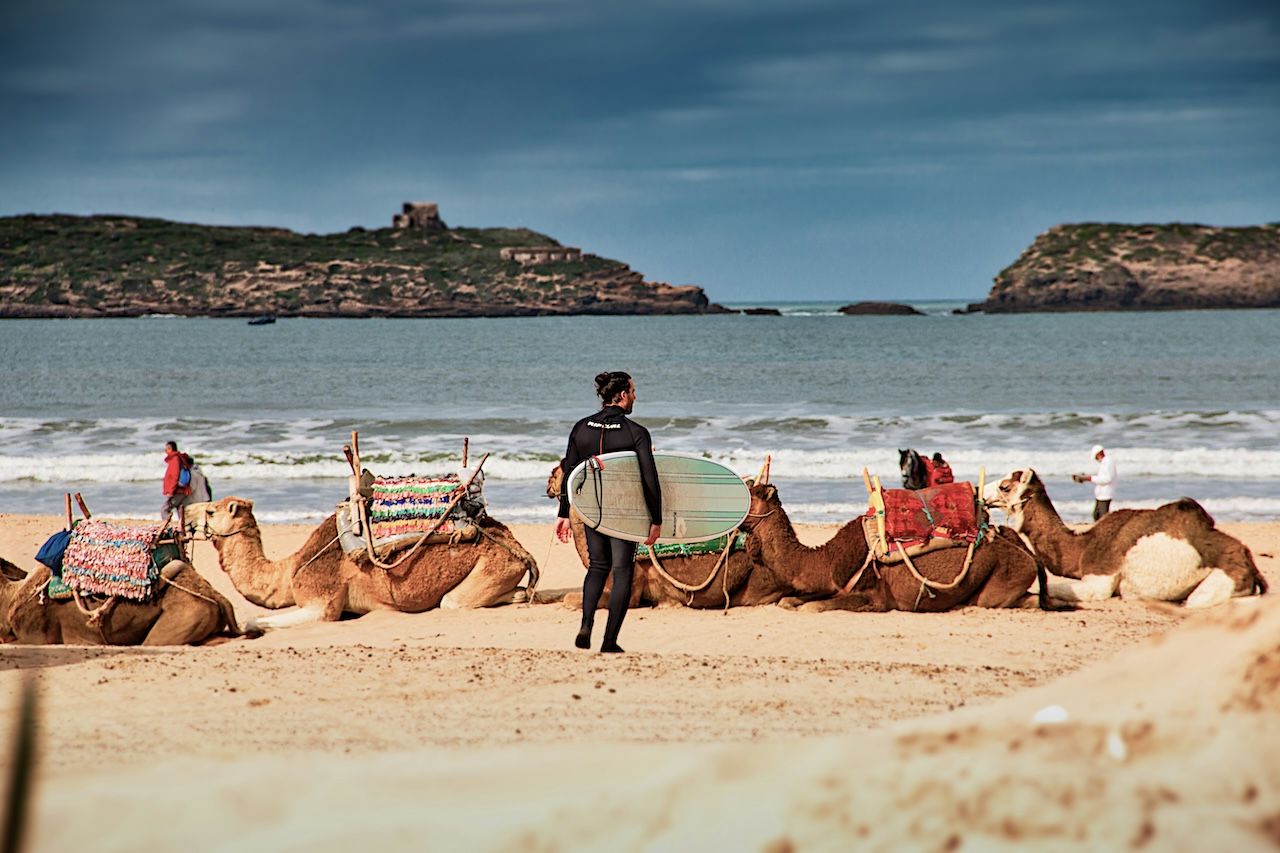
Essaouira's steady Atlantic winds make the bay between the main beach and Cap Sim a natural playground for kitesurfing, windsurfing, or surfing lessons. Set aside half a day, and combine an active session with relaxed seaside cafes or a medina evening.
Day trip to Sidi Kaouki
A short trip south to Sidi Kaouki adds a quieter Atlantic beach and low-key surf scene to the top attractions in Morocco. Allow half or a full day for a coastal walk, a simple seafood lunch, and a sunset return to Essaouira.

Essaouira, Morocco @ Shutterstock
Practical planning tips
Plan Essaouira as a slower coastal pause rather than a packed sightseeing stop. Build in time for weather changes and strong winds. Decide early whether you want lessons for kitesurfing or surfing and book in advance. Factor transfers from Marrakech, Agadir, or Casablanca into your overall route.
Where to stay in Essaouira
If you have one or two nights, staying inside the historic medina puts you within a few minutes' walk of the ramparts, harbour, and main streets. Traditional riads here offer character and easy access to cafés, galleries, and evening walks, but parking is outside the walls, so you will need to wheel bags from a gate.
Travelers who prioritize car access often choose small hotels or guesthouses just beyond the medina ramparts, close to Bab Marrakech or along the beachfront road. These areas keep you within walking distance of the old town while making arrival, departure, and day trips simpler.
The beachfront zone feels more modern and open, suiting those who want quick access to the sand and wide ocean views.
Getting around
Essaouira is compact and best explored on foot, with most visitors spending their time walking between the medina, harbour, ramparts, and beach. Streets are mostly flat, though sometimes uneven, so comfortable shoes are helpful. The main sights cluster close together, making cars unnecessary once you are settled.
Most travelers arrive by private transfer or intercity bus from Marrakech, Agadir, or Casablanca, then walk or take a short taxi to their accommodation. If you arrive with a rental car, expect to park outside the medina in paid lots near the main gates or along the seafront.
A car is useful only for day trips, such as Sidi Kaouki or inland argan cooperatives; otherwise, it is simpler to rely on walking and occasional petit taxis.
Plan your trip with a Local Expert
Designing time in Essaouira is often about fine-tuning pace rather than ticking sights off a list, which is where Morocco specialists come in. They tailor routes to the Atlantic seasons, planning wind-dependent activities like kitesurfing or long beach walks for calmer parts of the day, and favouring hammams, galleries, and sheltered cafes when the coast turns cool or blustery.
Travel style shapes the plan too: families might build in shorter walks and courtyard hotels, while surfers or art-focused visitors spend longer at the beach or in studios. With only one night, planners tend to focus on ramparts, harbour, and a sunset walk; with two or three, they add slower mornings, nearby beaches such as Sidi Kaouki, and flexible time within a wider Morocco journey.


