Casablanca is Morocco's main commercial hub and a natural entry point to the country, distinct from imperial cities and desert regions through its modern skyline, Atlantic port, and business-focused energy. It deserves a place in a multi-day itinerary as a practical base for international arrivals and departures, and for sampling contemporary urban Morocco alongside older quarters and the nearby coast.
The city suits travelers who prioritize efficient city time to adjust after flights, handle logistics, and cover a short list of sights without straying far from major transport links. It typically works best as the first or final stop on a wider route that links Casablanca with Marrakech, Fez, Rabat, or Atlantic coastal towns.
Why visit Casablanca?
Casablanca offers an immediate immersion into contemporary Moroccan life that you will not find elsewhere in the country. Here, glass-fronted towers and Art Deco boulevards sit beside traditional markets and oceanfront promenades, giving a tangible sense of how Morocco looks and feels today.
Instead of focusing on monuments, time here is about sensing the pace of a working port city: office workers on tramlines, families strolling the seafront, and late-night cafés staying busy long after dark.
What sets Casablanca apart is this blend of business energy and Atlantic openness. You leave with a clearer picture of how historic and modern influences meet in everyday routines, from French-era architecture repurposed as banks and cinemas to informal street football on the esplanades. It is a place to experience Morocco in motion rather than as a preserved historic stage set.
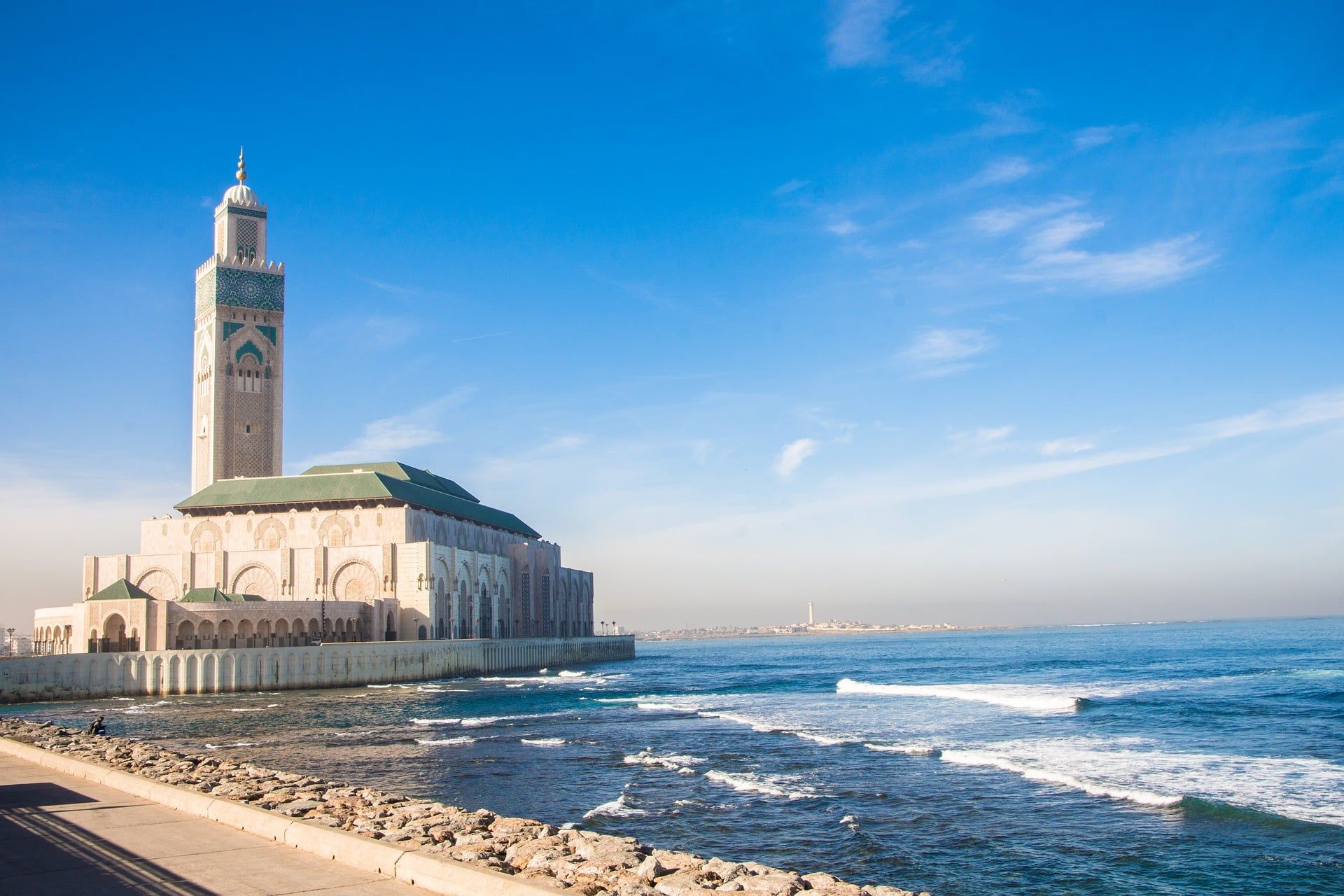
Casablanca
Who is Casablanca best for?
You'll probably enjoy Casablanca if you are curious about contemporary Morocco and like observing everyday city life rather than ticking off classic sightseeing lists. It works particularly well for travelers who value smooth arrivals and departures, prefer reliable urban comforts, and enjoy mixing short walks, cafe stops, and light exploring between flights or train journeys.
Business travelers, digital nomads, and repeat visitors to Morocco often appreciate having time here to reset, people-watch, and ease into or out of more intense itineraries in places like Marrakech or the desert.
You may prefer another destination if your priority is a romantic escape, a resort-style beach holiday, or an itinerary focused on historic monuments and traditional medinas. First-timers wanting a storybook vision of Morocco usually feel more rewarded by cities such as Marrakech or Fez, while families looking for pool time and easy sand access might gravitate to coastal spots like Agadir or Essaouira.
If you have limited days overall, it can be wiser to spend most of your time in more characterful cultural or coastal hubs and keep Casablanca purely functional.
How does Casablanca fit into an itinerary?
Casablanca usually sits at the start or end of your itinerary in Morocco, thanks to its major international airport and straightforward rail connections. Many travelers arrive here, spend a single night to adjust and organize practical details, then continue by train or private transfer to cities such as Marrakech, Rabat, Fez, or coastal towns. Others finish their route in Casablanca, using a final night near the airport to simplify departure day without shortening time in more atmospheric destinations.
On journeys of around 7 to 14 days, Casablanca can also work as a mid-trip pause between inland and Atlantic-coast stops or between two more intensive sightseeing cities.
One to two nights usually feels sufficient, giving your route a calmer, more functional stretch without overcommitting days that could be spent elsewhere. It can anchor limited day trips along the nearby coast, but in most tailor-made plans, its main role is to keep connections smooth and the overall pace of your journey balanced.
How many days do you need?
Most travelers spend one night in Casablanca, using it as a comfortable pause between flights or train journeys. In a single day, you can focus on a relaxed overview: a walk between central boulevards and older quarters, plus dinner by the Atlantic before moving on.
| Days | Recommended focus |
|---|---|
| 1 day | Recover from travel, stroll key neighborhoods, and enjoy an evening along the Corniche before onward connections. |
| 2 days | Add slow cafe time, explore contrasting districts, and leave room for practical errands such as SIM cards or currency. |
| 3 days | Use Casablanca as a flexible base between day trips or meetings, balancing light sightseeing with work or rest. |
| 4+ days | Best suited to business trips or longer stays that mix remote work with occasional urban exploring. |
Shorter stays keep more time free for Morocco's classic destinations, while longer ones make sense if you value urban comforts or have practical reasons to remain in the city.
Best region combinations
Casablanca pairs naturally with Marrakech, creating an itinerary that moves from a modern Atlantic hub to a classic medina city. Many travelers arrive in Casablanca, spend a night to adjust, then take the train to Marrakech for several days of immersive markets and riads.
Another logical route is Casablanca-Rabat-Fez, using the coastal capital as a gentler introduction before heading into the historic intensity of Fez. Trains link each city in roughly 1-4 hours, keeping overland travel straightforward.
For an Atlantic-focused trip, combine Casablanca with Essaouira or Agadir, starting in Casablanca for logistics, then following the coast for beach time and slower coastal neighborhoods. Casablanca can also connect inland to Meknes or onward via high-speed rail toward Tangier for those continuing to or from Europe.
When is the best time to visit Casablanca?
Spring and fall are generally the best time to visit Morocco for a stay in Casablanca, with comfortable temperatures for walking between districts and spending evenings along the seafront without the peak summer heat or wetter winter weather.
In midsummer, Casablanca is often cooler than inland destinations, making it a practical place to begin or end a hot-season itinerary. Winter remains milder than much of Europe, but clouds and showers are more common, so it helps to plan more time in cafes, restaurants, and indoor attractions.
As Casablanca is mainly a transport and business hub, crowd levels depend more on flight schedules than tourism seasons. Local experts can time overnight stays around international arrivals and departures, keeping rail and road connections smooth throughout the year.

Main square in Casablanca with goverment building, Morocco © Shutterstock
Best things to do in Casablanca
Casablanca blends modern architecture, Atlantic views, historic neighborhoods, and some of Morocco’s most important cultural landmarks. The city works well as a short stop or the starting point for a wider Morocco itinerary.
Walk the waterfront along La Corniche and the Ain Diab coast
Strolling from the Hassan II Mosque seawall towards La Corniche and Ain Diab frames Casablanca as an Atlantic city, with cafés, beach clubs, and ocean views. Allow half a day for a relaxed walk, sunset drink, and unhurried people-watching.
Explore the Hassan II Mosque and seafront esplanade
Visiting the Hassan II Mosque, one of the top attractions in Morocco, combines striking contemporary religious architecture with sweeping Atlantic views from its broad esplanade. Guided tours provide cultural context, while the surrounding promenade offers space to sit, reflect, and watch the waves meet city life.
Discover Art Deco streets between Place Mohammed V and the Arab League Park
Walking from Place Mohammed V towards the Arab League Park reveals Casablanca's 20th-century character through weathered Art Deco facades, arcades, and civic buildings. It suits travelers who enjoy urban photography and architecture and works well as a one- to two-hour wander.
Dip into daily life around the Central Market and Marche Habous
Time at the Central Market and the shops of the Habous quarter offers a grounded look at everyday shopping habits, from produce stalls to small cooperatives. It suits travelers who value local color over souvenirs, with a few unhurried hours enough.
Enjoy the cafe and restaurant culture in Gauthier and Racine
The Gauthier and Racine districts balance residential calm with polished cafes, bistros, and rooftop spots, suiting remote workers, business travelers, or anyone easing into Moroccan city life. Plan an afternoon or evening here to combine errands, meetings, and downtime.
Link city time with coastal escapes to Azemmour or El Jadida
Using Casablanca's rail and road connections for a day or overnight trip to Azemmour or El Jadida adds quieter medinas and fortified Atlantic views to an otherwise urban stay. This works well mid-itinerary as a softer coastal interlude without complex logistics.
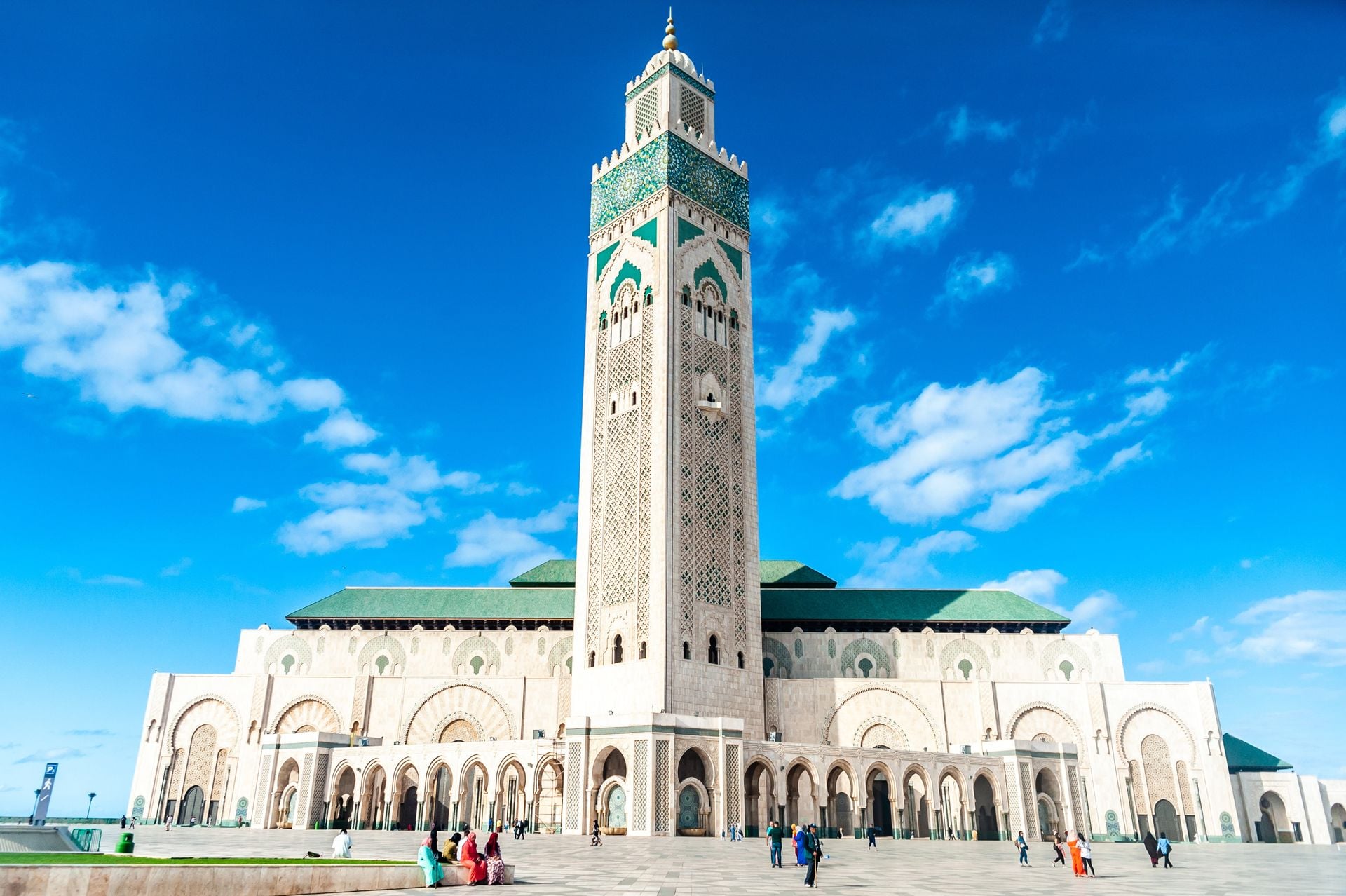
Hassan II Mosque, Casablanca
Practical planning tips
Plan Casablanca as a flexible stop with simple logistics: book central accommodation near the Casa Port or Casa Voyageurs train stations for easy transfers, and allow buffer time at rush hour. Pack layers for ocean breezes, use cards plus some cash, and confirm prayer-time opening hours.
Where to stay in Casablanca
First-time visitors often find it easiest to stay near the city center between Place Mohammed V and the Arab League Park, with good walking access to cafés, offices, and light sightseeing. For nightlife, La Corniche and Ain Diab offer seafront lounges and restaurants, though they are more spread out and taxi-reliant.
Families usually prefer calmer residential areas like Gauthier or Racine, which balance parks, neighborhood restaurants, and modern conveniences.
Luxury-minded travelers can choose upscale hotels along the waterfront or in the business districts clustered around Boulevard d'Anfa.
If you want straightforward public-transport connections, look near Casa Voyageurs for the main train hub and tram lines, or Casa Port for trains and walkable access to parts of the downtown grid.
Getting around
Central Casablanca is reasonably walkable for short hops between business districts, parks, and the waterfront, though pavements can be uneven and distances longer than they appear. The tram is one of the most practical ways to move across town, linking residential zones, key squares, and rail stations on predictable routes.
Buses cover wider areas but are slower and less intuitive for short stays. Taxis are plentiful and inexpensive by international standards; agree on the meter or fare before departure and use them at night or when crossing larger gaps between neighborhoods.
Cycling infrastructure is limited, so bikes are best kept for short leisure rides rather than daily transport. With trains, trams, and taxis readily available, most visitors do not need a rental car inside Casablanca.
Plan your trip with a Local Expert
Casablanca works best when it is shaped around your wider Morocco journey rather than treated as a stand-alone destination. Local experts use their knowledge of rail links, flight timings, and city layout to judge whether it should be a single night for recovery, a short mid-route pause, or a slightly longer base between inland and coastal stops.
They adapt routes to the season, favoring cooler Atlantic evenings in midsummer and more walking time in spring or autumn. Your travel style shapes the details: business travelers may stay close to Casa Port or Casa Voyageurs, while slower travelers might build in neighborhood walks and Corniche sunsets.
With only a few days in Morocco, they keep Casablanca streamlined so you can spend more time in places such as Marrakech, Fez, or Essaouira.


