Rabat, Morocco's Atlantic-coast capital region, combines government, culture, and everyday urban life in a compact, manageable area. Compared with more intense cities like Casablanca or Fez, it feels calmer while still offering key historic sites and coastal views, so it deserves a clear place in a multi-day Morocco itinerary.
This region suits travelers who want a practical base with good transport connections, time-efficient sightseeing, and straightforward access to both northern and inland routes. Rabat typically works well as an arrival or departure stop, or as a short city break between more demanding legs such as an imperial cities circuit or journeys toward the Sahara.
Why visit Rabat?
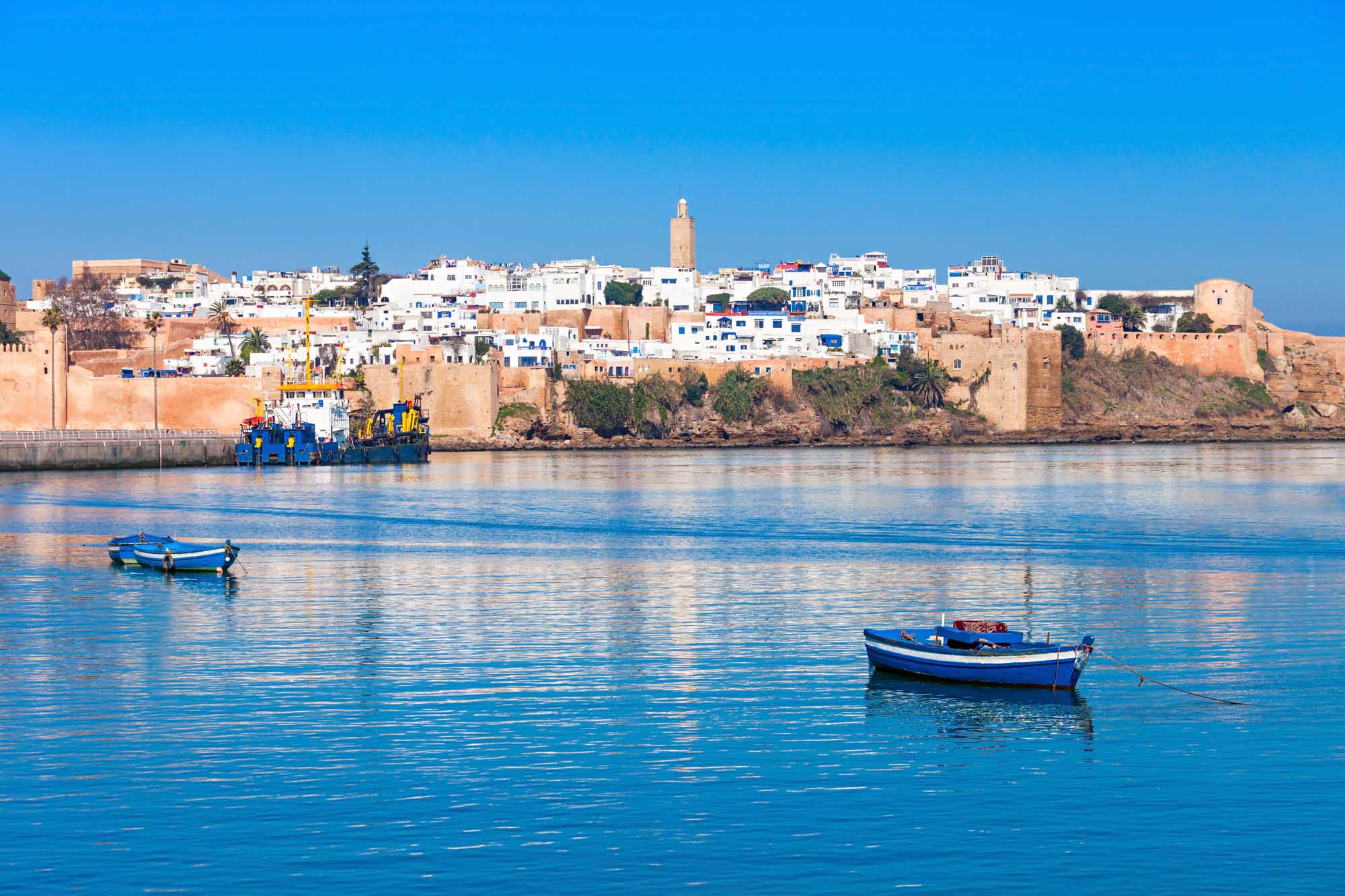
Rabat offers a softer introduction to Morocco, where ocean air, palm-lined boulevards, and white-and-blue medina walls create a calmer rhythm than in the country’s bigger cities.
What stands out is how easily you move between worlds: from sea-battered ramparts and blue alleys above the Atlantic to broad, orderly avenues lined with ministries, bookshops, and cafés.
You can pause for mint tea while the call to prayer drifts across the Bouregreg, then watch evening life unfold as families and walkers spread out along the waterfront.
Rather than overwhelming you with noise and density, Rabat shows how a modern capital and historic quarters can share the same compact space, leaving you with a grounded sense of everyday coastal life in Morocco’s political heart.
Rabat
Who is Rabat best for?
You will probably enjoy Rabat if you like a calmer base with enough to explore without packing every hour. It works well for first-time visitors who want time to adjust to Morocco without feeling overwhelmed, and for culturally curious travelers who enjoy museums, galleries, and local cafes more than ticking off a long list of must-sees.
Rabat also tends to fit families and multi-generational groups looking for straightforward logistics and gentler day-to-day rhythms. City-break fans, digital nomads, and couples planning a relaxed few days between more demanding routes often find its pace and structure reassuring.
You may prefer another destination if you are seeking an intense, round-the-clock city break with dense souks, nightlife, or dramatic desert and mountain scenery on your doorstep.
Travelers focused on long beach holidays, high-adrenaline outdoor adventures, or a wide choice of ultra-luxury resorts might be happier basing themselves elsewhere and visiting Rabat briefly as part of a wider Morocco itinerary.
How does Rabat fit into an itinerary?
Rabat typically anchors the easier stages of your time in Morocco. Many travelers start or end their plans here, pairing the capital with nearby Casablanca for international flights while keeping their first or final days calm and manageable. It also works well as a mid-trip pause between more intense stops such as Fez, Marrakech, or longer desert routes, giving you space to reset before continuing overland.
Most visitors find that one or two nights are enough to weave Rabat into their route without overloading the schedule, while slower holidays might stretch to three if you want more downtime. Using the city as a base for day trips along the Atlantic coast or inland suits travelers who prefer unpacking once and making shorter excursions.
Building Rabat into your itinerary generally softens the overall pace, turning a chain of headline destinations into a journey with deliberate pauses and room to adjust plans as you go.
Rabat, Morocco
How many days do you need?
Rabat can work as anything from a short overnight pause to a gentle three-night stay. Many travelers spend one full day and night walking the medina, visiting the Kasbah of the Udayas, and enjoying a relaxed dinner before moving on.
In two days, you can add sites like the Hassan Tower and Chellah, fit in a few café stops, and still keep the pace unhurried.
Three or more days make sense if you want a low-key base for work, slow exploration, or day trips along the coast or inland, using Rabat's calmer feel to balance busier stops elsewhere in Morocco.
| Days | Recommended focus |
|---|---|
| 1 day | Quick orientation, medina and kasbah walk, seaside sunset before or after a longer itinerary leg. |
| 2 days | Add key monuments and museums, balance gentle sightseeing with café time and evening strolls. |
| 3 days | Use Rabat as a calm base, include a half-day trip nearby, and slow the tempo of a multi-stop route. |
| 4+ days | Settle in for remote work, deeper neighbourhood wandering, and several low-stress excursions. |
Best region combinations
Rabat combines naturally with Casablanca, just down the Atlantic coast by train, creating an easy city-to-city link that suits travelers flying in or out via Casablanca and wanting a calmer night in the capital.
Pairing Rabat with Fez works well for a contrast between a compact, orderly capital and an intense historic medina city, usually traveling between Rabat and Fez by train in around three hours. Adding Rabat to a Marrakech loop gives you a quieter coastal pause between heavier sightseeing days.
For coastal-focused trips, linking Rabat with Tangier or Asilah creates a relaxed Atlantic route of scenic train rides, seaside walks, and manageable cities rather than large resort hubs.
When is the best time to visit Rabat?
Spring and fall are generally the best time to visit Morocco for a stay in Rabat. Comfortable temperatures make it easy to walk between neighborhoods, explore historic sites, and spend time outdoors without intense heat or heavy crowds.
Summer can be warm, but Atlantic breezes keep conditions milder than in many inland cities. Evenings are well suited to seaside walks and viewpoints, although trains and main routes may be busier. Winter is cooler and can be breezy or wet, but Rabat’s compact layout still makes short urban stays practical.
Local experts can adapt the itinerary to the season, adding more walking and outdoor time in spring and fall or including extra cafe and museum stops during hotter or wetter weather.

Chellah, Rabat, Morocco @ Shutterstock
Best things to do in Rabat
Rabat combines historic landmarks, Atlantic views, landscaped gardens, and a relaxed modern atmosphere. Morocco’s capital is easy to explore and works well as a calm stop on a wider journey.
Wander the Kasbah of the Udayas and Atlantic ramparts
Strolling through the blue-and-white lanes of the Kasbah of the Udayas and along its Atlantic-facing ramparts adds deeper context to Rabat, with quieter corners and shifting sea views. Allow a couple of unhurried hours rather than rushing between viewpoints.
Explore Rabat's medina and Rue des Consuls
Rabat's compact medina and the covered arcades of Rue des Consuls are best for noticing details often missed on a first walk: restored doors, craft workshops, and quieter side alleys. Set aside a few hours for slow browsing rather than hard shopping.
Visit the Hassan Tower and the Mausoleum of Mohammed V
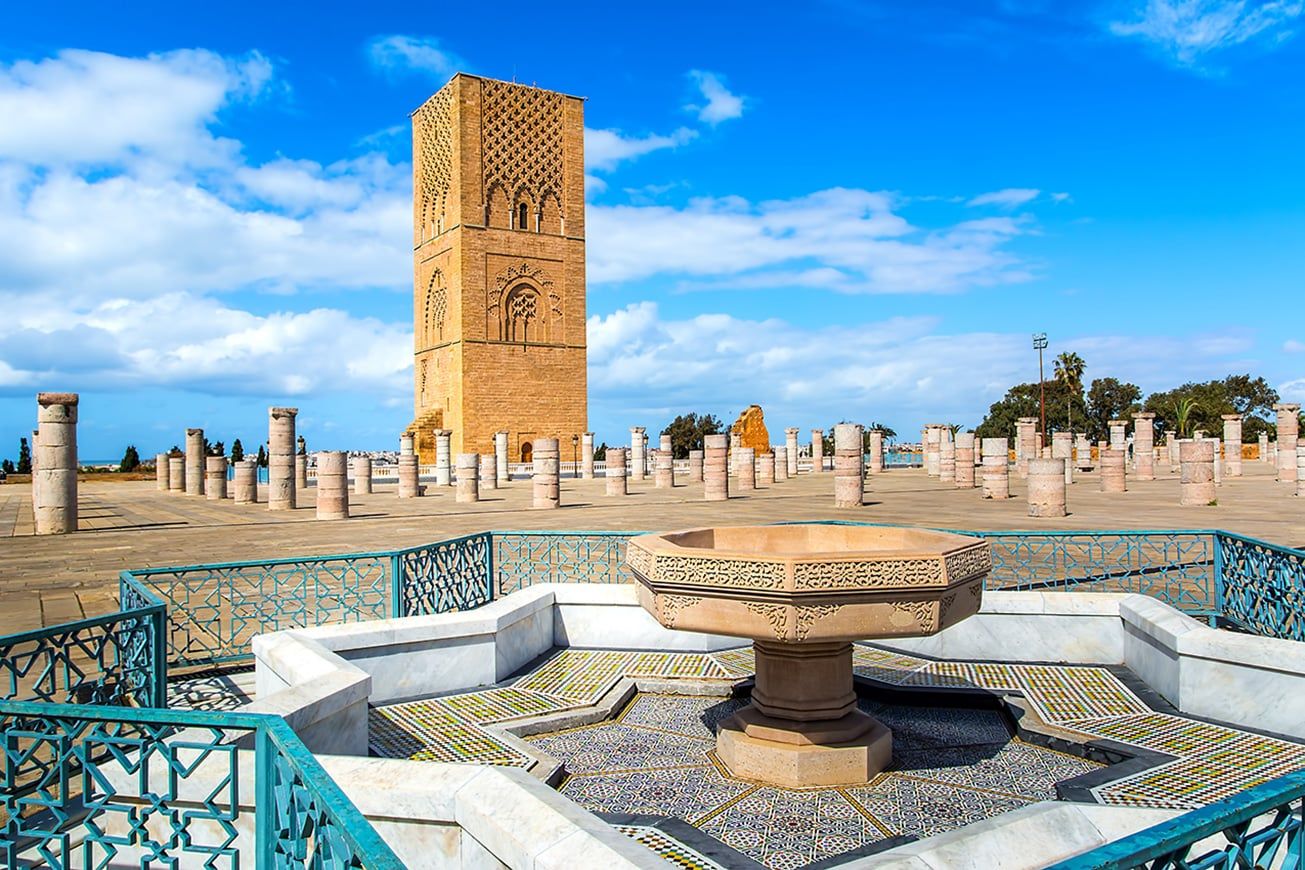
The wide esplanade around the Hassan Tower and Mausoleum of Mohammed V forms one of the top attractions in Morocco, connecting Rabat’s monumental architecture with the country’s political history. Allow about an hour and visit in the late afternoon for softer light and clearer photos.
Unwind in the Andalusian Gardens and the riverside area
The Andalusian Gardens below the Kasbah and the nearby Bouregreg riverfront work well as a reset point in a city itinerary, with shaded benches and river breezes. They suit families and couples looking for a gentle break between museum visits.
Follow the oceanfront from Rabat Beach to the lighthouse
A coastal walk from Rabat Beach toward the Rabat Lighthouse puts the city's Atlantic setting into perspective, especially around sunset. Allow an hour or two for strolling, people-watching, and photo stops rather than treating it as a quick viewpoint.
Discover galleries and collections at the Mohammed VI Museum
The Mohammed VI Museum of Modern and Contemporary Art offers a focused way to understand recent Moroccan and North African art, balancing older monuments elsewhere in the city. Its manageable size makes it a good half-day option in heat or rain.
Rabat
Practical planning tips
Allow time buffers between trains and check prayer times, as some monuments close briefly. Carry small cash for taxis and casual snacks, dress modestly for government and religious areas, and expect security checks near official buildings. Evenings can feel cool by the ocean, so pack an extra layer.
Where to stay in Rabat
For first-time visitors, staying near the medina or Kasbah of the Udayas offers atmospheric streets and easy access to core sights, cafes, and the oceanfront on foot. These areas suit travelers who prioritize walking and want a traditional feel without intense crowds.
Districts around the Ville Nouvelle and Mohammed V Avenue work well for families and business travelers, with wider pavements, modern services, and straightforward access to the train station and tram. You trade some old-town atmosphere for calmer evenings and simpler logistics.
Agdal and Hay Riad appeal to those seeking nightlife, contemporary restaurants, and more upscale stays, with tram or short taxi rides linking back to historic districts. These areas are convenient for public transport and feel practical for longer visits, remote work, or travelers who value space over proximity to monuments.
Getting around
Rabat's main sights cluster compactly, so many visitors walk between the medina, kasbah, oceanfront, and central avenues. Pavements are generally good, but distances can feel longer with children or in summer heat, making short hops by tram or taxi useful.
The modern tram network links key axes, including Agdal, Hay Riad, and the city center, and is often the simplest option in busy hours. Public buses cover wider areas but can be slower and less intuitive for short stays, so most travelers rely on trams plus walking.
Red petit taxis are plentiful and inexpensive for cross-town trips, though traffic around rush hour can add time. A rental car is rarely necessary within Rabat itself; parking can be awkward near historic areas, and intercity trains cover most onward journeys better than driving. Cycling is possible along some seafront stretches but is not yet a primary transport choice for visitors.
Plan your trip with a Local Expert
A tailored Rabat stay works best when it reflects your own pace, the season, and your broader route through Morocco. Local trip planners draw on day-to-day knowledge of train timings, opening hours, and neighborhood rhythms to keep plans calm rather than rushed.
The balance between oceanfront walks, medina wandering, and museum visits shifts with the weather: more coastal air and gardens in spring, extra indoor stops in winter rain or peak summer heat. Cultural depth, child-friendly pauses, or time for remote work all suggest different routes and overnight choices.
With only one night, plans often focus on the kasbah and riverfront; with several days, they expand to quieter districts, galleries, and easy excursions that keep Rabat's relaxed character at the center.


