Southern China offers a different experience to the country’s northern and central hubs, with sub-tropical landscapes, river valleys, and a slower pace of urban life. It deserves a place in a multi-day itinerary if you want to balance major city sightseeing with time in smaller historic towns and rural areas.
The region suits journeys focused on food, everyday culture, and scenery rather than long museum schedules or intensive temple visits. Within wider routes across China, southern China often follows Beijing and Xi'an as a contrasting later segment, or works as a shorter standalone trip when time is limited.
Why visit southern China?
Southern China offers a blend of limestone karst peaks, winding river valleys, and lush sub-tropical hillsides that you will not find in the country’s imperial northern heartlands. Days here are shaped by slow river journeys past fishermen on bamboo rafts, quiet hikes between terraced fields, and evenings in old-town streets where traditional shopfronts glow under red lanterns.
It is worth making time for the way everyday life unfolds outdoors: morning tai chi on riverfront promenades, family hotpot dinners spilling onto pavements, and produce markets that overflow with regional herbs, chilies, and tropical fruit.
You leave with specific sensory memories: river mist lifting off the water, frogs calling in rice paddies, and the taste of delicately seasoned dishes that highlight freshness over heavy sauces. This region offers one of China’s most immersive combinations of landscape, food, and street life.

Li River and karst mountains, China @ Shutterstock
Who is southern China best for?
You will probably enjoy southern China if you like unhurried trips built around atmosphere rather than must-see checklists. It works well for couples and friends who want time for scenic walks, long meals, and quiet photo stops instead of rushing between major landmarks.
Returning visitors to China often appreciate using this region to balance earlier, more intense city-focused itineraries. Families with older children who are happy with light hiking, boat rides, and relaxed evenings in small towns tend to get more from the experience than those needing constant structured entertainment.
You may prefer another destination if you want a first visit to China focused on headline icons, dense museum time, or a fast-paced nightlife scene. Travelers looking for broad sandy beaches and resort-style stays will generally be better served in dedicated coastal or island destinations. Those who dislike slower days, variable weather, or spending time outdoors on trails and boats may find other regions a more natural fit.
How does southern China fit into an itinerary?
Southern China usually sits in the middle or latter half of a longer route across China, offering a softer change of pace after time in major northern or central cities. Many travelers arrive by high-speed train or a short flight from hubs such as Shanghai, Chengdu, or Hong Kong, then continue onward to the coast or back to an international gateway.
It connects naturally with Hong Kong and Macau to the south, the Yangtze region to the north, and, on longer holidays, with Yunnan or Guizhou for more rural stays.
For most tailor-made trips, southern China works well as a three- to six-night stretch, split between one compact city and one or two smaller river or countryside towns. Rather than settling in a single base, routes typically move in one direction, using trains, private drivers, and short internal flights to avoid backtracking. This keeps travel days relatively short and shifts your itinerary into a calmer rhythm while still feeling as though you are progressing from place to place.

Fish Village in Lamma Island, Hong Kong © Shutterstock
How many days do you need?
Most travelers spend between three and six days moving through southern China rather than basing themselves in a single city. This allows time to pair a compact hub such as Guilin or Guangzhou with smaller river or countryside towns, using high-speed trains and private drivers to keep travel days short.
| Days | Suggested route | Ideal pace |
|---|---|---|
| 3-4 days | Guilin & one riverside town such as Yangshuo | Highlights-focused, one hotel change |
| 5-6 days | Guilin - Yangshuo - rice terraces near Longji | Balanced mix of scenery, walks, and free time |
| 7-9 days | Guangzhou - Guilin - Yangshuo - countryside stay | Unhurried, deeper local experiences |
Additional days let you venture beyond the classic river landscapes to quieter villages, terraced hillsides, and evening riverside walks, with space for rest days so the region's slower pace can be fully appreciated.
Best region combinations
Southern China combines well with Hong Kong, linking Hong Kong - Shenzhen - Guilin in under a day by high-speed train, ideal for first-time visitors who want city energy followed by softer landscapes.
Pairing Chengdu with southern China works for food-focused travelers, with a Chengdu - Chongqing - Guilin route adding spicy Sichuan cuisine and panda visits before river scenery.
Longer trips often connect Shanghai with Guilin and Yangshuo, suiting those who enjoy contrasts between skyline views, water towns, and karst peaks.
For slower journeys, combining historic districts around Guangzhou with Yangshuo and nearby countryside suits couples and photographers who value evening street life as much as daytime views.
Experienced China travelers sometimes add the Yangtze region before continuing south, creating a sequence of river-focused landscapes without constant one-night stays.
When is the best time to visit southern China?
Spring, from March to May, and fall, from late September to November, are generally the best time to visit China when exploring the south. Warm temperatures, manageable humidity and clearer visibility create comfortable conditions for river cruises, terrace walks and outdoor sightseeing.
Summer brings lush scenery but also high heat, humidity and heavier rain. Mist can soften river views, while shorter boat trips, market visits and flexible indoor stops help keep itineraries comfortable during downpours. Winter is cooler and quieter, with fewer crowds, lower prices and shorter daylight hours.
Seasonal planning may time rural stays around terrace planting or harvest, adjust walking routes during wet weather and avoid public holidays when major river routes and popular towns are busiest.

Sunset in the highest mountian of Hong Kong -Tai Mo Shan © Shutterstock
Experiences to include in Southern China
Southern China combines dramatic karst landscapes, subtropical islands and fast-moving cities shaped by trade and regional culture. Its mix of scenery, coast and urban energy makes it a varied addition to a wider China itinerary.
Drift between karst peaks on the Li River from Guilin to Yangshuo
A Li River cruise from Guilin to Yangshuo threads between sheer karst peaks and tiny riverside hamlets, giving a slow, cinematic introduction to southern China’s landscapes. Allow most of a day, with an extra night in Yangshuo for evening strolls and cafés.
Cycle quiet lanes and village paths around Yangshuo
Cycling from Yangshuo through villages such as Fuli and Baisha lets you move at a gentle pace between rice paddies, farm tracks, and river viewpoints. It suits reasonably active travelers; allow half to a full day with stops for fruit stalls and photo breaks.
Walk the rice terraces at Longji near Longsheng
The Longji Rice Terraces near Longsheng offer stepped hillsides, stone paths between villages like Ping’an and Dazhai, and far-reaching views at sunrise or sunset. Stay one or two nights to enjoy slower walks, changing light, and quieter evenings once day-trippers leave.
Explore historic streets and food culture in Guangzhou
Time in Guangzhou adds tree-lined streets around Shamian Island, temples such as the Temple of the Six Banyan Trees, and markets showcasing Cantonese produce. It works well as a two- or three-night stop for travelers who value food, riverfront walks, and local neighbourhoods.
Stroll riverfront promenades and backstreets in Guilin
Guilin’s central lakes and riverfront promenades are among the top attractions in China for relaxed evening walks beneath illuminated pagodas and bridges. Spend one or two nights exploring Ronghu and Shanhu Lakes, then add a short climb to Folded Brocade Hill for wider city views. The slower pace suits travelers who enjoy atmospheric waterside scenery without rushing.
Combine riverside scenery with rural stays near Lipu or Xingping
Staying in smaller towns such as Xingping or rural guesthouses near Lipu creates quieter mornings and evenings among orchards and tributaries of the Li River. This suits travelers who prefer simple comforts, slow walks, and time to watch daily life unfold in nearby villages.
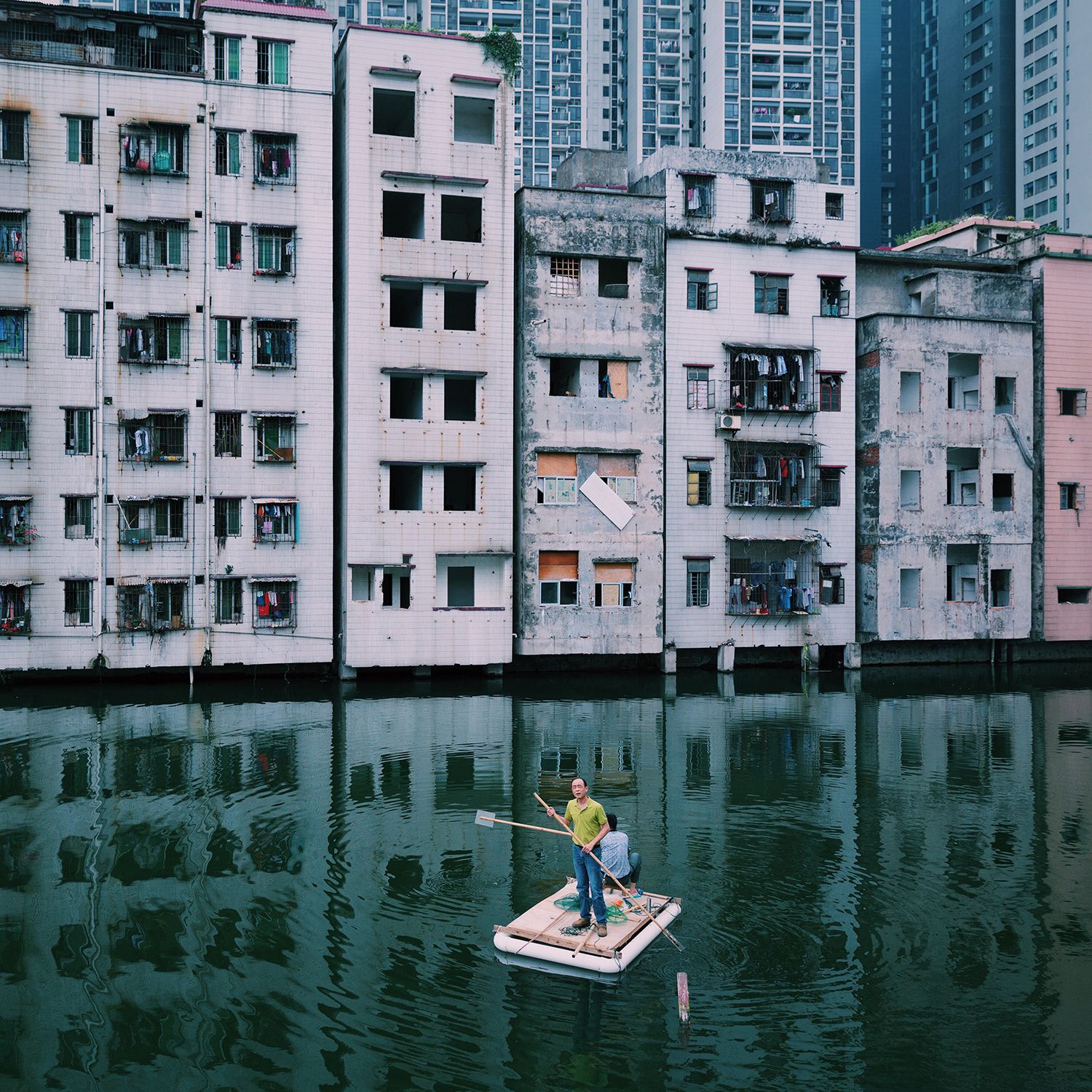
Men in Downtown Village, 2015 / Guangzhou, Guangdong, China
Planning Southern China with local expert tips
Southern China encompasses major cities, dramatic limestone landscapes, river valleys and rural areas spread across several provinces. Local experts can narrow those possibilities into a coherent route, using fast trains between major centers and private transportation for the countryside, where the journey often becomes part of the experience.
Where to stay in Southern China
The right bases depend heavily on the route you choose. Guilin provides useful transport connections for exploring Guangxi, while staying in Yangshuo places you directly among the limestone scenery and reduces the need for repeated trips from the city.
Farther west, smaller towns can provide access to rice terraces and rural landscapes, although another overnight is worthwhile only when you have enough time to enjoy the area.
Guangzhou offers a very different urban base and strong connections with other parts of southern China. Your local expert can balance these contrasting stops rather than adding a new hotel for every place of interest. If scenery and countryside are your priorities, for example, they can devote more nights to Guangxi and keep larger cities primarily for useful transport connections.
How transportation can be arranged
China’s high speed rail network makes it possible to cover many longer journeys across the south without relying on domestic flights. Private vehicles can then connect railway stations with villages, scenic areas and accommodation beyond the main lines. A local expert can coordinate these different stages so that arrival times work with your planned activities and hotel check in.
Flights remain useful when the wider itinerary covers distant parts of China, particularly when a rail journey would consume much of the day. If your route takes you through Guilin and Yangshuo before continuing to Guangzhou, for example, your expert can combine road and rail transportation in one direction, adjusting departure times and stops to your pace instead of returning to the same gateway after each stay.