Chengdu, in southwest China's Sichuan province, offers a slower, more livable pace than the country's coastal megacities, with straightforward access to city services and nearby countryside. It earns a place in a multi-day itinerary if you want to combine food, everyday culture, and short excursions without constant internal flights.
The city works best as a relaxed base for time in teahouses and parks, visits to panda research centers, and low-stress day trips. On wider China routes, Chengdu typically sits between major hubs like Beijing, Shanghai, or Xi'an and more remote destinations in western Sichuan or Tibet.
Why visit Chengdu?
Chengdu offers a rare chance in China to slow down without leaving a major city. Instead of racing between marquee sights, you settle into teahouse tables, leisurely card games, and tree-shaded parks where conversations stretch for hours.
The city’s deep-rooted Sichuan food culture is lived on every corner, from numbing-pepper street snacks to long, sociable hotpot dinners that linger late into the night. Misty bamboo hills and river valleys sit just beyond the urban edge, so it is easy to move between dense, flavorful city life and quietly scenic countryside in a single day.
You leave Chengdu not only with memories of pandas or famous dishes, but with a clear sense of how pleasure, spice, and slowness shape daily life here in a way that feels uniquely its own within China.
Who is Chengdu best for?
You will probably enjoy Chengdu if you value unhurried travel and like to linger over meals, conversations, and people-watching rather than racing through a checklist of sights. Curious eaters who want to explore regional Chinese food in depth, from street stalls to leisurely hotpot dinners, tend to get the most from time here.
The city also works well for repeat visitors to China who have already seen the main icons and now want a softer, more everyday perspective, as well as remote workers or slow travelers who appreciate a relaxed base with good amenities.
You may prefer another destination if your priority is ticking off China's most famous landmarks in a very short trip, or if you are seeking beach time as a central part of your holiday.
Travelers looking for high-adrenaline outdoor pursuits every day, or those who dislike spicy food and are not keen to experiment, may also feel more at home in other regions of China or in destinations with milder cuisines and more dramatic, high-impact sightseeing.
How does Chengdu fit into an itinerary?
Chengdu usually sits in the middle of a wider China route, linking major hubs with the landscapes and cultures of the southwest. Many travelers arrive from Beijing, Shanghai, or Xi'an, then continue on to Yunnan, western Sichuan, or Tibet. It can also work as a gentle starting point if you prefer to ease into China in a calmer setting before larger cities, or as a wind-down stop near the end of your holiday before flying home from another gateway.
Because the city encourages a slower rhythm, travelers commonly stay three to four nights rather than passing through in a single day. This gives room to settle into one area and use Chengdu as a practical base for nearby day trips without constant repacking. Placing it after several intense urban stops can change the pace of your journey, building in space for rest and everyday routines while keeping straightforward onward links to more remote regions.

Two pandas at Chengdu Panda Reserve (Chengdu Research Base of Giant Panda Breeding) in Sichuan, China © Shutterstock
How many days do you need?
Most travelers spend three to four days in Chengdu. This gives time to settle into a neighborhood, enjoy long meals, and fit in one or two light excursions without turning every day into a checklist. With just one full day, you can focus on a single district, sample Sichuan dishes, and spend an unhurried evening in a teahouse or park.
Two days add space for a mix of food walks, temple visits, and a nearby green space. Three days let you slow the pace and consider a short countryside trip, while four or more days suit remote workers or slow travelers who want to build routines in local cafes and parks.
| Days | Recommended focus |
|---|---|
| 1 day | Core city neighborhood, key food experiences, evening in a park or teahouse |
| 2 days | City highlights plus varied meals, one slower half-day in a quieter district |
| 3 days | Deeper exploration of everyday life and a relaxed short excursion out of the center |
| 4+ days | Slow travel base combining work, rest, and flexible day trips |
Best region combinations
Chengdu pairs naturally with Beijing for a trip that contrasts imperial landmarks and political history with Chengdu's everyday park life and teahouse culture. Starting in Beijing, then flying to Chengdu, works well for first-time visitors who want a softer landing after fast-paced sightseeing.
Linking Chengdu with Shanghai creates a modern China itinerary: begin in Shanghai's waterfront and high-rise districts, then continue to Chengdu to slow down with long hotpot dinners and neighborhood walks. Direct flights keep travel time manageable.
Combining Chengdu with Xi'an builds a route through central China's history and food. Travelers often visit Xi'an's ancient city walls and museums first, then continue by high-speed train or short flight to Chengdu for a more relaxed finale.
Chengdu also fits well before or after time in western Sichuan, using the city as a comfortable base to regroup between mountain landscapes and rural stays. This works especially well for travelers who value hot showers, varied restaurants, and an easy airport connection at each end of a longer journey.
When is the best time to visit Chengdu?
Spring, from March to May, and fall, from September to early November, are generally the best time to visit China for travelers spending time in Chengdu. Mild temperatures make long walks, outdoor teahouses and evening food streets more comfortable.
Summer can be hot and humid, so shaded parks, air-conditioned cafes and shorter evening strolls help balance the heat. Winter is cooler and grayer but often quieter, making parks more peaceful and popular restaurants easier to visit.
Seasonal planning may emphasize indoor food experiences and shaded green spaces in summer, while winter itineraries can favor earlier dinners and shorter outdoor walks. Chengdu also fits easily into wider routes linking northern cities or higher-elevation regions.

The Temple House Hotel, Chengdu
Experiences to include in Chengdu
Chengdu combines relaxed teahouse culture, lively food streets and easy access to some of Sichuan’s best-known sights. Its mix of local life, food and nearby cultural attractions makes it a rewarding stop on a wider China itinerary.
Share slow moments in People’s Park teahouses
Settle into a bamboo chair at Heming Teahouse or other lakeside spots in People’s Park to watch card games, ear-cleaners, and families drifting past. Allow half a day for unhurried people-watching, ideal for culture-minded and slower-paced travelers.
Wake early to see giant pandas at Chengdu Research Base
Spend a morning at the Chengdu Research Base of Giant Panda Breeding, arriving near opening time to see pandas most active before the heat builds. It suits first-time visitors to China, families, and anyone wanting one wildlife-focused half day.
Taste classic Sichuan dishes in Jinli or Kuanzhai Alleys
Jinli Ancient Street and Kuanzhai Xiangzi are among the top attractions in China for exploring Chengdu’s food culture. Spend several hours sampling mapo tofu, dan dan noodles and spicy skewers, combining sit-down dishes with street-side snacks. The compact setting suits food-curious travelers who want to try a wide range of local flavors in one evening.
Experience tea and countryside at Huanglongxi Ancient Town
Huanglongxi Ancient Town offers old riverside streets, wooden houses, and teahouses shaded by trees, less intense than urban Chengdu. A relaxed day trip works for couples, photographers, and repeat China visitors wanting a softer, small-town atmosphere.
Combine temples and hills at Qingcheng Mountain and Dujiangyan
Spend a full day exploring forested paths and Taoist temples on Qingcheng Mountain, then visit Dujiangyan's historic irrigation system nearby. This suits moderately active travelers who enjoy light hiking, culture, and cooler air without committing to remote, high-altitude trekking.
Join locals for evening life along the Jin River
Walk or cycle sections of the Jin River between Anshun Bridge and surrounding streets to see illuminated restaurants, casual riverside bars, and older residents strolling after dinner. Allow a flexible evening here, especially good for adults and night-owls.
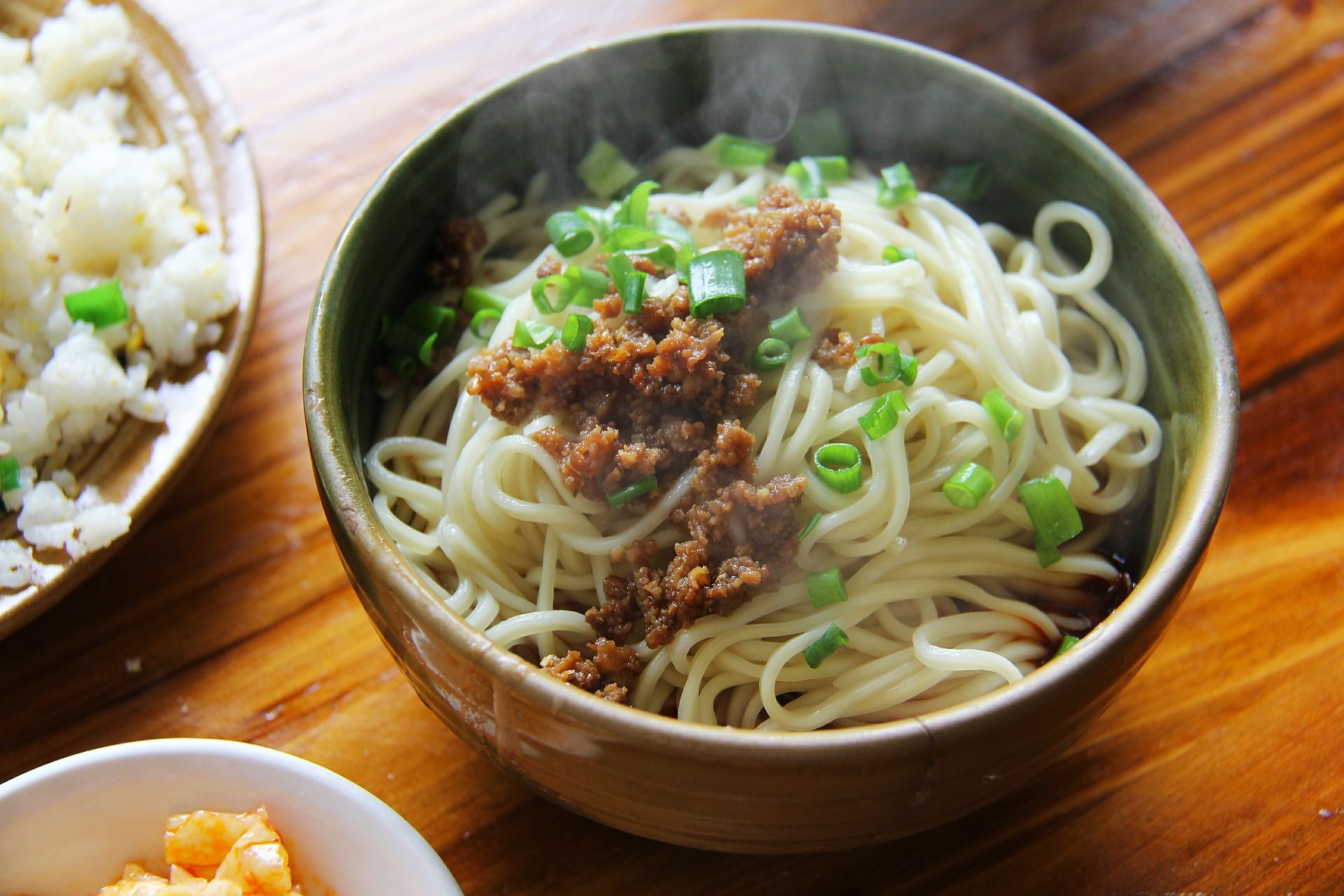
Dan dan, Chinese food, Sichuan
Planning Chengdu with local expert tips
Chengdu is both a destination in its own right and the main gateway to much of Sichuan, with excellent connections to mountain areas and historic sites beyond the city. Local experts can shape your stay around Chengdu’s neighborhoods and food culture, then choose the most efficient departure for the next part of your journey.
Where to stay in Chengdu
Central Chengdu gives you convenient access to restaurants, shopping and many cultural sights, while areas around the traditional lanes offer a more atmospheric setting.
Accommodation closer to Taikoo Li and Chunxi Road suits travelers who want a lively central location, whereas quieter neighborhoods can provide a welcome contrast to the busiest commercial districts. Your local expert can choose a hotel based on the places you plan to visit rather than simply selecting the most central address.
Chengdu is large, so avoiding unnecessary journeys across the city can make each day more comfortable. If the giant panda breeding center is high on your list, for example, your expert can arrange an early visit while keeping the rest of that day focused on places that fit naturally with the route back into the city.
How transportation can be arranged
Chengdu has an extensive metro system as well as major railway stations and two airports, making the correct departure point important when planning transfers. Private transportation can be useful for airport journeys and excursions beyond the center, while high speed trains provide efficient connections to destinations across Sichuan and farther afield.
Leshan can be reached conveniently by rail, and Emei Shan can be incorporated into the same wider route when it suits your plans. A local expert can coordinate train reservations and station transfers so you do not lose time crossing Chengdu unnecessarily.
If you are continuing deeper into Sichuan, they can arrange your final city plans around the most suitable train or flight and adapt the departure to your chosen route.