Japan's south offers warmer weather, relaxed coastal cities, and smaller islands that feel very different from Tokyo, Kyoto, or the northern Alps. It deserves a place in a multi-day itinerary if you want mild winters, straightforward transport, and access to beaches, hot springs, and smaller historic towns without complex planning.
The region is best for slower, point-to-point journeys with short hops by train or ferry and a limited number of bases. It typically fits after time in central Japan: travel down by shinkansen or flight, use two or three hubs for several days, then loop back via Osaka or another major airport.
Why visit Southern Japan?
Southern Japan stands out for the way everyday life spills right to the water's edge: sea views from local trains, steaming onsen overlooking quiet bays, and compact cities where beaches sit a short tram ride from downtown.
Volcanic landscapes feel more immediate here, with active calderas, black-sand shores, and hot springs woven into daily routines rather than tucked away as resort experiences. You are likely to remember the textures as much as the sights: the salty air on evening harbor walks, the crunch of charcoal-grilled local seafood, the warmth of open-air baths on cool nights.
Traditional districts, small shrines, and island communities feel more lived-in than curated, giving you space to notice details at a slower pace. You leave with a sense of Japan as a maritime and volcanic country first, and an urban powerhouse second.

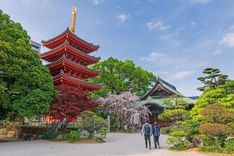
Fukuoka panorama © Shutterstock
Who is Southern Japan best for?
You will probably enjoy southern Japan if you like unhurried travel days, are happy with a looser schedule, and value small discoveries over must-see checklists. It tends to work well for couples and friends who want time to linger over long dinners, soak in onsen, and wander local streets without rushing to the next landmark.
Families with school-age children who travel comfortably by train and are flexible with meal times often find the pace relaxing rather than boring. Returning visitors to Japan who have already ticked off Tokyo and Kyoto usually appreciate the contrast most.
You may prefer another destination if you want iconic sights packed into every day, rely on constant English signage and restaurant options, or dislike planning around slightly longer transport legs.
Very short first trips to Japan, party-focused city breaks, or travelers who feel anxious without a dense list of major attractions within walking distance might be happier basing themselves in larger hubs further north.
How does Southern Japan fit into an itinerary?
The south of Japan usually comes after time in central hubs such as Tokyo, Kyoto, or Osaka, once you are ready to slow the pace and stay longer in each place. Many routes sweep west from Osaka and Hiroshima before continuing down to Kyushu or nearby islands, then loop back by shinkansen or a short domestic flight. It connects naturally with Chugoku, Shikoku, and the Seto Inland Sea, and often forms the final, more relaxed segment of a longer holiday rather than the starting point.
Travelers typically allocate four to seven days here, splitting their stay between one or two coastal cities and a quieter onsen town or island. Instead of using a single base, most people move every two or three nights to experience different coastal settings without rushing. This shift toward fewer hotel changes, more buffer between transfers, and shorter travel days changes your route from sightseeing-heavy to more restorative, giving your plans a softer landing before you fly home.

Beppu, Japan cityscape with rising steam from hot spring bathhouses © Shutterstock
How many days do you need?
Most travelers spend four to seven days in southern Japan, using two or three bases rather than one. This allows time for a mix of compact port cities, onsen towns, and quieter coastal stretches without rushing long transfers.
| Days | Suggested route | Ideal pace |
|---|---|---|
| 3-4 days | Fukuoka with a side trip to an onsen town such as Beppu or Yufuin | Good for a first taste of the south, one main base with one or two day trips |
| 5-6 days | Hiroshima - Fukuoka - onsen coast in Kyushu | Balanced mix of city life, coastal views, and hot springs, with time to linger |
| 7+ days | Hiroshima - Nagasaki - coastal Kyushu or nearby islands | Unhurried, with space for ferries, scenic trains, and slower seaside evenings |
Additional days make it easier to include smaller fishing ports, volcanic landscapes, or island overnights that depend on less frequent trains or boats, while still keeping individual travel days short.
Best region combinations
Many travelers pair southern Japan with Kansai, starting in Osaka or Kyoto before riding the shinkansen west through Hiroshima and on to Kyushu. This works well for first-time visitors who want iconic temples and city life first, then quieter coastal days.
Chugoku connects naturally via Hiroshima and the Seto Inland Sea, suiting travelers who enjoy ferries, small islands, and maritime history.
Shikoku links in by ferry from Hiroshima or Beppu, ideal for walkers and onsen fans who like rural mountain and coastal scenery. Within Kyushu, combining Fukuoka, Nagasaki, and an onsen area such as Beppu or Kurokawa suits food-focused travelers who want short hops and varied evenings.
More experienced visitors sometimes add Okinawa at the end, flying south from Fukuoka or Kagoshima for warm-water beaches and snorkeling before returning to Tokyo.
When is the best time to visit Southern Japan?
Late March to early May and late October to late November are generally the best time to visit Japan for travelers exploring the south. Mild temperatures and clearer skies suit coastal walks, city sightseeing and onsen stays.
Summer brings lush landscapes, seaside festivals, heat and humidity, along with a greater risk of typhoons that may disrupt ferries and trains. Winter is cooler but usually milder than in northern Japan, with quieter streets and relaxing hot-spring stays, although some island services operate less frequently.
Seasonal planning may reduce weather-sensitive ferry journeys, add more time in sheltered onsen towns during rainy periods, and time city stays around festivals and public holidays.

Sakurajima Volcano, Kagoshima, Kyushu, Japan @ Shutterstock
Experiences to include in Southern Japan
Southern Japan combines volcanic landscapes, subtropical islands and historic cities shaped by maritime trade and regional traditions. Its mix of city life, nature and island scenery makes it a varied addition to a wider Japan itinerary.
Follow the coast between Hiroshima and Onomichi
Traveling the Seto Inland Sea coast between Hiroshima and Onomichi mixes low-rise port towns, island views, and easy day trips by local train or ferry. Allow two to three days to pause in smaller harbors, sample seafood, and explore compact historic streets.
Soak in onsen around Beppu and Yufuin
Beppu and Yufuin are among the top attractions in Japan for volcanic scenery and traditional onsen stays. Spend two nights enjoying open-air baths, steam-filled streets, ryokan dinners, and gentle countryside walks. The slower pace especially suits couples and relaxed travelers looking for unhurried evenings.
Combine Fukuoka's food scene with seaside walks
Base in Fukuoka to pair yatai food stalls and Hakata ramen with breezy strolls along Momochi Seaside Park or around Nokonoshima Island Park. Two or three nights work well, balancing city comforts with easy-access coastal views and casual cycle routes.
Explore Nagasaki's layered harbor and hill districts
Nagasaki rewards slow exploration of its harborfront, hillside viewpoints like Inasayama, and historic neighborhoods around Dejima and Glover Garden. Spend two days riding trams, visiting small museums, and lingering at evening lookout points over the bay lights.
Ride scenic trains through Kagoshima and Ibusuki
Using Kagoshima as a base, you can ride coastal lines toward Ibusuki, with sea views, black-sand onsen, and glimpses of Sakurajima's volcano. One or two days of relaxed train trips suit travelers who enjoy gentle scenery over fast transfers.
Island-hop between Miyajima and the Tobishima Kaido
Linking Miyajima with the quieter Tobishima Kaido islands south of Kure offers shrine forests, small fishing ports, and bridge cycling routes. Allow two days for ferries, short rides, and shoreline walks, ideal for active visitors seeking low-key, local-feeling coasts.
Yakushima, Japan
Planning Southern Japan with local expert tips
Southern Japan combines the cities and volcanic landscapes of Kyushu with hot spring resorts, historic ports and subtropical islands farther south. Local experts can shape the journey around a few contrasting areas, using Japan’s rail network for the main corridor and flights or road transportation where geography makes them more practical.
Where to stay in Southern Japan
Fukuoka is a convenient gateway to Kyushu and a useful first base, while Nagasaki rewards an overnight stay for its distinctive history and hillside setting. Farther south, Kumamoto provides access to central Kyushu, and Kagoshima is well placed for exploring the volcanic landscapes around Sakurajima or continuing toward the islands. Hot spring destinations such as Beppu or the smaller resorts of central Kyushu can add a more rural stay between cities.
Trying to include every major stop can make the journey unnecessarily busy. Your local expert can choose accommodation that creates genuine contrasts, perhaps combining Fukuoka with a hot spring stay and Kagoshima rather than moving through several cities for a single night each.
How transportation can be arranged
The Kyushu Shinkansen makes rail particularly effective between Fukuoka, Kumamoto and Kagoshima, while other train services connect many destinations around the island.
Buses and private transportation become more useful in mountainous areas where rail routes are less direct. Flights can save substantial time when Southern Japan is combined with Okinawa or other islands, and ferries are useful on selected routes.
Fukuoka and Kagoshima both provide convenient air connections for wider journeys through Japan. If you enter Kyushu from Kansai and plan to finish in Okinawa, your expert can arrange a southbound rail itinerary through the places that interest you most, followed by a flight from the most convenient airport rather than requiring you to retrace the route.


 (1).jpg)