Gyeongju is a compact, manageable base for experiencing South Korea's most concentrated collection of historical sites, from Silla-era royal tombs to temples and museums. It deserves a place on a wider South Korea itinerary because you can see a broad sweep of the country's early history without complex logistics or long transfers.
The town center is walkable, and key sights are clustered or linked by simple local transport and taxis. Gyeongju works best as a short stay of one or two nights: long enough to combine central landmarks with nearby Bulguksa and other outlying sites, but not so long that it slows down a multi-stop route through the country.
Why visit Gyeongju?
Gyeongju offers an immersion into Korea's ancient Silla kingdom that you will not find elsewhere in the country. Royal burial mounds rise from grassy parks in the city center, stone lanterns and pagodas stand in situ, and artifacts appear within sight of where they were unearthed. Evening walks among softly lit tombs and restored palace ponds feel closer to exploring an open-air archaeological landscape than a modern city.
In the nearby hills, temple complexes and the Seokguram-style grotto settings link Buddhist art directly to the surrounding forest and rock rather than to gallery cases. Making time for Gyeongju means leaving South Korea with a tactile sense of its first golden age - how its rulers lived, worshipped, and were buried, instead of only its contemporary urban energy.
Who is Gyeongju best for?
You'll probably enjoy Gyeongju if you are curious about history, like to explore at a gentler pace, and are happy spending time in museums and at cultural sites. It works particularly well for couples or friends who enjoy walking between places, pausing for cafés and conversations rather than nightlife.
First-time visitors to South Korea who want at least one stop focused on heritage, as well as culture lovers who already know Seoul or Busan and want a contrasting, smaller-scale base, often find an overnight stay rewarding. Families with older children or teens who can engage with stories of ancient kingdoms tend to get more from a night or two here than those looking for hands-on attractions.
You may prefer another destination if your priority is shopping, nightlife, beach time, or theme parks, or if you are traveling with very young children who quickly lose interest in historical settings. In that case, a focused day trip from Busan or Daegu is usually enough to see key highlights before returning to a livelier base.
How does Gyeongju fit into an itinerary?
Gyeongju typically works as a focused stop of one or two nights slotted between major hubs like Seoul, Busan, and Daegu. Many travelers head south from Seoul, pause in Gyeongju to break up the long intercity journey and add historical depth, then continue on to Busan or the south coast. Others base in Busan and include Gyeongju as either a long day trip by train or bus, or as a short overnight to enjoy quieter evenings after day-tour groups depart.
Adding a night here gently slows your route, creating space for walks, museum visits, and unhurried meals instead of back-to-back city days. For tighter schedules, a day trip preserves a faster pace while still weaving Gyeongju into your plans. A local expert can help decide whether to overnight or visit in transit, depending on how much time you want to devote to Korea's southeast and how many separate hotel changes you prefer.
Trips that include Gyeongju
The South Korea culture trip: Seoul, Gyeongju, Busan and Jeju visits Yangdong Folk Village, the royal burial mounds of Daereungwon, and Cheonmachong's ancient treasures. Donggung Palace and Wolji Pond offer a glimpse of Gyeongju's Silla-era architecture.
The Private South Korea trip: Seoul, Gyeongju and Busan focuses on Silla history at Gyeongju National Museum, Daereungwon Tomb Complex, and Cheomseongdae Observatory, with an evening visit to Donggung Palace and Wolji Pond.
The Best of South Korea tour: Seoul, Gyeongju, Busan and Jeonju combines the scenic setting of Anapji Pond with Daereungwon's royal tombs, artifacts inside Cheonmachong, and the ancient astronomical observatory of Cheomseongdae.
For an introduction to Korea's Buddhist martial arts traditions, our local experts can include a Sunmudo meditation session at Golgulsa Temple, adding a hands-on cultural experience to your time in Gyeongju.
Gyeongju
How many days do you need?
Gyeongju rewards anything from a focused half-day visit to a slower two-night stay. Day-trippers can see a snapshot of the historic core, but an overnight lets you experience illuminated tombs and quieter streets after tour buses leave.
| Time | Recommended focus |
|---|---|
| Half day | Quick circuit of central tombs and one or two key landmarks, then continue to Busan or Daegu. |
| One day | Historic park areas plus a museum or temple, with café stops and flexible pacing. |
| One night | Daytime sightseeing plus evening strolls among lit mounds and old streets before moving on. |
| Two nights | Unhurried visits to outlying temples and grottoes in the hills, with time for scenic walks and longer meals. |
Each extra night shifts the experience from a checklist of major sights to a more atmospheric stay that connects city, countryside, and history.
Best region combinations
Gyeongju most often pairs with Busan, Daegu, and Seoul, and can also link smoothly with nearby coastal or mountain areas. A classic route is Seoul - Gyeongju - Busan, using Gyeongju as a one- or two-night historical interlude between big-city stays; allow around 2-3 hours from Seoul to Gyeongju by KTX and transfer, and about 1-1.5 hours on to Busan.
From Busan, Gyeongju works well as a relaxed overnight or an extended day trip before continuing to Daegu, roughly an hour away by train or bus.
Travelers heading for Andong and Hahoe Folk Village can route via Gyeongju for a compact Silla-history stop, while those exploring the east coast near Pohang can dip inland to Gyeongju for a night to balance coastal scenery with cultural sights.
When is the best time to visit Gyeongju?
April to May and late September to early November are generally the best times to visit South Korea for travelers exploring Gyeongju. Mild temperatures and clearer skies suit walks between royal tombs, temples and museums, while cherry blossoms in spring and autumn foliage make the city especially atmospheric.
Summer is hot and humid, so shaded temple grounds, indoor exhibits and early-morning or evening walks work best. Winter is colder and quieter, rewarding travelers who do not mind bundling up in exchange for fewer crowds.
Experiences to include in Gyeongju
These experiences highlight Gyeongju’s most distinctive Silla-era sites and scenic corners, giving you a strong sense of place even on a short stop within a wider South Korea itinerary.
Stroll Tumuli Park and Wolseong for Silla-era landscapes
Allow half a day to wander Daereungwon Tomb Complex and Gyeongju Gyochon Traditional Village around Wolseong Park. The walkable cluster of grassy royal mounds, historic streets, and bridges captures Gyeongju’s core atmosphere and combines easily with the Donggung Palace area after dark.
Experience lantern-lit Donggung Palace and Wolji Pond
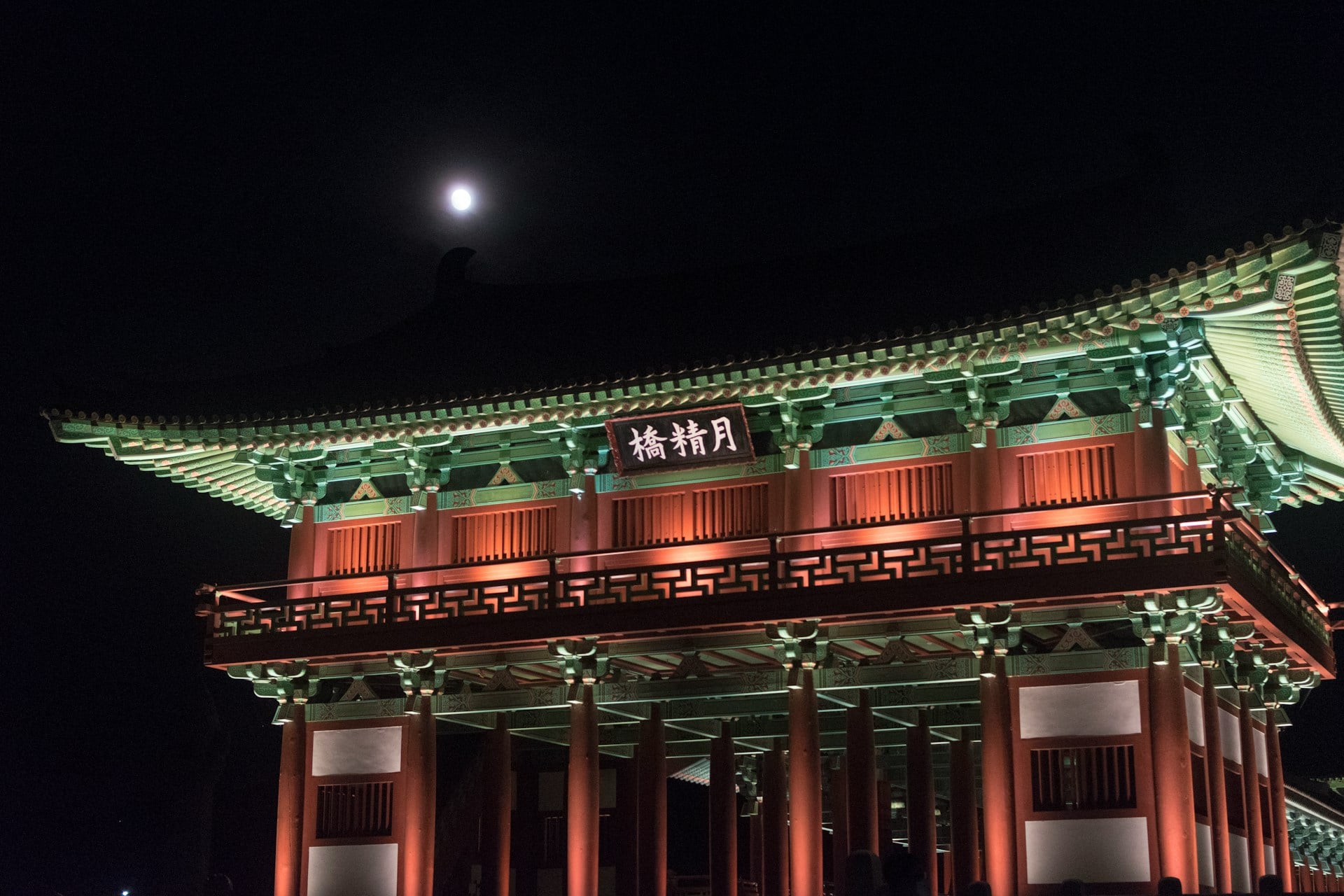
Plan an evening visit to Donggung Palace and Wolji Pond, when reflections of pavilions and lights turn the site into one of Gyeongju’s most atmospheric scenes. One to two hours here pairs well with a late-afternoon walk through nearby Daereungwon or Wolseong Park.
Combine Bulguksa Temple with Seokguram Grotto in the hills
Dedicate half a day to Bulguksa Temple and the hillside trail or shuttle to Seokguram Grotto. Together they reveal the Buddhist artistry and forested setting that defined Silla spirituality, and can comfortably fill a morning or afternoon within a two-night Gyeongju stay.
Cycle around Bomun Lake resort area
Rent a bicycle and spend two to three relaxed hours circling Bomun Lake, stopping at lakeside cafés or viewpoints along the path. The flat loop contrasts with tombs and temples and can be combined with morning city sightseeing on a longer day.
Trace history at Gyeongju National Museum
Set aside two to three hours at Gyeongju National Museum to connect outdoor sites with their original artifacts, from Silla crowns to stone pagoda pieces. It works well as a midday break between morning walks in Wolseong Park and evening lights at Donggung Palace and Wolji Pond.
Walk evening streets around Hwangridan-gil
Spend an evening exploring cafés, hanok-style restaurants, and bars along Hwangridan-gil near central Gyeongju. One to two hours here adds a contemporary counterpoint to daytime ruins and can easily follow visits to Daereungwon or Donggung Palace and Wolji Pond.
Planning Gyeongju with local expert tips
Gyeongju is one of South Korea’s richest historic destinations, with royal tombs, temple complexes and archaeological remains recalling its centuries as the capital of the Silla kingdom. Local experts can arrange these scattered sites into an easy sequence while preserving time to enjoy the historic center after the main day visitors have left.
Where to stay in Gyeongju
Central Gyeongju is a convenient choice for exploring the Daereungwon tomb complex, traditional streets, and nearby historic areas on foot. Staying here also gives you access to restaurants and a pleasant atmosphere in the evening. The Bomun Lake area offers larger hotels and resort facilities, but requires more transportation for visits to the historic center.
Bulguksa Temple and Seokguram Grotto lie farther east, so they are better approached as an excursion than as a reason to move hotels. An overnight in Gyeongju is particularly worthwhile when Korean history is a major interest, since it gives you more freedom than a day trip from Busan. Your local expert can choose between a central stay and a quieter resort setting according to the pace you prefer.
How transportation can be arranged
Gyeongju is easily incorporated into a journey through southeastern South Korea, with high-speed rail services using Singyeongju Station outside the historic center. Transfers can be arranged between the station and your hotel, while local buses, taxis, or private transportation are useful for reaching sites beyond the central area.
Bulguksa Temple and Seokguram Grotto combine naturally in the same outing, whereas the central tombs and historic streets are better explored partly on foot. If you are traveling between Seoul and Busan, your expert can make Gyeongju an overnight stop rather than a return excursion, arranging your rail tickets and local transportation around the sites you most want to see.