Northeast Thailand offers a different perspective on the country: slower-paced, culturally rich, and rooted in everyday life rather than headline sights. For a multi-day trip to Thailand, it usually works best as one segment of a wider itinerary linked with Bangkok, the south, or the north.
A vetted local expert can help you decide how many days to spend here, which provinces to prioritize, and how to structure overland connections. Instead of browsing generic tours, you compare specific, tailor-made proposals for this region and refine one plan together so it matches your timing, interests, and budget.
Why visit Northeast Thailand?
Northeast Thailand, or Isan, rewards the traveler who slows down and looks a little closer. This vast plateau of rice paddies, forested hills, and quiet river towns feels far from Thailand's busier centers, with a rhythm of life shaped by the seasons and the rice harvest. You come here to taste fiery regional dishes at simple markets, wander among Khmer ruins and ancient temples, and watch the Mekong glow at sunset.
Time in the northeast leaves you with a deeper sense of Thailand's cultural roots, from village festivals and silk weaving traditions to the cadence of the local dialect. Rather than dramatic, one-off sights, the lasting memory is of small encounters and everyday scenes that build into a rich, grounded experience of the country.

The twin rock pillars in Pha Taem National Park, Ubon Ratchathani province, Thailand © Shutterstock
Who is Northeast Thailand best for?
You'll probably enjoy Northeast Thailand if you are a repeat visitor or an independent traveler who values everyday experiences over big-name sights. Culturally curious couples and friends who like slow journeys, local food, and unhurried evenings in small towns tend to feel at home here.
It also suits travelers interested in village life, crafts, and festivals who are happy with simple comforts rather than extensive resort facilities. Families with older, adaptable children who cope well with longer drives and low-key days may also appreciate the region.
You may prefer another destination if you are a first-time visitor wanting Thailand's classic highlights in a short trip, or if you are mainly looking for beaches, nightlife, or theme-park-style attractions.
Families with very young children, or travelers who expect luxury hotels, extensive shopping, and dense sightseeing in a compact area, are often better served by places such as Bangkok, Chiang Mai, or the southern islands, using the northeast only as a brief add-on if it fits.
How does Northeast Thailand fit into an itinerary?
Northeast Thailand usually works best as a segment within a wider Thailand journey rather than a standalone trip. Many travelers start with a few days in Bangkok, then head into the northeast for a slower overland stretch before continuing on to the north or flying south to the islands. Others add it in the middle of a longer route to change tempo between city time and beach time.
Because distances are greater and drives longer, including the region naturally slows the overall pace, with fewer hotel changes and more two- or three-night stays. Local experts help you decide whether to approach it as a loop from Bangkok, a bridge between regions, or a final, quieter chapter before your departure.
Trips that include Northeast Thailand
The Northern Thailand and Koh Samui | Thailand trip explores Khao Yai National Park after Bangkok and Ayutthaya, with a guided walk through monsoon forest. After a stop at the Visitor Center, forest trails lead to Nong Phug She Tower for wildlife spotting and Heow Suwat Waterfall, featured in the film The Beach.
The journey continues with cycling among the temples of Sukhothai Historical Park, visits to Chiang Rai and Chiang Mai, and leisure time on Koh Samui.
For a better chance of spotting wildlife, our local experts can allow extra time at Nong Phug She Tower, adjusting your day in Khao Yai to suit your interests.
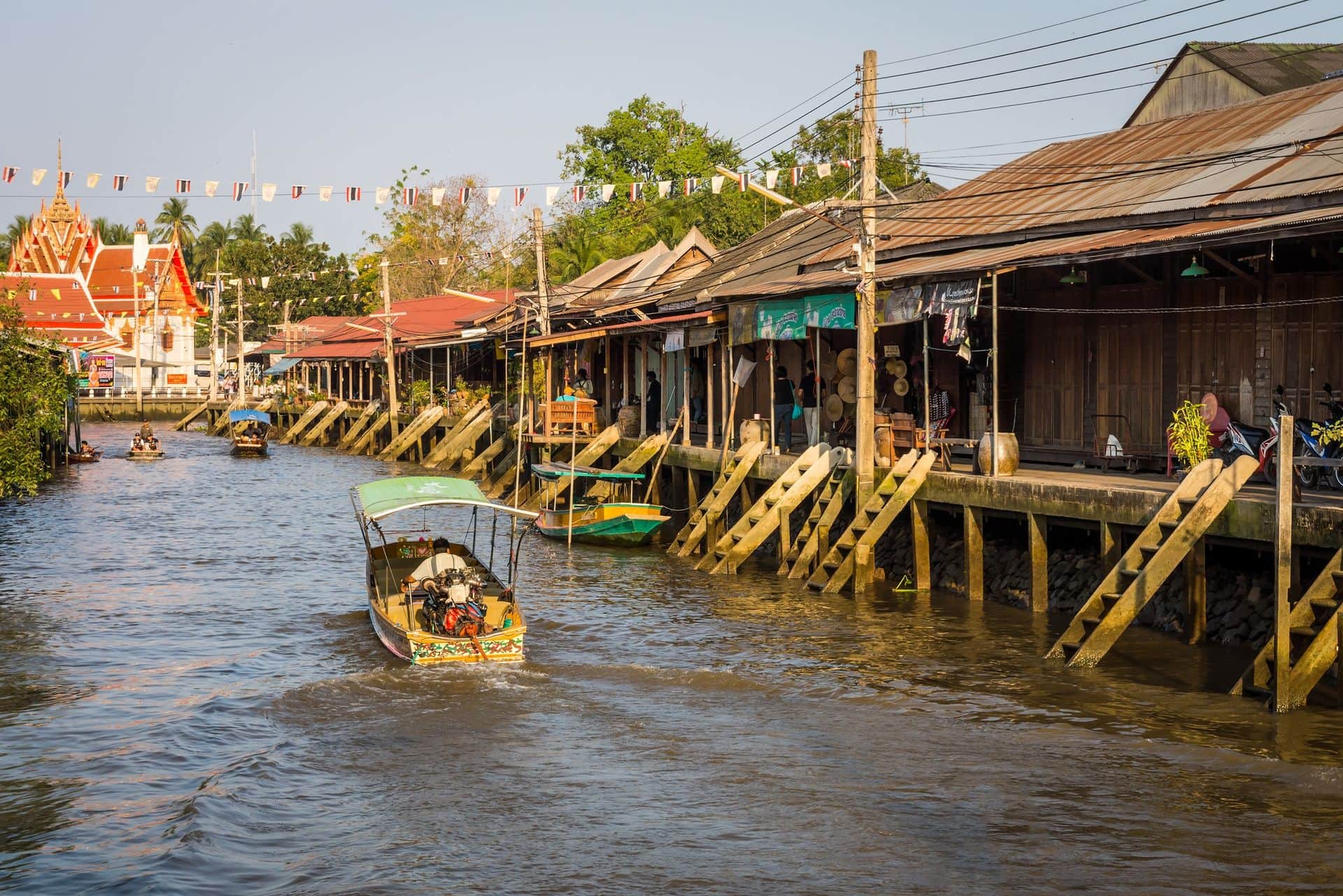
The traditional vintage motorboat and riverside Thai village at Amphawa district in countryside of Thailand
How many days do you need?
Most travelers fold Northeast Thailand into a wider Thailand journey, so the ideal stay depends on your route. As a guide, use the table below:
| Days | Recommended focus |
|---|---|
| 2-3 days | Sample one hub such as Khon Kaen or Udon Thani, visit nearby temples or villages, and enjoy Isan food before moving on. |
| 4-5 days | Link two provinces, for example Ubon Ratchathani and Nakhon Phanom, with time for Mekong views, small towns, and one festival or market day. |
| 6-8 days | Follow a slower loop across several provinces, building in village stays, weaving communities, and time to simply watch daily life unfold. |
Stay shorter if you mainly want a taste of Isan between better-known regions. Stay longer if you enjoy road trips, low-key evenings, and getting to know one or two bases in depth. A local expert can balance driving times so the trip still feels relaxed.
Best region combinations
One popular option is Bangkok - Khon Kaen - Udon Thani, using domestic flights and short drives to add a rural interlude between city and onward connections. It suits first-time visitors who want just a taste of Isan without long overland stretches.
A slower cultural route is Ayutthaya - Korat (Nakhon Ratchasima) - Surin, ideal for history-minded travelers interested in Khmer ruins and traditional crafts, with manageable half-day drives.
Nature lovers often enjoy Chiang Mai - Loei - Nong Khai, combining northern mountains with cooler highlands and Mekong sunsets, good for couples or friends who like scenic viewpoints and walking.
For a north-south journey, combine Sukhothai - Khon Kaen - Ubon Ratchathani, then fly to Krabi or Phuket. This works well for travelers wanting quiet cultural days before beach time.
Experienced Thailand visitors might choose Udon Thani - Nakhon Phanom - Mukdahan along the Mekong, a gentle drive-based route for those who value river views and low-key towns over headline sights.
When is the best time to visit Northeast Thailand?
The best time to visit Thailand for exploring the northeast is typically November to February, when cooler, drier weather suits village walks, temple visits, and slow evenings along the Mekong. Routes are easier to plan, and outdoor markets and festivals feel pleasant rather than draining.
March to May is hotter and hazier. This period may suit travelers who prioritize quiet roads and flexibility over comfort or who have fixed school-holiday dates. Local experts may shorten midday sightseeing, add air-conditioned stops, and favor hotels with pools or river breezes.
June to October brings the green season. Rural landscapes turn lush, rice fields are at their most photogenic, and crowds remain light, but heavy showers can affect smaller roads and river conditions.

Phimai historical park on blue sky background, An ancient stone castle, World heritage in north east of Thailand © Paahboobkk/Shutterstock
Experiences to include in Northeast Thailand
The experiences below highlight the most rewarding ways to spend your time in Northeast Thailand, focusing on authentic encounters, local flavor, and slow-paced exploration that add depth and balance to a wider Thailand itinerary.
Follow the Mekong through laid-back river towns
Staying along the Mekong in towns like Nong Khai or Nakhon Phanom brings a calm, contemplative rhythm to your trip. Allow two to three nights in one base for sunsets, riverside walks, and relaxed markets. It suits couples, friends, and repeat visitors who enjoy unhurried evenings and simple, friendly guesthouses.
Discover Khmer ruins and quiet historical sites
Northeast Thailand's Khmer ruins and lesser-known temples offer a quieter perspective on some of the top attractions in Thailand and are best enjoyed at an easy pace, with half-days spent exploring one site rather than rushing between many. This suits culturally curious travelers who like space to wander, photograph details, and learn about history without crowds or time pressure.
Immerse yourself in village life and local crafts
Staying near weaving or farming villages lets you see silk-making, rice fields, and daily routines up close. Plan at least a full day, or an overnight, to visit homes and workshops without feeling intrusive. It works well for respectful travelers who value connection over checklist sightseeing.
Savor Isan cuisine where it is from
Sampling grilled meats, spicy salads, and sticky rice in local restaurants and markets is a highlight of any Isan itinerary. Give yourself several unstructured meals to try regional specialties. It is ideal for adventurous eaters, with mild options and guidance from your local trip planner if you prefer less heat.
Explore provincial cities as relaxed bases
Cities such as Khon Kaen, Udon Thani, or Ubon Ratchathani make convenient hubs, with good transport links, markets, and temples nearby. Spend two or more nights in each to reduce packing and driving. These bases suit travelers who like comfortable hotels, easy dining, and day trips into the countryside.
Enjoy scenic drives and slow countryside journeys
Road trips between provinces reveal rice paddies, small towns, and roadside food stalls that you would miss by flying. Plan manageable driving days with one or two planned stops rather than dense sightseeing. This style works for patient travelers who appreciate the journey itself as part of the experience.
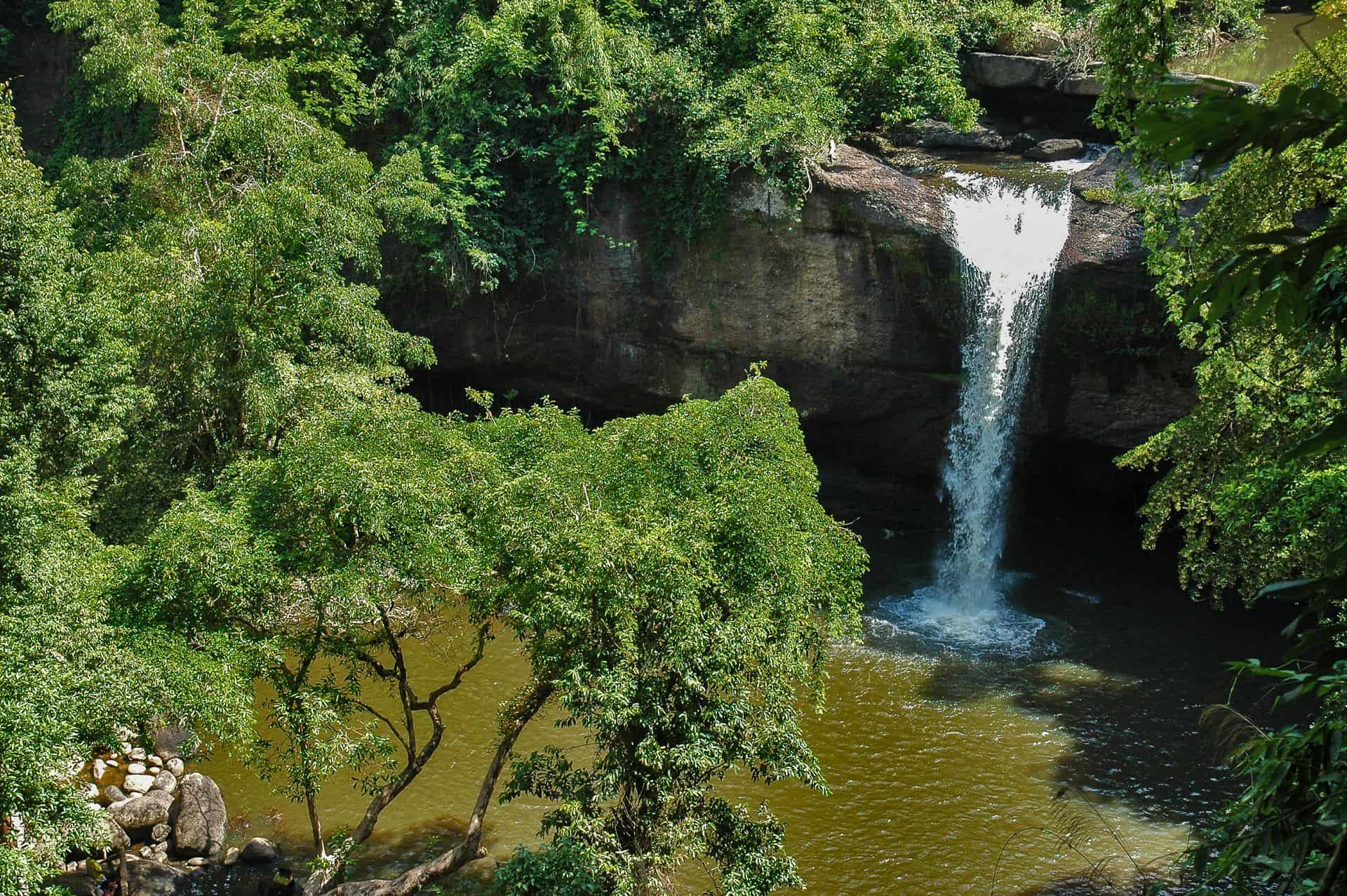
Waterfall in Khao Yai National Park near Nakhon Ratchasima
Planning Northeast Thailand with local expert tips
Northeast Thailand, widely known as Isan, offers Khmer temple ruins, Mekong River towns, national parks and a distinctive regional food culture away from the country’s busiest visitor routes. A local expert can focus your journey on one part of this large region, combining rail or air connections with road travel rather than attempting to cover Isan from end to end.
Where to stay in Northeast Thailand
Nakhon Ratchasima is a useful gateway from Bangkok and can provide access to the southwestern part of Isan, including historic Khmer sites. Farther east, Ubon Ratchathani works well for travelers interested in the lower Mekong region, while Khon Kaen offers strong transport connections in central Isan. Nong Khai provides a more relaxed base beside the Mekong and can fit naturally into a journey toward Laos.
The distances between these places make a selective approach important. Your local expert can concentrate on the Khmer heritage of southern Isan or follow the Mekong through the north rather than combining distant cities simply for variety. This leaves more time for smaller communities and rural landscapes between the main bases.
How transportation can be arranged
Rail lines connect Bangkok with several major cities in Northeast Thailand, including Nakhon Ratchasima, Khon Kaen, Nong Khai and Ubon Ratchathani. Domestic flights can save time when the region forms one part of a longer Thailand itinerary, while private road transportation is particularly valuable for archaeological sites, national parks and villages away from the main transport corridors.
Border connections with Laos can also influence the most logical direction of travel. Your expert can, for example, arrange a train or flight from Bangkok followed by a private journey through selected Isan provinces, finishing near the Mekong when Laos is your next destination. The route can be adjusted around your interest in temples, food, countryside, or river landscapes rather than distance alone.