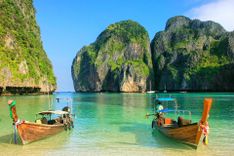
Krabi is a strong choice if you want Thailand’s limestone cliffs, island-dotted seas and relaxed coastal towns in one focused area, without criss-crossing the country. Instead of piecing together ferries, transfers and day trips yourself, a vetted local expert can design a logical route that fits smoothly into a longer Thailand itinerary.
They help you decide how many days to allocate to Krabi versus Bangkok, the north or the Gulf islands, and which activities truly match your priorities, from quiet beaches to low-key marine excursions. This keeps each day purposeful, with realistic travel times and pre-arranged logistics, so you can commit to a clear plan and book with confidence.
Why visit Krabi?
Krabi rewards the time you spend getting there with some of Thailand's most dramatic coastal scenery. Towering limestone karsts rise straight from clear seas, framing long, pale beaches and small coves that feel a world away from city noise. Out on the water, you can follow island-dotted horizons by longtail boat or kayak into quiet lagoons and sea caves, where the main sounds are paddles and birds.
Inland, mangroves, hot springs, and jungle trails show a different side of southern Thailand beyond the beach. Stay a few days, and you leave with a sense of having slowed down: sunsets watched from soft sand, salt on your skin, and a clearer picture of Thailand's wilder, more elemental coast.

Long tail boat on tropical beach with limestone rock, Krabi, Thailand © Shutterstock
Who is Krabi best for?
You will probably enjoy Krabi if you like unhurried, outdoors-focused trips and do not mind splitting your time between different beaches or islands. It suits couples looking for relaxed days and memorable sunsets, families who value easy boat trips and simple downtime, and first-time visitors to Thailand who want coastal scenery without intense nightlife.
It also works well for active travelers who enjoy mixing gentler adventures like kayaking or easy hikes with plenty of time to recharge. If you prefer characterful smaller resorts and a sense of space over big-city buzz, Krabi is a good fit.
You may prefer another destination if you want fast-paced nightlife, intensive shopping or a dense concentration of bars and restaurants within walking distance. Those seeking very short transfers from airport to beach, or an all-in-one large resort with everything on-site, might find other Thai beach areas more convenient. Travelers focused mainly on temples, museums and urban food scenes will likely be happier basing themselves in Thailand's major cities instead.
How does Krabi fit into a Thailand itinerary?
Krabi usually sits in the middle or latter half of a tailor-made Thailand trip, after time in at least one city or cultural region such as Bangkok, Chiang Mai, or central Thailand. Many travelers arrive via Bangkok, then fly to Krabi for several slower days before either returning home or adding one more coastal stop, such as Phuket, for contrast.
It works best as the stage where your itinerary deliberately eases off: fewer hotel changes, longer stays in each place, and simpler logistics focused around one coastal base. A local expert will typically design a flow that starts faster and more varied, then builds in Krabi as the decompression phase, so the overall journey ends at a calmer pace.
Trips that include Krabi
The Tailor-made Krabi discovery trip features a speedboat excursion to Phra Nang Cave, Tub Island, Chicken Island, and Poda Island for swimming, snorkeling, and beach time. The itinerary also includes canoeing along the Sok River in Khao Sok.
The Thailand trip: tailor-made Krabi beach escape begins with a transfer from Krabi Airport, followed by rainforest walks in Khao Nor Chu Chi National Park and panoramic views from Wat Tham Suea, or Tiger Cave Temple.
The Southern Thailand tour travels from Bangkok towards Phuket, stopping at Wat Tham Sua in Krabi Province before a long-tail boat excursion to Ko Poda Island and Phra Nang Cave for snorkeling and relaxation.
For a glimpse of traditional island life, our local experts can set aside more time to explore the villages of Koh Klang, adding a cultural experience to your Krabi stay.

Aerial view of Phra Nang Cave Beach with traditional long tail boat on Ao Phra Nang Beach, Krabi, Thailand © Avigator Fortuner/Shutterstock
How many days do you need?
Krabi rewards at least a few unhurried days, so you are not rushing between beaches and islands. A local expert can fold Krabi into your wider Thailand route, balancing time here with Bangkok, the north and other coasts.
| Days | Recommended focus |
|---|---|
| 2-3 days | Quick coastal escape with one main beach base, a classic island-hopping trip, and a sunset evening. Best if you are short on time or adding Krabi to a busy Thailand route. |
| 4-5 days | Balanced stay mixing boat trips with kayaking, a lagoon or mangrove visit, and relaxed beach time. Ideal for first-time visitors and couples. |
| 6-7+ days | Slower exploration, splitting between two areas such as Ao Nang and Railay or an offshore island, with extra time for quiet coves and inland nature spots. |
Stay shorter if you have a tight overall itinerary; stay longer if you value slow mornings, flexible days and fewer hotel changes.
Best region combinations
Krabi combines well with Bangkok, giving you temples, markets, and urban food before shifting into quieter coastal scenery. Many travelers fly Bangkok-Krabi-Bangkok, which works for first-time visitors wanting an easy, classic contrast.
Pairing Chiang Mai with Krabi brings together northern mountains and culture with southern beaches. A typical order is Bangkok-Chiang Mai-Krabi, flying between each; this suits travelers keen on soft adventure, gentle hikes and relaxed coastal time.
Phuket and Krabi can be combined by road transfer of around 2-3 hours, starting in busier Phuket, then moving to Krabi for a calmer finish. This suits families and groups who appreciate varied dining and activity options.
Khao Sok National Park with Krabi offers jungle, lakes, and wildlife, followed by sea views and sunsets. Traveling Khao Sok-Krabi overland works well for nature lovers who like simple lodges and scenic boat trips.
When is the best time to visit Krabi?
The best time to visit Thailand for a stay in Krabi is generally from November to March, when seas are calmer and days tend to be sunnier, creating good conditions for island-hopping, kayaking, and longtail-boat excursions. This is also peak season, so beaches, popular viewpoints, and boats are busier. A Local Expert can help you book ahead and time outings to avoid the most crowded hours.
From April into early May, temperatures rise, but conditions can still work well for coastal stays if you plan slower days and plenty of swimming. The green season, usually from May to October, brings more rain and occasionally choppier seas, but also quieter beaches, lush scenery, and softer light.

Chedi at the Tiger Cave Temple, Krabi, South of Thailand
Experiences to include in Krabi
The activities below highlight the most rewarding ways to experience Krabi, adding depth to a wider Thailand itinerary rather than covering every attraction.
Island-hop among limestone karsts
Exploring Krabi's offshore islands by longtail or speedboat is a memorable way to experience some of the top attractions in Thailand, with the region's dramatic limestone scenery unfolding from the water.
Allow at least one full day, or two slower half-days, to combine swimming stops with time in quieter coves. It suits couples, friends, and families who are comfortable with boat travel and variable sea conditions.
Kayak to lagoons and sea caves
Paddling through mangroves, sea caves and hidden lagoons offers a calmer, close-up way to appreciate Krabi's cliffs and waterways. Half-day trips are enough for most travelers, with time for gentle paddling and photos.
Unwind on relaxed beaches
Krabi's beaches are best enjoyed as unhurried downtime between excursions, not just a single photo stop. Plan at least a few open afternoons or mornings with no fixed schedule.
Walk jungle trails and viewpoints
Short jungle walks and viewpoint hikes add variety between sea days and reveal Krabi's inland character. Set aside a half-day, ideally in cooler morning or late afternoon hours, and expect humidity, steps, and occasional uneven paths.
Soak in hot springs and natural pools
Natural hot springs and forest pools provide a softer kind of activity, combining light wandering with time to soak and unwind. They work well as a half-day paired with a nearby stop, rather than a standalone excursion.
Enjoy sunset dinners by the sea
Allow several evenings for simple sunset dinners overlooking the water, when the cliffs and islands turn to silhouettes. Book earlier times if traveling with children or during busy months.

Railay Beach in Krabi, Thailand © Shutterstock
Planning Krabi with local expert tips
Krabi combines dramatic limestone cliffs, beaches, mangroves and easy access to islands scattered across the Andaman Sea. A local expert can choose the right coastal base for your plans and arrange boat days around the places you most want to see, leaving enough time to enjoy the mainland rather than treating Krabi simply as a departure point.
Where to stay in Krabi
Ao Nang offers the greatest convenience for restaurants, accommodation, and boat departures, making it a practical base for travelers planning several excursions. Railay has a more dramatic setting beneath limestone cliffs and is reached by boat, which creates a stronger sense of escape but makes transfers with luggage more involved.
Quieter coastal properties elsewhere in Krabi suit travelers who prefer resort time over evening activity. Krabi Town can be useful for local markets and transport connections, although it is not a beach base.
Your local expert can choose Railay when scenery and seclusion matter most, or favor Ao Nang when you want easier access to different boat routes and mainland excursions without changing hotels.
How transportation can be arranged
Krabi International Airport provides a convenient arrival point, with road transfers connecting the airport to Krabi Town, Ao Nang, and the coastal piers. Boats are essential for reaching Railay and many offshore islands, so your hotel location and planned excursions should be considered together.
Private road transportation is useful for inland areas and for continuing north toward Khao Sok, while ferries and speedboats can link Krabi with destinations such as Ko Phi Phi and Phuket. Your expert can build Krabi into a one-way Andaman route, perhaps arriving overland from Khao Sok and departing by boat toward Ko Phi Phi, with transfers arranged around your resort, sea conditions, and onward travel plans.