Southeast and South Thailand region is a practical choice if you want clear decisions about where to focus your time in Thailand. It combines coastal hubs, islands and inland communities, so you can build a coherent multi-day route instead of a series of disconnected stops.
With a vetted local expert, you can define priorities: travel pace, comfort level, and preferred remoteness, then structure a trip that links efficiently with your arrivals and departures elsewhere in Thailand. The result is a tailored sequence of bases, transfers, and activities that fits your budget, timing, and interests.
Why visit Southeast and South Thailand?
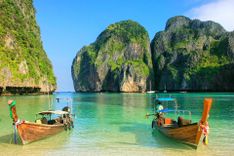
Southeast and South Thailand are worth making time for because it brings together some of the country's most evocative coastal scenery with an atmosphere that still feels distinctly local. Long sweeps of sand, karst-framed bays and mangrove-edged channels create a backdrop that changes subtly from town to town, giving the region a strong sense of place rather than a single highlight.
Within a wider trip to Thailand, this area acts as a slower, more immersive counterbalance to busy cities and major resorts. Distances are manageable, yet the landscapes feel spacious and open, inviting you to breathe, linger and notice everyday life unfolding along the shore.
You leave with a memory of salt in the air, monsoon-green hills on the horizon, and evenings that revolve around simple pleasures: fresh seafood, soft light on the water, and the sound of waves setting the pace of your days.
Who is Southeast and South Thailand best for?
You'll probably enjoy Southeast and South Thailand if you like balancing relaxed days with low-key exploration rather than ticking off big-name sights. It tends to suit couples seeking unhurried time together, food-focused travelers who care about fresh, local meals, and repeat visitors to Thailand who want a calmer base than the main resort hubs.
Families who value space, simple routines and easy-going days often find it works well, especially if they are comfortable with quieter evenings and tailor-made logistics arranged in advance by a local expert.
You may prefer another destination if you want non-stop nightlife, shopping malls, and a dense line-up of major landmarks within walking distance. First-time visitors who only have a few days and want headline sights in Bangkok or the islands around Phuket might be better served elsewhere.
Travelers who need all-inclusive resorts with extensive kids' clubs, or ultra-urban stays with rapid public transport, are likely to be happier in Thailand's larger cities or more developed beach areas.

Railay Beach in Krabi, Thailand
How does Southeast and South Thailand fit into an itinerary?
Southeast and South Thailand typically work as the slower, restorative section of a tailor-made Thailand journey. Many travelers place it after time in Bangkok or central regions, using it as a shift into a gentler rhythm with longer stays in fewer bases.
It combines naturally with the Andaman coast, the Gulf islands or northern cultural hubs, forming a balanced loop between urban, inland and coastal experiences. In itinerary design, this region often occupies the middle or final third of a trip, when travelers appreciate simplified logistics and predictable routines.
Including it usually means accepting more travel time between areas but fewer overall moves, shaping a journey that feels unhurried rather than box-ticking.
Trips that include Southeast and South Thailand
The Southern Thailand tour includes overnight stays in Hua Hin and Chumphon, with a visit to Khao Sam Roi Yod National Park. Travelers reach Phraya Nakhon Cave by boat or on foot from Bang Pu before continuing towards Phuket.
The Tailor-made Krabi discovery trip combines temple visits with a speedboat excursion to Phra Nang Cave, Tub Island, Chicken Island, and Poda Island, with opportunities for swimming, snorkeling, and relaxing on the beaches.
The Tailor-made Hua Hin beach getaway in Thailand explores Khao Takiab, also known as Monkey Mountain, before a boat ride and hike to Phraya Nakhon Cave in Sam Roi Yod National Park. A Pranburi River cruise follows later in the journey.
For a longer coastal escape, our local experts can add extra nights in Krabi or extend your stay in Hua Hin, leaving more time to enjoy the beaches and surrounding scenery.
How many days do you need?
With flexible routing and relatively short hops between bases, Southeast and South Thailand work from around three days upwards, depending on how many stops you include. In three to four days, focus on one coastal town as a base, adding a nearby island or inland excursion without rushing.
Five to seven days let you split time between two contrasting areas, such as a quieter beach stretch and a livelier fishing town, while still leaving space for unscheduled evenings.
| Days | Recommended focus |
|---|---|
| 3-4 days | One main base with a half-day boat trip or countryside outing. |
| 5-7 days | Two bases, mixing coastal views with a different local atmosphere inland or along the shore. |
| 8+ days | Deeper immersion, slower travel days and extra time for markets, food and relaxed beach time. |
Stay shorter if you are linking several Thai regions in quick succession; stay longer if you value quiet routines, room to adjust plans, and fewer hotel changes.
Best region combinations
A classic combination is Southeast and South Thailand with Krabi and the Andaman Coast, starting in Krabi Town or Ao Nang, then heading across to quieter southeast beaches for a calmer finale. This suits first-time visitors wanting dramatic scenery followed by slower days.
Another option is pairing Surat Thani and nearby coastal districts with the Gulf islands of Koh Samui or Koh Phangan, beginning with island time before transitioning to more local-feeling mainland evenings, ideal for couples and food-focused travelers.
More adventurous routes link Nakhon Si Thammarat or Songkhla with the Southeast and South Thailand coast, creating a cultural-inland start and beach-based finish over seven to ten days.
Time-pressed travelers might add two or three nights in a southeast coastal town after Phuket or Khao Lak, trading busy resort life for space and sea breezes. Repeat visitors often combine several lesser-known coastal towns in sequence, accepting longer drives in exchange for variety without crowds.
When is the best time to visit Southeast and South Thailand?
Southeast and South Thailand are feasible year-round, but conditions and feel shift with the monsoon patterns. When considering the best time to visit Thailand, drier, sunnier months typically bring calmer seas and clearer views, ideal for gentle boat trips, coastal walks and long evenings outdoors.
This period tends to be busier around major holidays, yet the region usually feels less crowded than headline resorts, especially when a local expert steers you toward low-key towns and smaller properties.
Rainier months can still work well for travelers who prioritise quiet stays, flexible plans and softer light over guaranteed sunshine. Showers are often sharp but short, leaving time for markets, cafes and relaxed coastal drives between bursts of rain.

Koh Samui © Shutterstock
Experiences to include in Southeast and South Thailand
The activities below highlight some of the most rewarding ways to experience Southeast and South Thailand, combining local flavors and relaxed variety with some of the top attractions in Thailand to enrich your wider itinerary without overloading your days.
Drift between quiet mainland beaches
Use one or two low-key coastal towns as bases, then take short hops to neighbouring beaches for changing views and rhythms. Allow at least half a day per beach, longer if you enjoy swimming and unhurried walks. This suits couples, friends and families who prefer simple days over busy beach clubs, with modest facilities, local cafes and evening strolls rather than nightlife.
Explore fishing villages and working piers
Visit active piers and small fishing communities to see boats unload their catch, nets being mended and modest markets waking up. A half-day fits one or two villages. It is ideal for photographers, food lovers and curious families who enjoy everyday scenes. Expect simple infrastructure, strong seafood smells and a focus on observation rather than set sights, best arranged with a local driver or expert who knows when activity is at its peak.
Take gentle boat trips through bays and mangroves
Short boat outings reveal sheltered bays, mangroves and offshore viewpoints without requiring long transfers. Plan two to four hours, or a full day if combining several stops and a seafood lunch. Calm-water trips suit most travelers, including children and older visitors, though basic mobility is needed for boarding. Expect simple boats, sun exposure and flexible routes that a local expert can time around tides, currents and weather for smoother journeys.
Wander local markets and evening food streets
Markets in Southeast and South Thailand emphasise fresh produce, snacks and simple meals over souvenirs, giving a grounded sense of local life. Set aside an hour or two in the early morning or evening. This experience suits anyone keen on everyday food culture and relaxed people-watching. Stalls are often cash-only, English is limited and seating is basic, so it helps to arrive with a few Thai phrases or a guide to ease ordering and explain dishes.
Follow low-key countryside and coastal drives
Day drives link modest beaches, rubber or palm plantations and small towns, turning travel days into gentle exploration. Allow a full day with frequent short stops for viewpoints, shrines and casual cafes. This works for travelers who like slow, scenic journeys more than fixed attractions. Roads are generally good but signage can be sparse, so self-drivers need confidence; many prefer a private driver so they can look out the window and stop spontaneously.
Build in slow days for simple seaside routines
Leaving unprogrammed days lets you settle into a personal rhythm of walks, swims, reading and easy meals, which is where this region excels. Plan at least one free day for every two or three structured days. This suits anyone seeking decompression after cities or more intense sightseeing. Expect quieter evenings, limited shopping and a focus on small pleasures rather than entertainment, with a local expert fine-tuning the balance between planned activities and pure downtime.

Thailand, Ko Tao, Hat Sai Ri
Planning Southeast and South Thailand with local expert tips
Southeast and South Thailand combine tropical islands, spectacular coastlines, lush rainforests, and vibrant cultural traditions. From the beaches of Koh Chang and Koh Samet in the east to Phuket, Krabi, and the islands of the south, the region offers everything from peaceful seaside escapes to lively resorts and national parks. Local travel experts in Thailand can help visitors explore its diverse landscapes and coastal communities.
Where to stay in Southeast and South Thailand
In the southeast, Koh Chang offers beachfront resorts and secluded bungalows, while Koh Samet is popular for short island escapes. Farther south, Phuket provides a wide choice of luxury resorts, boutique hotels, and family-friendly accommodation. Krabi, particularly Ao Nang and Railay, is ideal for dramatic limestone scenery and island excursions.
Koh Lanta appeals to travelers seeking quieter beaches and a relaxed atmosphere. On the Gulf coast, Koh Samui offers upscale resorts, while Koh Phangan and Koh Tao are known for beaches, diving, and smaller guesthouses. Thailand travel specialists can recommend suitable destinations according to preferred activities, atmosphere, and budget.
How transportation can be arranged
Bangkok is a major international gateway, with domestic flights connecting to Phuket, Krabi, Surat Thani, Trat and other regional airports. Ferries and speedboats serve many islands, while private transfers, buses and trains connect mainland destinations. Local travel experts in Thailand can coordinate airport pickups, island transfers, guided excursions and multi-stop itineraries.
Weather patterns differ between coasts: the Andaman coast generally has its driest conditions from November to April, while the Gulf coast often experiences heavier rain later in the year. Ferry schedules and sea conditions can change during monsoon periods, so flexible travel plans are advisable.