Northeast Vietnam covers the rugged provinces between Hanoi and the Chinese border, offering different landscapes and logistics from the country’s coastal and southern regions. It earns a place in a multi-day itinerary for its limestone karst ranges, terraced valleys, and the ability to link scenic driving with short hikes and village visits.
This region suits travelers who are comfortable with longer road journeys, basic but characterful accommodation, and changeable mountain weather. It typically fits into a wider route as an overland loop from Hanoi, often linked with Ha Long or Lan Ha Bay before continuing south or returning to the capital for onward connections.
Why visit northeast Vietnam?
Northeast Vietnam offers some of the country’s wildest frontiers, where jagged limestone ridges, deep river gorges and remote hamlets create a sense of scale you won’t find in the deltas or along the coast.
Here, mountain roads cling to cliffs, opening up viewpoints where clouds drift below you, and tiny terraced fields punctuate the slopes. Days revolve around slow journeys rather than specific sights: pausing at roadside markets, watching farmers lead water buffalo home at dusk, or lingering over tea in a stilt house as mist settles into the valley.
You leave with a vivid memory of Vietnam as a highland country of swirling fog, shifting light and long, quiet horizons, a contrast to the bustle of its cities and bays, and a reminder that the road itself can be the most rewarding experience.

Ban Gioc, Cao Bang, Vietnam, one of the top 10 waterfalls in the world © Shutterstock
Who is northeast Vietnam best for?
You'll probably enjoy northeast Vietnam if you like unhurried journeys, are happy to spend several hours a day on winding roads, and see travel time as part of the experience. Curious, independent-minded travelers who enjoy spontaneous market stops, village walks and simple, characterful guesthouses tend to get the most from this region.
It works particularly well if you're returning to Vietnam and want a contrasting perspective to the classic Hanoi-Hue-Hoi An route, or if you value photography, changing light and quiet landscapes over ticking off landmark sights.
You may prefer another destination if you want a straightforward first introduction to Vietnam with shorter transfers, a wide choice of restaurants and easy access to beaches. Families with very young children or anyone needing resort-style comforts and polished nightlife will likely be happier elsewhere.
Another destination may also be a better fit if you dislike mountain roads, are anxious about basic infrastructure, or prefer a fast-paced itinerary with a different highlight every day.
How does northeast Vietnam fit into an itinerary?
Northeast Vietnam usually features as an overland loop within a longer holiday that starts and ends in Hanoi. Many trips begin with a night or two in the capital, then head north and east into the mountains before returning to Hanoi for onward travel to central or southern Vietnam, or to coastal areas such as Ha Long or Lan Ha Bay. The region works best as a multi-stop road trip rather than a single-base stay, with travelers moving between small towns and rural valleys over several days.
Including the northeast slows the overall rhythm of your route, shifting emphasis from quick sightseeing to longer drives and quieter overnights. Travelers usually ring-fence a continuous block of days here so the rest of the itinerary can stay balanced without too many one-night stops. Local experts often position this section in the middle of your plans to create a clear change of pace between more developed regions and to link naturally with onward routes.
Trips that include Northeast Vietnam
The Vietnam trip: Art, heritage and living culture cruises Ha Long Bay aboard a traditional junk, exploring Thien Cung and Dau Go caves, swimming at Titov Beach, and spending the night on the water.
The Vietnam at a glance trip combines Hanoi and Hoi An with an overnight Ha Long Bay cruise, visiting Surprising Grotto and Luon Cave, staying near Titov Beach, and passing Cock Fighting Rock.
The Impressive Vietnam with Sapa trip travels from Hanoi to Ha Long Bay for an overnight cruise, with cave exploration, swimming, and a sunrise boat ride past Fisherman's Head, Turtle, and the Sail rock formations.
For a more relaxed day on the bay, our local experts can balance cave visits with extra swimming time at Titov Beach, tailoring the cruise to your preferences.
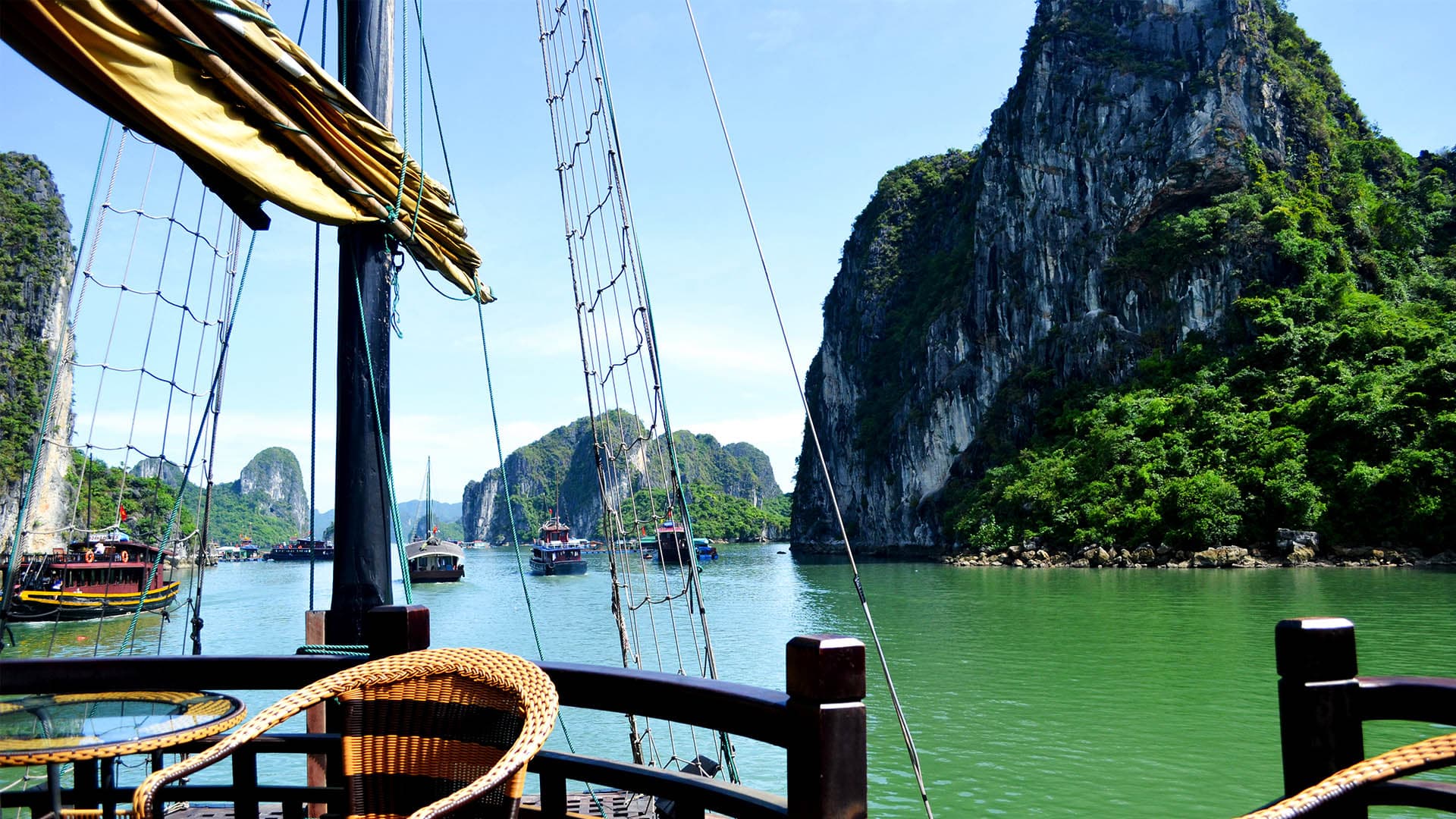
Halong Bay cruise
How many days do you need?
Northeast Vietnam rewards a little extra time because distances are longer and roads are winding. Most travelers spend between three and seven days linking a handful of valleys and small towns rather than staying in one place.
| Days | Suggested route | Ideal pace |
|---|---|---|
| 3-4 days | Hanoi - Ba Be Lake - return to Hanoi | Highlights only, one or two key stops |
| 5-6 days | Hanoi - Ba Be - Cao Bang (Ban Gioc area) - Hanoi | Balanced: time for short walks and village visits |
| 7-8 days | Hanoi - Ba Be - Cao Bang - Lang Son or Ha Long area | Unhurried, more chances for markets and viewpoints |
Adding days lets you break up driving, include quieter side valleys, early-morning markets and extra walks without rushing, keeping the region's slower rhythm intact within your wider Vietnam journey.
Best region combinations
Pairing northeast Vietnam with Hanoi works well, using the capital as your cultural and culinary base before or after a mountain loop. The contrast between Old Quarter energy and village evenings in stilt houses suits visitors who want both city life and rural calm in a single trip.
Linking the northeast with Ha Long or Lan Ha Bay creates a land-and-sea journey: start with Hanoi and the highlands, then finish with an overnight cruise among limestone karsts. This combination suits travelers who value scenery and prefer to end with slower days on the water after time on the road.
For a longer holiday, adding Ninh Binh after Ha Long or Hanoi keeps the focus on landscapes and gentle activities such as boat trips and easy walks among karsts and rice fields. Active travelers might then continue south to Phong Nha for caves, building a route that gradually shifts from cooler highlands to warmer lowlands.
When is the best time to visit northeast Vietnam?
October to April is generally the best time to visit Vietnam for travelers exploring the northeast, with cooler temperatures, lower humidity and more comfortable conditions for long drives and short hikes. Skies are often clearer, though mist can still gather around the higher mountain passes.
From May to September, heavier rain may affect road conditions, visibility and some routes, but valleys are greener and rivers fuller. Crowds remain light year-round, and flexible planning helps travelers adapt overnight stops, walks and viewpoints to changing weather.

Ha Giang Province, Vietnam @ Shutterstock
Experiences to include in Northeast Vietnam
Northeast Vietnam is defined by dramatic mountain passes, river valleys, waterfalls and remote ethnic minority villages. Travelers can combine scenic road journeys with short hikes, local markets, cave systems and quieter landscapes far from the country’s busiest routes.
Follow the mountain roads between Ba Be and Cao Bang
Driving the sinuous road between Ba Be Lake and Cao Bang reveals some of the northeast's most varied scenery, from karst peaks to rice valleys and forested passes. Allow a full day with unhurried stops for short walks, photographs and village coffee breaks.
Unwind by the water at Ba Be Lake
Ba Be Lake ranks among the top attractions in Vietnam for its tranquil water, forested scenery and nearby villages. Spend two nights enjoying boat trips and relaxed walks through Pac Ngoi and surrounding hamlets, especially if you prefer simple homestays and gentle outdoor activities.
Explore the valleys around Cao Bang and Ban Gioc
Using Cao Bang as a base lets you explore the road towards Ban Gioc Waterfall at a measured pace, pausing in quieter valleys such as Quang Uyen and Trung Khanh. It suits travelers who value rural views, local lunches and flexible roadside stops.
Pause at high passes and viewpoints near Lang Son
Routes towards Lang Son include high passes with wide views over terraced hillsides and distant limestone ridges. Brief stops at roadside viewpoints break up longer days, adding memorable panoramas without demanding hiking, for travelers who prioritize scenery over ticking off sights.
Visit local markets on the road from Hanoi
Markets in small towns between Hanoi, Ba Be and Cao Bang offer a window onto highland life, especially in the early morning before long drives. Stopping at one or two en route adds human detail and cultural interest to a largely landscape-focused loop.
Take short walks in village valleys
Gentle walks from homestays near Ba Be or in valleys outside Cao Bang lead past stilt houses, fields and riverside paths without requiring full-day treks. They suit most fitness levels and can be fitted around driving days to keep the overall pace relaxed.

Rice fields on the terraced hills of Hoang Su Phi, Ha Giang, Vietnam © Nguyen Tien Son/Shutterstock
Planning Northeast Vietnam with local expert tips
Northeast Vietnam is a region of limestone mountains, dramatic passes, minority communities, waterfalls, and remote valleys close to the Chinese border. Travel here is less about ticking off individual sights and more about choosing a coherent route, with a Vietnam specialists helping to balance ambitious mountain scenery with realistic driving times and worthwhile overnight stops.
Where to stay in Northeast Vietnam
Ha Giang is a common starting point for journeys into the northern mountains, but the landscapes become increasingly striking farther along the roads toward Dong Van and Meo Vac. Spending nights in these smaller towns makes it possible to experience the high passes without turning each day into an exhausting drive.
Farther east, Cao Bang provides a useful base for exploring the countryside around Ban Gioc Waterfall and nearby caves and villages. Accommodation becomes simpler as you move away from larger towns, with locally run guesthouses and homestays often part of the experience. Instead of changing beds every night, your specialist can build in occasional longer stays where the surroundings justify a slower day.
How transportation can be arranged
Road travel defines a journey through Northeast Vietnam, and mountain distances take considerably longer than they appear on a map. A private vehicle with an experienced local driver allows stops at viewpoints, villages, and markets while avoiding the demands of navigating unfamiliar mountain roads independently.
Some routes involve steep passes and long stretches between larger towns, so weather and daylight should influence the daily schedule. Hanoi is the usual gateway, but there is no need for every journey to operate as a simple return trip.
With enough time, your specialist might trace a broad circuit through Ha Giang and Cao Bang before bringing you back toward Hanoi, adjusting the number of mountain stages to your dates and preferred pace.