The Rif Mountains in northern Morocco are one of the country’s most distinctive natural regions, with rugged limestone mountains dropping towards the Mediterranean and scattered valleys of cedar, oak, and terraced farmland.
Compared with the Atlas or the Sahara, it feels more compact and less touristic, making it a good choice if you want quieter hiking, village life, and fresh mountain air in a limited timeframe.
The area typically fits into a wider Morocco route as a northern segment, combined with cities like Tangier, Tetouan, or Fez. It rewards a dedicated multi-day stop with manageable travel distances, straightforward walking routes, and small towns that work well as practical bases.
Why visit the Rif Mountains?
The Rif Mountains offer a wilder, more intimate side of Morocco's mountains, where Mediterranean light meets steep limestone ridges and deep, forested valleys. Trails wind through cedar and cork oak, then open suddenly onto sea views and dramatic cliffs that you will not find in the Atlas.
Small Amazigh villages are tucked into terraces of olives and cannabis, and walking here often means informal pauses at fountains, threshing floors, or communal bread ovens rather than passing rows of formal guesthouses.
In spring, hillsides glow with wildflowers; in late summer, the light turns hazy over remote shepherd pastures and hidden gorges. With lighter tourism, walks feel unmarked and spontaneous, letting you notice details like hand-built irrigation channels, drying kilns, and quiet shrine sites as you move from hamlet to hamlet.
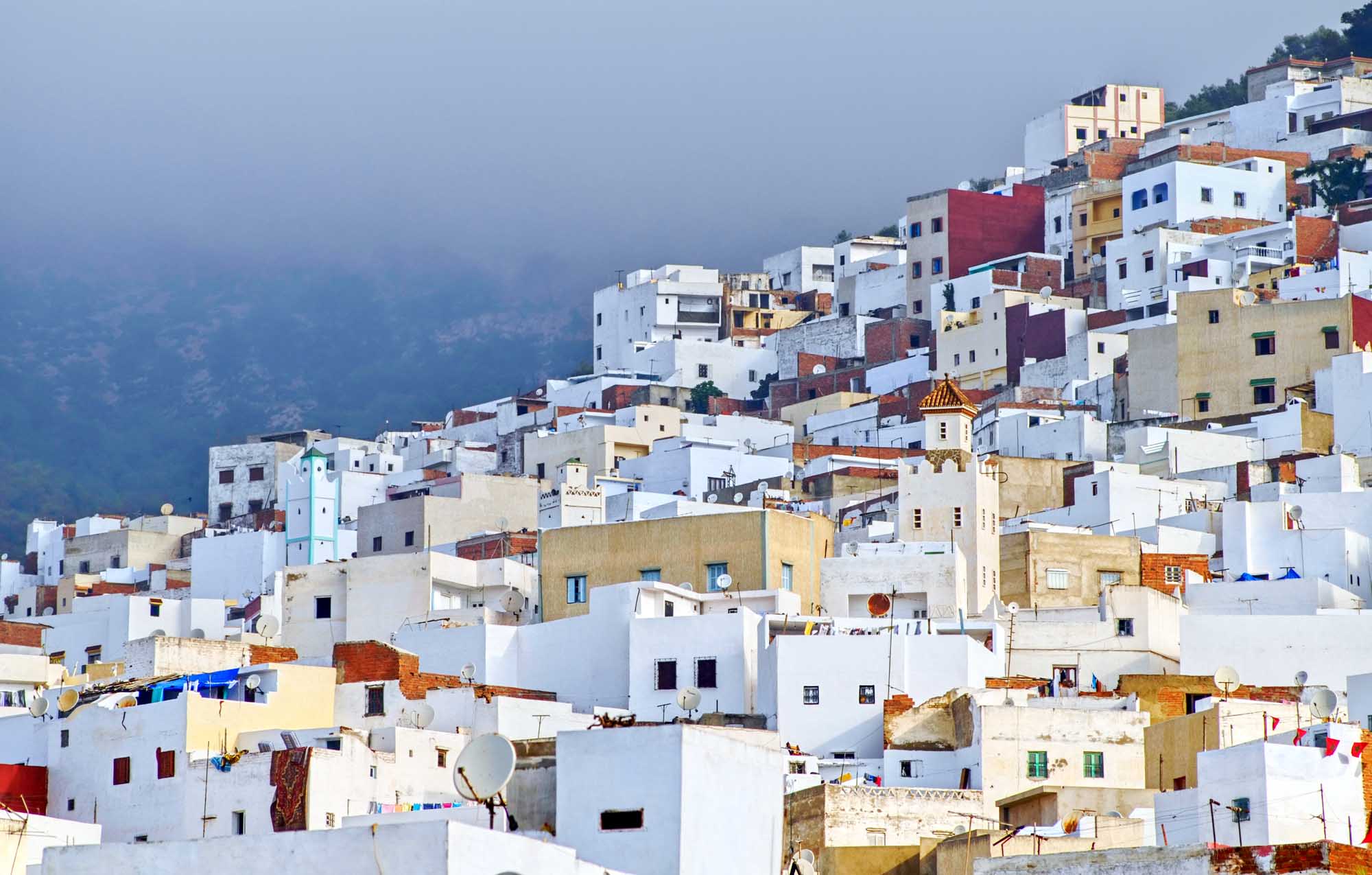
White houses on the mountain slope in the royal town of Tetouan in the Rif Mountains, Morocco
Who are the Rif Mountains best for?
You'll probably enjoy the Rif Mountains if you like unhurried, low-key travel and are happy with simple comforts in exchange for time outdoors. Hikers and active travelers who enjoy half- or full-day walks more than big summit objectives tend to feel at home here, as do photographers who look for quiet village scenes and everyday rural life rather than famous landmarks.
It also works particularly well if you like building a trip around one or two small bases instead of changing accommodation every night. Families with older children who enjoy walking and being outside can do well, especially if they are used to informal, locally run stays.
You may prefer another destination if you want resort-style facilities, a wide choice of luxury lodges, or lots of structured activities planned in advance. Travelers seeking big-mountain challenges, extensive wildlife watching, or a highly polished tourism infrastructure might be happier focusing on the High Atlas, the Sahara, or Morocco's Atlantic coast instead.
How do the Rif Mountains fit into an itinerary?
The Rif Mountains usually work as a northern chapter of your Morocco trip, often linked with cities such as Tangier, Tetouan, or Fez. Many travelers arrive by road from one of these hubs, settle into a small-town base for several nights, then continue south or along the coast. Rather than moving every day, it lends itself to one or two bases with day excursions, so packing and transfers stay simple.
Two to four nights is common, giving room to adjust walks to weather and energy levels without rushing. Road links are direct enough that your route can loop in and out of the mountains without complex planning.
Adding the Rif Mountains generally slows the tempo of your journey, creating a quieter stretch of village time and gentle drives between busier, more structured parts of your holiday.

Jemaa Bouzafar, Chefchaouen, the Rif Mountains, Morocco @ Shutterstock
How many days do you need?
The Rif Mountains work well for short, focused stays. With 2 days, you can base yourself in one town, take a couple of gentle walks in nearby valleys, and get an initial feel for village life without rushing. Three days allow time to explore different directions from your base, mixing ridge paths and rural lanes, and to linger over slow lunches or market visits.
Four to five days suit travelers who like unhurried days on the trail, time to sit with views, and the flexibility to adapt plans to weather or mood. Shorter visits are sufficient if the Rif is just a pause between busier city stops; longer stays make sense if hiking and rural immersion are central to your Morocco trip.
| Days | Recommended focus |
|---|---|
| 2 | Single base, nearby walks, and village visits |
| 3 | Mix of valleys, ridges, and small-town life |
| 4-5 | Deeper hiking, slower days, flexible route choices |
Best region combinations
A classic pairing is Tangier and the Rif Mountains, starting with coastal history and galleries before driving 2-3 hours inland to quieter mountain valleys; the contrast between port-city buzz and rural calm is marked.
Another easy link is Tetouan and the Rif, with its whitewashed medina and Andalusian architecture leading into forested slopes within a couple of hours' drive. Many travelers also combine Fez and the Rif, beginning with medieval lanes and madrasas, then heading north by road (around 4-5 hours) for cooler air, hiking, and slower evenings.
For a longer loop, the Rif Mountains can open a journey that continues south to the Middle or High Atlas, gradually trading Mediterranean light and terraced hillsides for higher peaks and more dramatic, rocky landscapes.
When is the best time to visit the Rif Mountains?
Spring from March to May is generally the best time to visit Morocco to explore the Rif Mountains. Mild temperatures, green hillsides, and wildflowers make day walks comfortable and the scenery especially photogenic.
Early summer and early fall bring warmer, drier weather, with clear mornings suited to longer hikes and afternoons better for shaded forest paths or village visits. In high summer, midday walking can be tiring, so outings are best planned for early morning or late afternoon, particularly on exposed ridges.
Winter is cooler and wetter, with muddy tracks and mist sometimes limiting higher views. Crowds are minimal, however, and village life continues at a slower pace. A flexible walking plan and a stable town base make it easier to adjust routes to changing weather and road conditions.
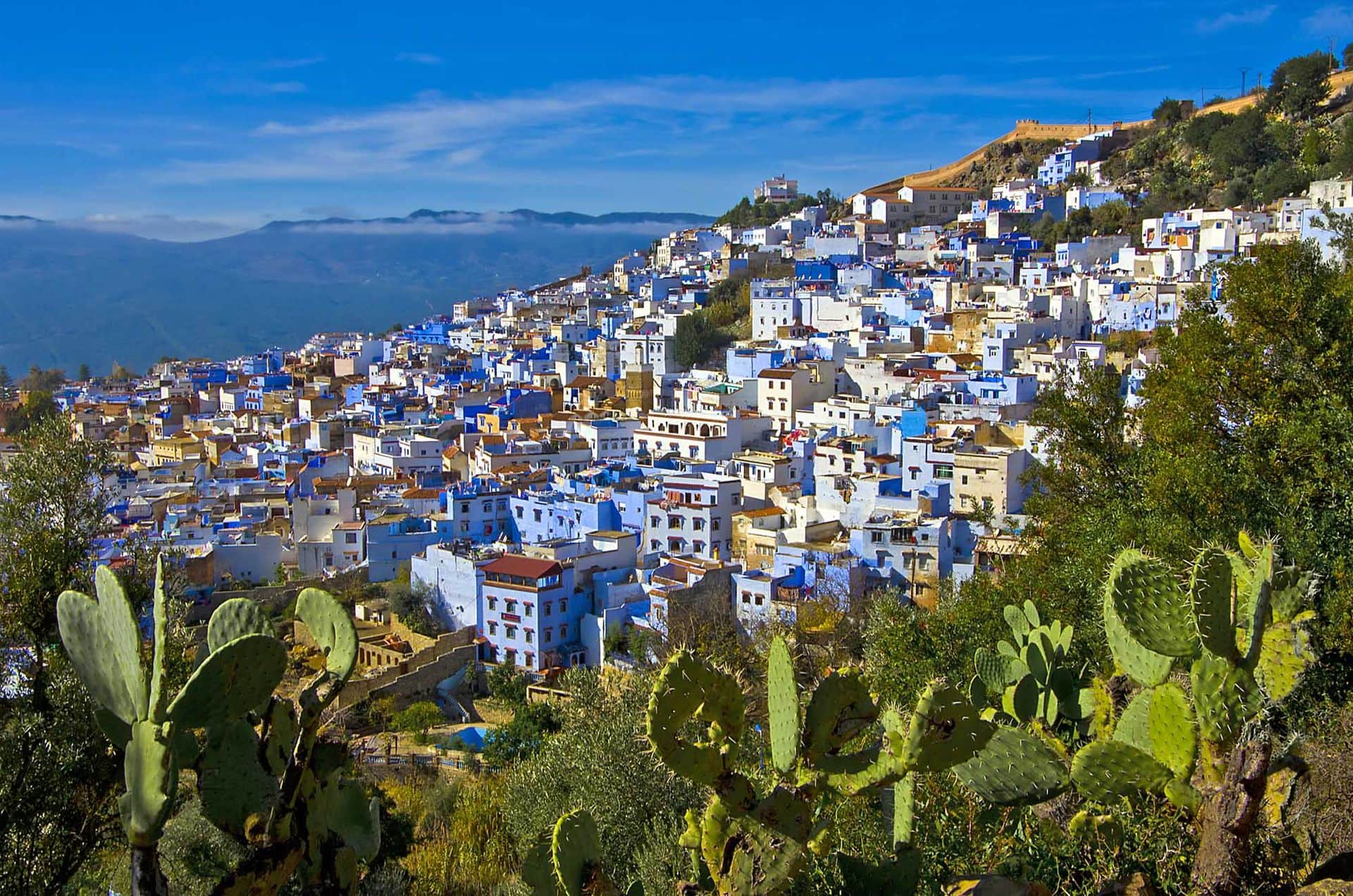
Chefchaouen, the blue city, the Rif Mountains, Morocco
Best things to do in the Rif Mountains
The experiences below highlight the Rif's most rewarding outdoor moments, from relaxed day hikes and forest walks to clifftop viewpoints and rural valleys that fit easily into a short stay in northern Morocco.
Walk the blue lanes around Chefchaouen and the Ras el-Ma valley
Base yourself in Chefchaouen and follow easy paths from Ras el-Ma spring into the surrounding hillsides and orchards, one of the most relaxed ways to experience the top attractions in Morocco. Allow half a day for unhurried walking and photography, with moderate gradients, village encounters and simple cafes along the way. It is especially well suited to first-time visitors and casual hikers.
Hike in Talassemtane National Park's fir forests and river gorges
Talassemtane National Park, southwest of Chefchaouen, concentrates limestone cliffs, cedar and fir forests, and deep river valleys. Plan a full day to follow waymarked trails near Akchour or along high ridges. Paths can be rocky and steep, suiting reasonably fit walkers who enjoy quieter, wilder landscapes.
Follow the river to Akchour and the Pont de Dieu
From the village of Akchour, a popular trail tracks the Oued Farda to the natural rock arch of Pont de Dieu and a series of pools. Allow 4-6 hours return with breaks for swimming and photos. Expect uneven, sometimes muddy paths. Best for active travelers comfortable with longer walks.
Explore the Oued Laou coastline and Rif foothills
On the Mediterranean side, the small town of Oued Laou combines a pebbly beach with access to low hills backing the coast. Spend half a day strolling the shoreline, then follow dirt tracks into olive groves for wide sea views. Suits travelers wanting gentle walking mixed with easy seaside downtime.
Wander rural tracks around Bab Berred and cedar-clad ridges
Using Bab Berred as a low-key base, you can follow farm tracks and mule paths into nearby cedar and oak-covered slopes. Half- or full-day loops reveal terraced fields, grazing flocks, and long views over the Rif chain. Trails are informal, so this suits independent hikers comfortable with basic navigation.
Combine Tetouan with short walks in the surrounding hills
From Tetouan, it is easy to reach nearby Rif foothills around Beni Hozmar or along roads towards Ceuta for relaxed countryside strolls with city views behind. Devote a half day to walking and roadside viewpoints. Best for travelers who want a light taste of Rif scenery without committing to a full hiking base.
Practical planning tips
Plan around short driving legs, using one or two small-town bases instead of frequent moves. Build in flexible hiking days in case of heat, mud, or mist. Pack layers, sun protection, and sturdy shoes for rocky paths. Agree on daily walking times and gradients with your local expert in advance.
Where to stay in the Rif
Most travelers base themselves in or around Chefchaouen, which balances blue-washed medina charm with quick access to Ras el-Ma, Talassemtane National Park, and day hikes into nearby valleys. It works well if you want car-free evenings, easy cafés, and short transfers to a variety of walking routes.
For a quieter, more rural feel, small villages near Akchour or in Talassemtane put you closer to fir forests, river gorges, and longer trails, but with fewer dining options and a stronger need to plan supplies.
Bab Berred and similar market towns sit in gentler, agricultural landscapes and make good bases for low-key walks on farm tracks and mule paths, suiting independent travelers who do not mind basic, locally run guesthouses.
Getting around
Self-drive is the most flexible way to explore the Rif, allowing you to link Chefchaouen, Akchour, Bab Berred, and coastal spots like Oued Laou on your own schedule. Roads are generally paved but often narrow, winding, and slow, with livestock, local traffic, and occasional rough patches after winter rains.
Public transport connects main towns, yet services are limited and rarely line up neatly with trailheads, so it suits patient budget travelers more than hikers with specific routes in mind. Taxis and organised day trips from larger hubs cover popular walks such as Akchour and short forays into Talassemtane, removing the need to drive or park on busy weekends.
Having your own vehicle is strongly recommended if you want early starts, quieter trail access, or to mix mountain hikes with spontaneous coastal or village detours.
Plan your trip with a Local Expert
In the Rif Mountains, planning with a local expert helps turn a simple map of Chefchaouen, Talassemtane, and coastal valleys into an itinerary that matches both the season and your pace. They adjust routes for spring wildflowers, summer heat, autumn haze, or winter mud, choosing shaded river paths, higher ridges, or village circuits as conditions change.
Travel style shapes choices too: stronger hikers might spend more time on longer national park ridgelines, while photographers or families focus on gentler walks near towns and farms.
With just a couple of days, a single base and nearby outings keep travel time low; with a week, they can link contrasting valleys, forests, and sea views into a gradual, unhurried circuit.


