Chefchaouen, in northern Morocco, is a compact mountain town known for its blue-painted lanes and walkable medina, making it a useful contrast to larger cities like Fez, Tangier, or Casablanca on a wider Morocco itinerary. Its small scale, cooler Rif Mountain setting, and slower pace help break up long stretches of travel focused on imperial cities or desert routes.
For most travelers, Chefchaouen works best as a short stay of one or two nights rather than a brief day trip. This allows time to explore the medina on foot, handle the hillier streets, and slot in a short hike or viewpoint visit without putting pressure on onward travel days.
Why visit Chefchaouen?
Chefchaouen offers an atmosphere you will not find elsewhere in Morocco: a mountainside medina washed in countless shades of blue, where everyday life unfolds at a gentler rhythm.
Rather than famous monuments, its appeal lies in drifting through quiet, painted alleyways, noticing how the blues shift with the light, and pausing in small family cafés that feel far from the bustle of imperial cities. The Rif Mountains frame the town at every turn, so even simple walks or moments on a rooftop terrace feel close to nature.
As evening falls, the call to prayer echoes off the blue facades and stone lanes, creating an intimate, almost enclosed world. You leave with a distinct sensory memory of color, cool air, and hushed streets that you will not find in Morocco's larger, busier medinas.
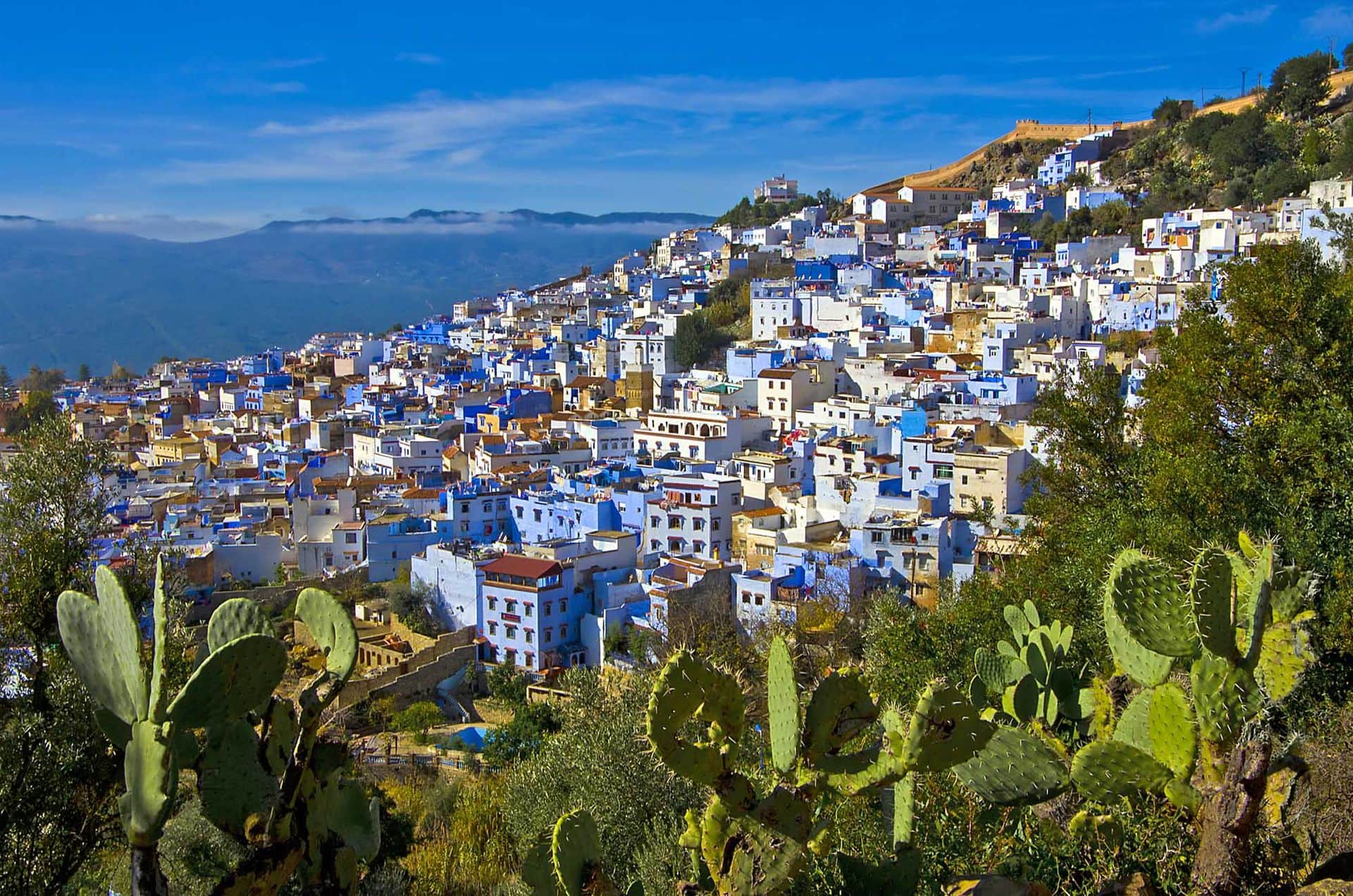
Chefchaouen, the blue city, Morocco
Who is Chefchaouen best for?
You will probably enjoy Chefchaouen if you like unhurried days, walking, and paying attention to small details rather than chasing major sights. It works especially well for couples looking for a quiet pause between busier cities, photographers drawn to color and texture, and creative visitors who enjoy sketching, journaling, or people-watching from a cafe table.
Outdoor-minded travelers who prefer short hikes or scenic walks over full-day treks also tend to value time here. For families, it suits those with patient older children or teens who do not need constant structured activities.
You may prefer another destination if you want a packed schedule of monuments and museums, busy nightlife, or a wide choice of formal kid-focused attractions. In those cases, treating Chefchaouen as a daytime stop to wander the lanes and have a leisurely lunch is usually enough, keeping your overnight stays for larger cities or more activity-rich areas elsewhere in Morocco.
How does Chefchaouen fit into an itinerary?
Chefchaouen usually sits in the middle of a northern Morocco route rather than at the very start or end of your trip. Travelers often slot it between larger, busier hubs such as Fez, Tangier, or Rabat to introduce a quieter pause in their plans.
Because it is compact and easy to navigate on foot, it works well as a one- or two-night stay, long enough to slow the rhythm of your journey without taking too much time from other regions. Some travelers visit as a long day trip from Tangier or Tetouan, but staying overnight lets your itinerary breathe and avoids rushing along mountain roads in a single day.
In a typical flow, you might travel inland from the coast or down from Tangier, pause in Chefchaouen, then continue toward Fez, Meknes, or further south. Adding it generally softens the pace of your route, creating a natural break between more intense sightseeing days in imperial cities or on long driving legs.
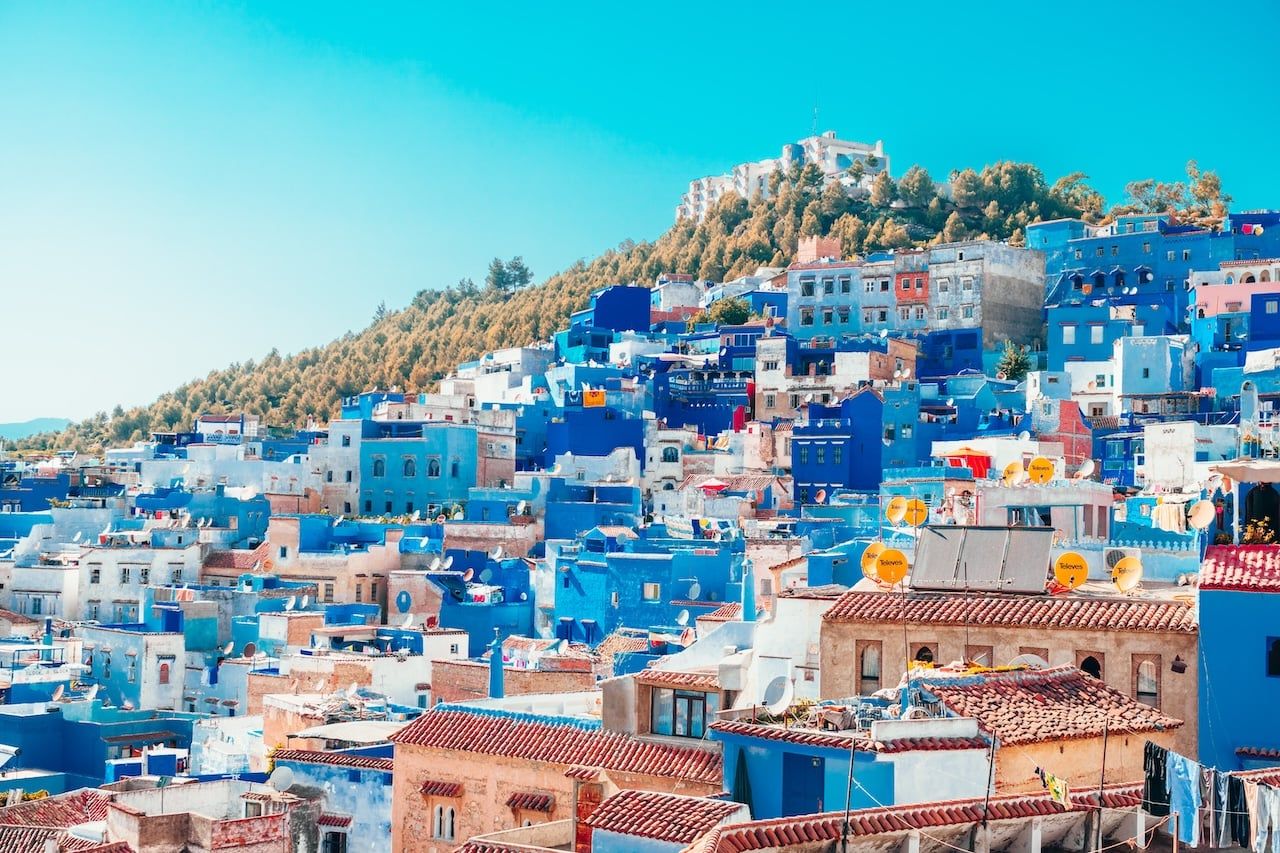
Chefchaouen, Morocco
How many days do you need?
Because Chefchaouen is compact and walkable, a single full day gives enough time to wander the blue medina, pause in cafés, and reach a viewpoint without rushing. Staying overnight, however, changes the feel: dusk and early morning are when the lanes are quietest, and the light is softest for photography.
Two nights work well if you like slow travel, want a more leisurely pause between cities, or hope to add a short hike in the Rif Mountains.
| Time | Recommended focus |
|---|---|
| Half day | Quick wander through the blue streets as part of a longer transfer. |
| One day | Explore the medina, main viewpoints, and a relaxed café stop. |
| One night | Experience quieter evenings and early-morning streets. |
| Two nights | Settle into the town's rhythm and add a short hike or extra viewpoints. |
Additional time mainly adds breathing space and more unhurried moments rather than extra must-see sights.
Best region combinations
Chefchaouen combines naturally with Tangier, using the coastal city as an arrival or departure hub, then heading inland to the mountains (around 2.5-3 hours by road). Chefchaouen usually works best as the overnight stop, breaking up longer drives.
Pairing Tetouan and Chefchaouen creates a focused northern loop: start with Tetouan's whitewashed medina before continuing about 1.5-2 hours to Chefchaouen for one or two nights.
Many itineraries link Fez and Chefchaouen, with a scenic road journey of roughly 4-5 hours. It works well to travel from the intensity of Fez to Chefchaouen for a slower interlude.
Rabat and Chefchaouen can also be combined overland (about 4-5 hours), using Rabat's coastal, cultural sights before ascending to the Rif Mountains for a calmer overnight stay.
For travelers flying out of Casablanca, a route via Rabat to Chefchaouen makes sense, placing the mountain town as a restorative mid-trip stop.
When is the best time to visit Chefchaouen?
Spring from March to May and fall from late September to November are generally the best time to visit Morocco for exploring Chefchaouen. Mild temperatures make its steep lanes and nearby trails more comfortable, while clear light suits photography.
Summer brings hotter days and larger crowds, especially during school holidays. Early-morning and late-afternoon sightseeing works best, with a slower break around midday. Winter can be cool and wet, but the town feels quieter and more atmospheric, making it a good season for short walks, viewpoints and cozy cafes.
For wider northern Morocco itineraries, daylight hours, road conditions, and tolerance for heat or cold can shape how many nights to spend in Chefchaouen and the order of stops such as Fez, Tangier, and Rabat.

Jemaa Bouzafar, Chefchaouen, the Rif Mountains, Morocco @ Shutterstock
Best things to do in Chefchaouen
These experiences highlight Chefchaouen’s distinctive blue medina and nearby Rif landscapes, giving you a strong sense of place even on a short stay.
Lose yourself in the blue lanes of the medina
Strolling through the blue-painted alleys around Plaza Uta el-Hammam is Chefchaouen’s defining experience, revealing quiet corners, doorways, and small cafés. Allow up to half a day, easily combined with a relaxed lunch and a viewpoint walk.
Watch the sunset from the Spanish Mosque
The gentle uphill walk to the Spanish Mosque, or Mosquée Bouzaafar, offers one of the most memorable views among the top attractions in Morocco, looking across Chefchaouen’s blue medina and the Rif foothills. Allow 1.5-2 hours for the round trip, ideally after exploring the medina earlier in the day.
Follow the river path to Ras El Ma
A short walk to Ras El Ma, where the mountain stream enters town, offers a cooler break with cascades, laundry terraces, and small tea stalls. Set aside one to two hours; it combines easily with nearby upper-medina lanes.
Drive the Rif roads for mountain scenery
Using Chefchaouen as a base, the winding road toward Tetouan or Akchour showcases terraced hillsides, cedar-clad slopes, and small Rif villages. Plan roughly half a day with photo stops, often aligning this with arrival or departure transfers.
Take a day trip to Akchour Gorge
The Akchour area in Talassemtane National Park offers riverside trails and waterfalls that contrast with medina life. Allow at least a half day, ideally a full day including driving time, then return for a slow evening in Chefchaouen.
Pause on Plaza Uta el-Hammam
Sitting at a café on Plaza Uta el-Hammam lets you watch daily rhythms framed by the Kasbah and Grand Mosque. One to two unhurried hours here fit comfortably around medina exploration or the walk to the Spanish Mosque.
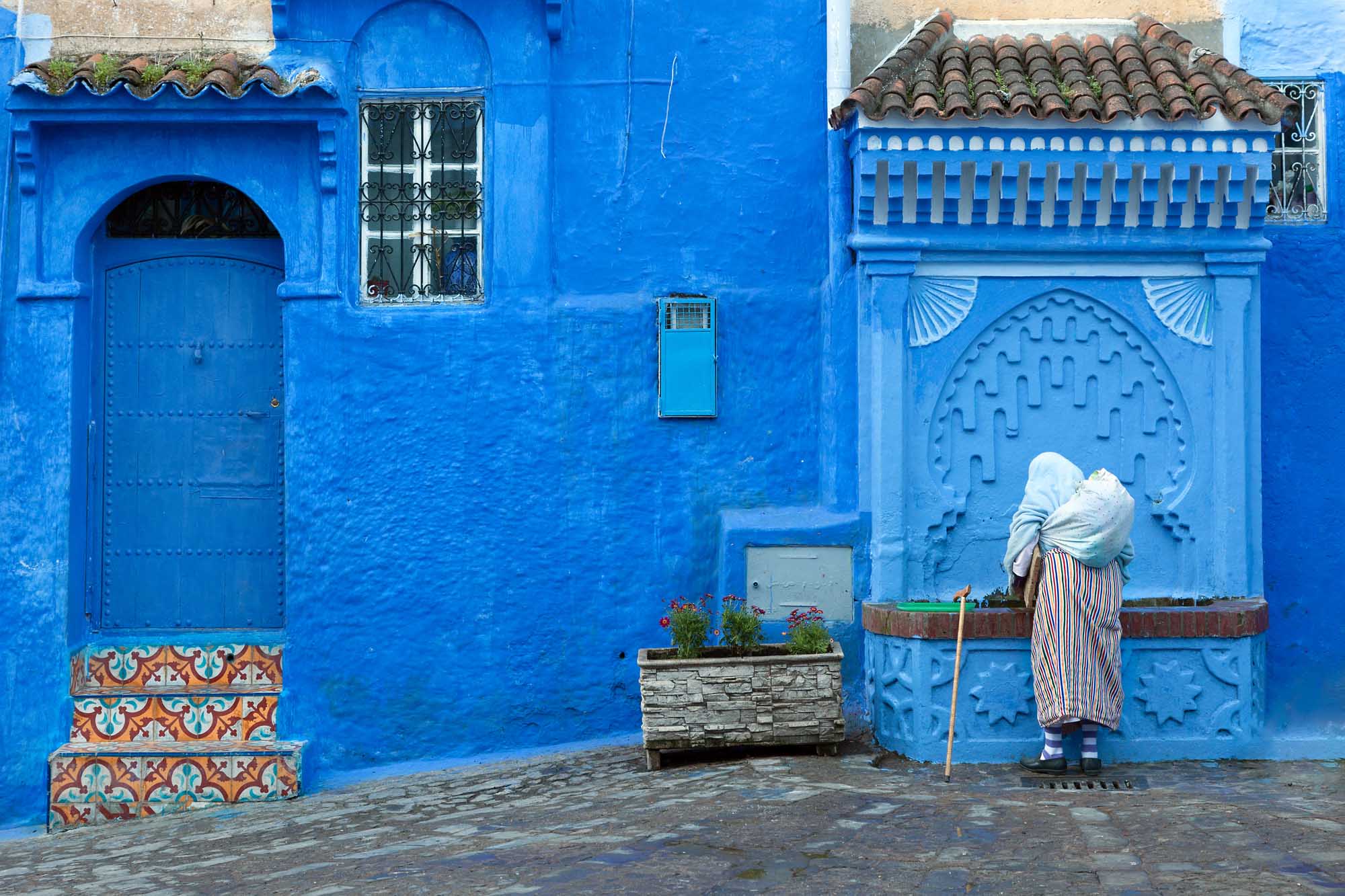
Street scene in the blue medina of Chefchaouen, Morocco.
Practical planning tips
Plan for uphill walking, limited vehicle access, and a slower pace than in larger Moroccan cities. Book centrally, but confirm luggage help if arriving with large bags, and check your riad's exact meeting point. Build in buffer time for mountain-road journeys to or from Fes, Tangier, or Rabat.
Where to stay in Chefchaouen
If you are spending one or two nights, staying inside or just by the blue-painted medina gives a strong atmosphere and easy walking access to cafés, viewpoints, and Plaza Uta el-Hammam.
Traditional guesthouses in the historic lanes feel immersive, but often require climbing stairs and short uphill walks from taxi drop-off points, so pack light and confirm how arrival works.
Travelers driving themselves or preferring simpler access can look for properties on the lower edges of the medina or near main approach roads, which balance character with easier parking and fewer climbs.
Wherever you choose, prioritize a quiet side street over the busiest alleys to enjoy Chefchaouen's calm evenings and dawn light without late-night noise from central squares.
Getting around
Chefchaouen is explored almost entirely on foot, with sights, cafés, and viewpoints clustered around the blue medina and Plaza Uta el-Hammam. Expect steep lanes, steps, and uneven paving, so comfortable shoes and an unhurried pace matter.
If you arrive by intercity bus or private transfer, vehicles typically stop below the medina, followed by a short uphill walk or porter-assisted luggage transfer to many guesthouses.
Drivers usually leave rental cars in paid lots or street parking near medina entrances and do not use them inside town, keeping them for day trips such as Akchour or onward journeys to Fez, Tangier, or Tetouan.
There is no need for a car within the old center itself; local taxis mainly cover short hops between lower districts, bus stations, and trailheads or parking areas outside the medina.
Plan your trip with a Local Expert
Time in Chefchaouen is usually limited, so careful planning focuses on how you like to travel rather than ticking off sights. Local trip planners who know northern Morocco well start by understanding your pace, interests, and priorities, then shape Chefchaouen's role within a wider route linking Fez, Tangier, Rabat, or the coast.
In spring and autumn, they might build in more walking and viewpoints, while in high summer they adjust timings around heat and crowds, favoring early and late explorations. Travelers who enjoy slow photography, mountain drives, or day hikes will follow different patterns from those who prefer shorter walks and cafe time.
With only one night, the plan might emphasize medina wandering and a single viewpoint; with two or more, they can add flexible Rif excursions without rushing.


