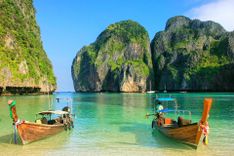
Ko Tao is a practical choice if you want to focus your time in Thailand on diving, snorkelling and relaxed island living rather than chasing a long checklist of sights. Its compact size, clear waters and small villages make it easy to judge what you can realistically fit into a multi-day itinerary.
A local Thailand expert can help you decide how many nights to spend here versus nearby islands, match ferry times to your flights, and pre-book reliable dive schools or boat trips. With structured, advance planning, Ko Tao slots into your wider Thailand route as a defined diving and downtime phase rather than an isolated beach stop.
Why visit Ko Tao?
Ko Tao is worth making time for because it feels like a self-contained tropical world, where jungle-covered hills drop straight into clear, reef-fringed bays. Days settle into a gentle rhythm of boat rides, swims and unhurried meals by the water, with sunsets marking time rather than the clock.
Within a wider trip to Thailand, it acts as a natural pause between busier cities or cultural regions, giving you space to rest without losing contact with the sea. You leave Ko Tao with vivid underwater memories: flashes of coral, shoals of reef fish, perhaps a first glimpse of a sea turtle, and a sense of having stepped, briefly, into a small island community where life is structured around the tides.
Who is Ko Tao best for?
You'll probably enjoy Ko Tao if you are happy with simple comforts, love spending time in or on the water, and do not need a packed sightseeing schedule. It suits couples looking for low-key time together, solo travelers who value an easygoing social scene around dive schools and beach cafes, and small groups keen to focus on dive courses or daily snorkelling trips. Active travelers who like to organise their days around the sea, with relaxed evenings rather than late-night partying, often find it a good match.
You may prefer another destination if you are a first-time visitor seeking a broad introduction to Thailand's culture, food, and history in one place, or if you prefer large resort facilities and extensive shopping. Families who need lots of structured activities for young children, and luxury travelers seeking ultra-high-end hotels, may be better served on larger islands or in resort areas with more varied infrastructure and entertainment options.
How does Ko Tao fit into an itinerary?
Ko Tao usually works best as the coastal or island phase of a wider Thailand journey, added after time in cities or cultural regions such as Bangkok, Chiang Mai, or Kanchanaburi. Many tailor-made trips place it in the middle or final third of the itinerary, using it as a slower-paced stretch between more active stops or as a wind-down before flying home.
It combines naturally with nearby islands such as Ko Samui and Ko Pha-Ngan, allowing for an island-hopping section tailored to how much time you want by the sea versus on the mainland. Because days here are typically less structured, adding Ko Tao will slow the overall rhythm of your trip, so a local expert will often balance it with one or two more fast-paced regions elsewhere in Thailand.

Ko Nang Yuan on Ko Tao island © Mix and Match Studio / Shutterstock
How many days do you need?
Ko Tao rewards an unhurried stay. With 2-3 days, you can sample a couple of bays, fit in one boat trip or introductory dive, and still have time for slow evenings by the water. Four to five days are enough to complete a full dive course, explore different snorkelling spots, and include a rest day or two with no fixed plans. Stays of a week or more suit travelers who want a simple routine of diving, swimming, and relaxed meals without constantly packing and unpacking.
| Days | Recommended focus |
|---|---|
| 2-3 days | Intro dives or snorkelling, one boat trip, relaxed beach time |
| 4-5 days | Dive course or multiple fun dives, explore several bays, and one rest day |
| 6-7 days | Slow island rhythm, regular diving, more remote beaches, and viewpoints |
Stay shorter if Ko Tao is a brief island break within a busy Thailand route; stay longer if diving is a main goal or you value a very relaxed pace.
Best region combinations
Ko Tao combines naturally with Ko Samui and Ko Pha-Ngan. A common route is Bangkok - Ko Samui - Ko Pha-Ngan - Ko Tao, finishing on the smallest, quietest island. This works for travelers who want city buzz, a mix of nightlife and beaches, and low-key days focused on the sea. Overnight ferries and short boat transfers keep travel times manageable.
Another option is Chiang Mai - Bangkok - Ko Tao, ideal for visitors prioritising temples, food and markets before slowing down by the water. Travelers interested in wellness and yoga often link Ko Pha-Ngan and Ko Tao, using the first for retreats and the second for diving. A local expert will fine-tune the sequence and durations so connections between flights, ferries and hotel check-ins feel smooth rather than rushed.
When is the best time to visit Ko Tao?
The best time to visit Thailand for a stay on Ko Tao is generally during the island’s drier months, when seas are calmer and underwater visibility is more reliable. Clearer conditions make diving and snorkelling more enjoyable and boat trips between bays more comfortable. These periods can also align well with time in Bangkok or northern Thailand, allowing you to move from warmer, often humid cities to a breezier island stay at the end of your trip.
Busier weeks bring more energy to waterfront areas but also higher prices and fuller boats, while quieter shoulder periods suit travellers who prefer a slower atmosphere and more space in the water. When seas are choppier, or rain is more frequent, Local Experts may adjust the order of regions, add buffer nights near ferry ports, or schedule more land-based downtime between dives. This helps Ko Tao fit smoothly into a wider, weather-aware Thailand itinerary.

Ko Tao Island, Thailand @ Shutterstock
Experiences to include in Ko Tao
The activities below highlight the most worthwhile ways to experience Ko Tao, helping you shape an itinerary around the island's strengths instead of trying to do everything.
Learn to dive or complete a dive course
Ko Tao is one of Southeast Asia's most popular places to learn to dive, with many schools, sheltered bays, and relatively calm conditions. Allow at least three to four days for an entry-level course, more for extra fun dives.
It suits confident swimmers comfortable with some study and early starts. Local experts can match you with reputable, safety-focused dive centers and schedule your course to fit ferry times and the wider trip plan.
Join a snorkeling and island-hopping boat trip
Boat trips around Ko Tao’s coastline offer an easy way to experience some of the top attractions in Thailand, taking in several bays in a single day with snorkelling over shallow reefs and plenty of swimming stops. Plan half or a full day, depending on your energy and the sea conditions.
This suits casual swimmers, couples, and groups who want to see colourful marine life without committing to scuba diving. Expect basic boats, simple lunches, and sociable groups; a Local Expert can reserve smaller, well-run operators and help you avoid the busiest times.
Hike to viewpoints for island panoramas
Short, sometimes steep trails lead from the coast into Ko Tao's interior hills, rewarding you with wide views over bays and offshore islets. Set aside a morning or late afternoon to avoid the strongest sun and bring sturdy footwear and water.
These walks suit reasonably fit travelers who enjoy light adventure between beach days. Paths can be rough or poorly marked, so it helps to have clear directions from your accommodation or a guide arranged in advance.
Explore quieter bays and local beach life
Beyond the main landing beaches, Ko Tao has smaller coves where the atmosphere feels slower and more residential. Spending half a day in one or two of these bays gives a sense of everyday island rhythms, from fishermen heading out to simple shorefront cafes. It is ideal for travelers who prefer low-key surroundings over busy strips. Reaching some spots involves bumpy roads or boat taxis, so allow extra time and check access with a local expert.
Take a Thai cooking or food-focused experience
Joining a cooking class or guided tasting introduces the flavours behind the island's everyday dishes, from curry pastes to fresh seafood. Allow half a day for a hands-on course or an unrushed evening for a food walk. This suits curious eaters, couples, and small groups who like relaxed, social learning. Expect simple, homely settings rather than formal schools.
Unwind with massages and simple wellness sessions
Between dives and boat trips, traditional Thai massages, beachside yoga sessions, and low-key spa treatments help you reset. Plan an hour or two on several days rather than one long block, so you can recover gradually from sun and sea activities. These experiences suit most travelers, especially after long journeys or active excursions.

Thailand, Ko Tao, Hat Sai Ri
Planning Ko Tao with local expert tips
Ko Tao is a compact Gulf of Thailand island known for clear water, coral reefs, diving, and small beaches tucked between rocky headlands. A local expert can choose the right part of the island for your stay and coordinate diving or snorkeling with ferry connections, leaving enough unscheduled time to enjoy the coast.
Where to stay in Ko Tao
Sairee Beach offers the widest choice of accommodation, restaurants and evening activities, making it convenient for travelers who want plenty within walking distance. Mae Haad is practical for ferry arrivals and departures, while quieter bays elsewhere on the island suit travelers who prefer swimming and relaxed evenings away from the busiest areas.
More secluded properties can involve steeper roads or additional transfers, so the most scenic location is not always the most convenient. Your local expert can select a base according to whether diving, beach time, or easy access to restaurants matters most. If you are primarily coming for the underwater environment, they can also position you near the operator or departure point that best suits your planned activities.
How transportation can be arranged
Ko Tao has no airport, so reaching the island requires a ferry, commonly through Ko Samui, Ko Phangan, or mainland ports. Ferry schedules therefore play an important role on both arrival and departure days, particularly when connecting with a flight. Once on Ko Tao, local taxis and arranged transfers are useful for reaching beaches and accommodation beyond Mae Haad and Sairee.
Boats are used for diving, snorkeling, and access to selected coastal areas. Your expert can incorporate Ko Tao into an island sequence with Ko Samui and Ko Phangan, choosing the most practical ferry order and leaving an appropriate margin before an important onward flight or other fixed connection.