Meknes is a compact imperial city that adds historical depth and urban contrast to a wider trip through Morocco. Its fortified medina, grand gateways, and quieter streets make it a useful stop for seeing monumental architecture without the scale and crowds of larger cities.
Meknes fits well as an overnight stop or short two-night stay, giving enough time to explore the medina, main squares, and nearby Roman ruins at Volubilis. Travelers on tight schedules can also treat Meknes as a focused day trip by rail or road, but staying at least one night makes sightseeing more flexible and less rushed.
Why visit Meknes?
Meknes offers an unusually concentrated insight into Morocco's imperial era. Nowhere else in the country brings together such extensive granaries, waterworks, and royal stables from a single sultan's vision, so you can grasp how an early modern capital was supplied and defended in practical detail. The architecture feels monumental yet human-scaled, making it easier to read the city as a coherent historical project rather than a collage of different dynasties.
Within a wider trip that may include more crowded or fragmented historic centers, Meknes stands out for its calm, legible layout and the way everyday life still flows around its main gates, squares and palaces. You come away with a clearer, more grounded understanding of how power, logistics, and urban design intersected here, an experience that is harder to piece together in Morocco's other former capitals.

A local man leaves the tomb of Moulay Ismail in Meknes, Morocco
Who is Meknes best for?
Meknes is a good choice for travelers who want to slow the pace and focus on history, architecture, and everyday local life. It works especially well for culture lovers, photographers, and food-focused visitors who prefer atmospheric streets, historic monuments, and simple local restaurants over busy nightlife and high-end shopping.
Couples often appreciate the quieter evenings, while solo travelers may find the city’s manageable size easy to navigate. Meknes can also be a gentler introduction to Morocco for first-time visitors who feel unsure about larger cities.
Travelers looking for lively nightlife, extensive shopping, or plenty of family attractions may prefer to stay elsewhere and visit Meknes on a day trip. The same may apply to those with very limited time who mainly want a quick look at its imperial architecture.
How does Meknes fit into an itinerary?
Meknes usually works best as a short stop woven between Morocco's bigger-name cities. Many travelers slot it between Fez and Rabat or Casablanca, using it as a quieter pause after the intensity of Fez or as a gentle introduction before heading deeper into the country.
It can be added as a focused overnight to break up a long overland leg, or extended to two nights if you prefer slower mornings and unhurried evenings. For those tight on time, Meknes can also be arranged as a day visit from Fez within a faster-moving route.
Adding Meknes typically softens the rhythm of your itinerary: instead of moving only between large, busy centers, you include a more measured segment where transfers are shorter, and the schedule feels less crowded.
This makes it a useful balancing point in a tailor-made Moroccan journey, whether you are looping through the imperial cities or continuing toward the Middle Atlas or the Atlantic coast.
Meknes
How many days do you need?
Meknes can be appreciated in a focused visit, but a bit of extra time deepens the experience. Use the overview sights in the medina as a base, then add time for slower wandering and nearby excursions like Volubilis if it fits your broader Morocco route.
| Time | Recommended focus |
|---|---|
| Half day | Quick circuit of the medina and main squares, a look at the monumental gates and a brief feel for the imperial atmosphere. |
| One day | Unhurried walk through the fortified medina, key imperial landmarks, and time to linger in local cafes and markets. |
| One night | Daytime sightseeing plus an evening in town, with quieter streets after day-trippers leave. |
| Two nights | Full exploration of Meknes at a relaxed pace, with space for a side trip to Volubilis or the surrounding countryside. |
Adding nights primarily buys you calmer pacing, more local encounters, and flexibility around weather or travel delays.
Best region combinations
Meknes combines naturally with other northern and central Moroccan cities. A classic route runs Fez - Meknes - Rabat - Casablanca, using Meknes as a one- or two-night breather between busier stops; Fez is about 1 hour by train, Rabat around 2.5 hours.
Another option is Fez - Meknes - Chefchaouen in 3-4 hours by road, with Meknes as a one-night cultural stop before the Rif Mountains.
From Marrakech, travelers often go Marrakech - Casablanca - Rabat - Meknes - Fes over a week, with Meknes again a short stay.
Meknes can also pair with Ifrane and the Middle Atlas on a loop from Fez, working well as an overnight after time in the mountains. In most of these combinations, Meknes serves best as a stopover of one or two nights rather than a long base.
When is the best time to visit Meknes?
Spring from March to May and fall from late September to November are generally the best time to visit Morocco for a stay in Meknes. Warm, manageable temperatures make it easier to walk through the medina and explore the city’s imperial-era landmarks.
Summer can be hot, so earlier starts and midday breaks are useful, especially when Meknes is part of a wider route through warmer cities such as Marrakech. Winter is cooler and sometimes rainy, but thinner crowds make the city’s calm atmosphere even more noticeable. Indoor monuments and flexible timing for outdoor visits work well at this time of year.
Even during national holidays and school breaks, Meknes is usually quieter than Fez. Local experts can adjust train times, travel days and nearby excursions so the city fits smoothly into the wider itinerary.

Meknes, Morocco @ Shutterstock
Best things to do in Meknes
These experiences capture Meknes at its best, from imperial landmarks to easy countryside excursions, and are the highlights most travelers should prioritize during a short stay or stopover within a wider Morocco itinerary.
Explore Bab Mansour and Place El Hedim
Bab Mansour and the wide-open Place El Hedim form Meknes's most iconic ensemble, showing the city's imperial scale and everyday life in one stop. Allow one to two hours and combine with the nearby medina and museums in the same outing.
Descend into Heri es-Souani and the Royal Stables
The vast vaulted granaries of Heri es-Souani and the adjoining Royal Stables reveal the logistical ambition behind Meknes's imperial project. Spend one to two hours here, often paired with Bab Mansour and Place El Hedim in a single half-day loop.
Wander the Meknes medina and covered souks
Meknes's compact medina and covered souks offer atmospheric streets and local commerce without the intensity of larger cities. Allow two to three unrushed hours, easily combined with Place El Hedim or a cafe stop to round out a half or full day.
Make a half-day trip to Volubilis
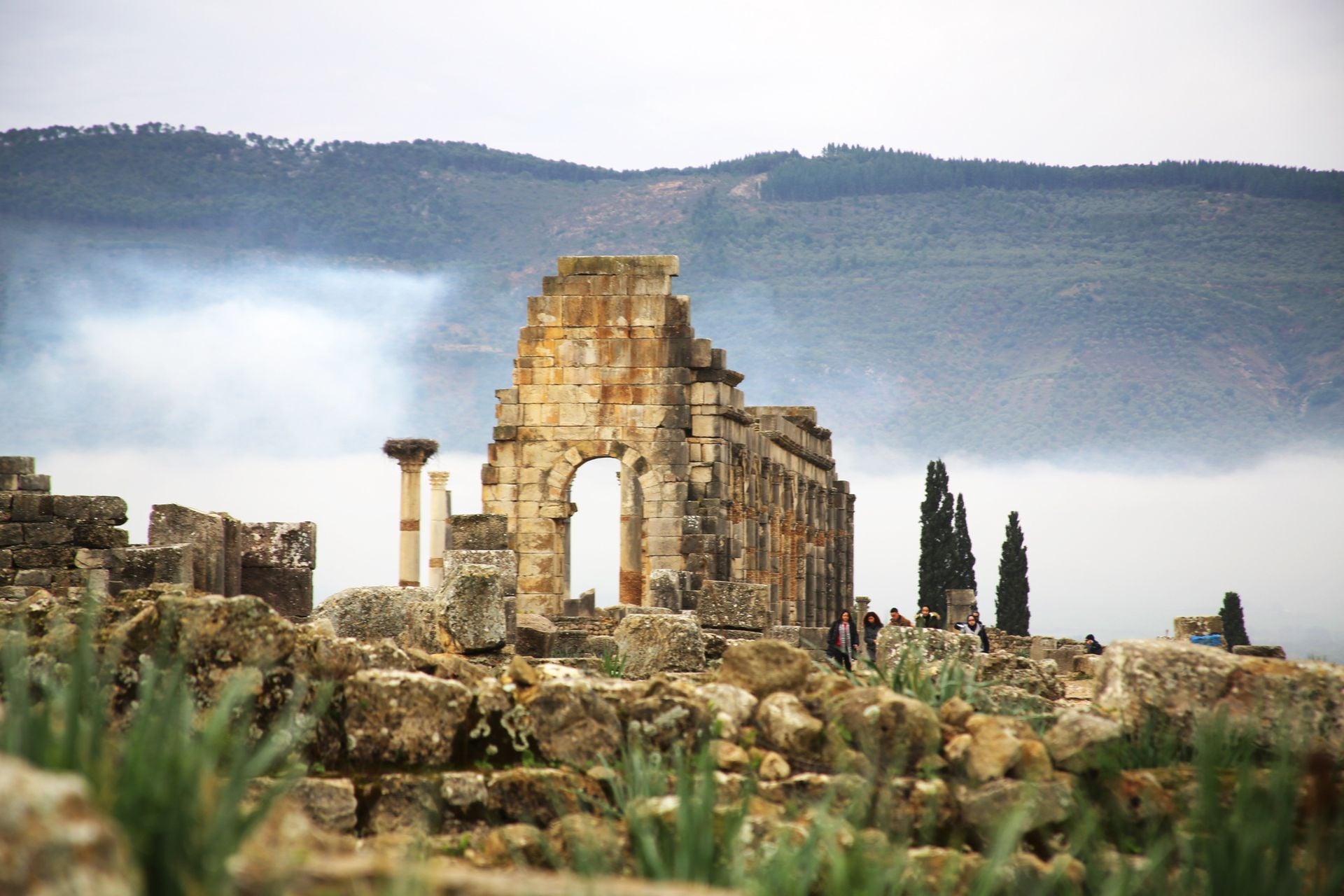
The Roman ruins of Volubilis, about 30 km from Meknes, are among the top attractions in Morocco and reveal a much older landscape of trade and power. Allow three to four hours, including travel, then return to Meknes for a relaxed evening rather than adding more sightseeing.
Visit Moulay Idriss Zerhoun on a countryside loop
The whitewashed hill town of Moulay Idriss Zerhoun adds religious heritage and village views to a Meknes stay. Combine it with Volubilis on a four- to six-hour excursion, or visit alone for a shorter countryside loop and a change of pace.
Unwind in the Jardin Lahboul
Jardin Lahboul offers shade, greenery, and local families at leisure, rounding out Meknes's historic focus with a softer side of city life. Spend an hour here, easily slotted between medina exploration and evening plans in and around Place El Hedim.

Bab el Mansour, Meknes, Morocco @ Shutterstock
Practical planning tips
Plan Meknes as a compact stop, packing modest clothing for religious sites and comfortable shoes for uneven medina streets. Expect limited English once away from the main squares, so having key French phrases helps. Carry some cash for small cafés and taxis, and confirm opening hours for imperial monuments in advance.
Where to stay in Meknes
For one or two nights, base yourself near the historic center without repeating the same walking routes you will explore by day. Around Place El Hedim and the medina, you are close to cafés and smaller local streets, which feel very different in the early morning and evening from formal sightseeing hours.
Riads inside or just beside the medina walls provide traditional interiors and rooftop terraces, but vehicle access and on-site parking are often restricted, so check with your host in advance.
If you are driving, guesthouses on the fringes of the old town or in the Ville Nouvelle usually have simpler car access, clearer signage and more reliable parking.
Choosing between these areas comes down to how much you value atmospheric nights inside the walls versus quick arrivals and easy departures with luggage.
Getting around
Meknes is largely explored on foot, especially the medina, main squares, and nearby city quarters, so expect plenty of walking on cobbles and occasional slopes. Arriving by train is straightforward, with taxis connecting the station to the historic center in a short ride; agree on the fare or ensure the meter is used.
Drivers should be prepared for narrow streets and one-way systems around the medina and may find it easier to leave the car in a hotel car park or guarded lot, then continue on foot. Local petits taxis work well for links between the Ville Nouvelle, residential districts and transport hubs, particularly in the heat or after dark.
A rental car is mainly useful for excursions into the surrounding countryside; during your stay in Meknes itself, it will probably remain parked.
Plan your trip with a Local Expert
Careful planning helps Meknes slot smoothly into a wider Morocco journey. Local experts draw on first-hand knowledge of the imperial cities and nearby countryside to shape routes that feel coherent rather than rushed, adjusting the balance between Meknes, Fes, Rabat and other stops to match your interests.
Seasonal conditions influence how days are structured: in hotter months, walking tours may be scheduled early with shaded sites or gardens at midday, while cooler winters lend themselves to longer visits in monuments and medina quarters. Travel style also reshapes the plan, whether you prefer slow, café-focused wandering, detailed monument visits or countryside loops to Volubilis and Moulay Idriss Zerhoun.
Available time then defines Meknes's role, from a short overnight stop within a fast-paced circuit to a two-night pause that allows deeper exploration and side trips.


